
At a Glance
- 2025 saw healthy growth but weak hiring and rising unemployment.
- Inflation stayed near 3%, with the Fed’s preferred measure at 2.8% in September.
- A six-week government shutdown in late 2024 clouded data collection.
Why it matters: Consumers, businesses, and policymakers face a mixed economic picture that could shape 2026 policy and job prospects.
In 2025, the U.S. economy grew at a solid pace while the labor market lagged behind, and inflation stayed stubbornly high. A six-week shutdown last fall further muddied economic data, leaving policymakers uncertain about the true state of the economy. Analysts weigh whether growth will translate into jobs or whether a “jobless expansion” will continue.
Growth Surges Amid Stagnant Hiring
Growth accelerated after a weak start, with the July-September quarter posting a 4.3% annual pace, the largest increase in two years.
Consumer spending, largely driven by higher-income households, lifted the economy despite a gloomy outlook.
The surge followed two quarters of tariff-related distortion, where a spike in imports shrank output as firms pre-ordered goods before duties.
Labor Market Lags Behind
Hiring did not keep pace, with job gains weakening after Trump’s tariff announcement in April.
The unemployment rate climbed from 4% in January to 4.6% in November, the highest in four years.
Companies cited tariff uncertainty, AI adoption, and a low-hire, low-fire environment as reasons to pause hiring.
- Tariff uncertainty
- AI adoption
- Low-hire, low-fire environment
Layoffs remained low, with only 105,000 jobs cut in October, largely due to a federal government purge that began that month.
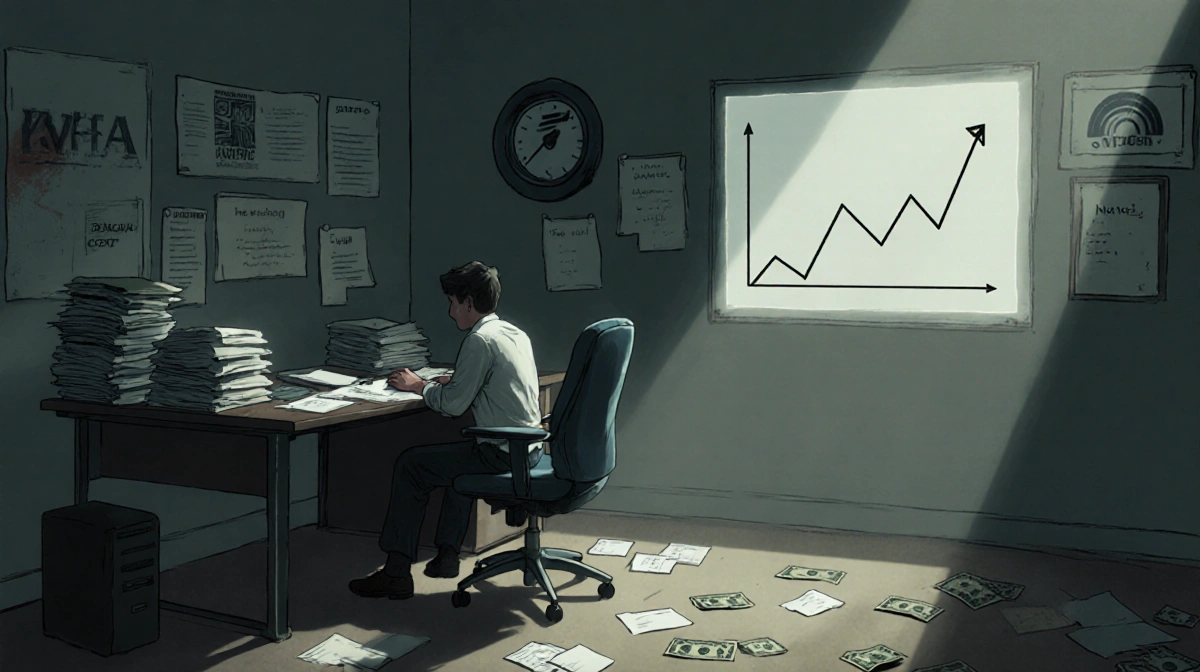
Excluding government, businesses added an average of 75,000 jobs a month in the three months ended November, up from 13,000 in August.
Most hiring concentrated in health care, restaurants, hotels, and government, while large private industries shed jobs.
Inflation Persists
Inflation held near 3%, with the Fed’s preferred measure at 2.8% in September versus 2.7% in December 2024.
The CPI cooled in November, but shutdown-related data gaps and holiday discounts may have distorted the reading.
Some economists warn that tariff costs and annual price adjustments could push inflation higher early in 2026, though most expect a gradual decline toward the Fed’s 2% target.
Outlook and Opinions
Stephen Stanley said:
> “2026 begins at a time when it is hard to say how 2025 ended,”
Federal Reserve Governor Christopher Waller stated:
> “This year could turn out to be a better year… Now whether that pulls the labor market along with it, I certainly hope it does.”
Key Takeaways
- 2025 growth was strong, but hiring lagged and unemployment rose.
- Inflation remains close to 3%, with mixed signals from CPI and Fed-preferred measures.
- Policymakers face uncertainty as a shutdown clouded data and a “jobless expansion” may persist.
The mixed signals from growth, jobs, and inflation leave 2026 as an uncertain year for the U.S. economy, with policymakers and businesses watching closely for signs that hiring will catch up to output.