At a Glance
- 2026 will feature moon landings, solar eclipses, supermoons, auroras, and the fading interstellar comet 3I/Atlas.
- NASA’s Artemis commander Reid Wiseman may be the first to view the far side of the moon in 50 years.
- The August 12 total solar eclipse will cross the Arctic, Greenland, Iceland, and Spain.
- Why it matters: The sky’s spectacles offer rare scientific opportunities and unforgettable viewing experiences worldwide.
2026 promises a packed celestial calendar, with the moon and sun stealing the spotlight. From robotic landers and human explorers to eclipses and interstellar visitors, the year’s sky will be full of wonder.
Moon Missions and Lunar Landings
NASA’s Artemis program is set to send a crew of three Americans and one Canadian to the moon early in 2026. Commander Reid Wiseman said the team could be the first to observe large swaths of the far side missed by Apollo. Their 10-day mission will include a U-turn behind the moon before returning to Earth, with no moonwalk planned.
- Artemis crew – first astronauts to view the far side since Apollo.
- Blue Origin’s Blue Moon – a 26-foot (8-meter) prototype to land on the moon, taller than Apollo’s lander; crewed version almost twice that height.
- Astrobotic Technology – targeting a 2026 lunar landing with scientific payloads.
- Intuitive Machines – also aiming for a 2026 landing.
- Firefly Aerospace – plans a far-side landing in 2026.
- China – will send a rover and a hopper to the south polar region, seeking ice in permanently shadowed craters.
Solar Eclipses of 2026
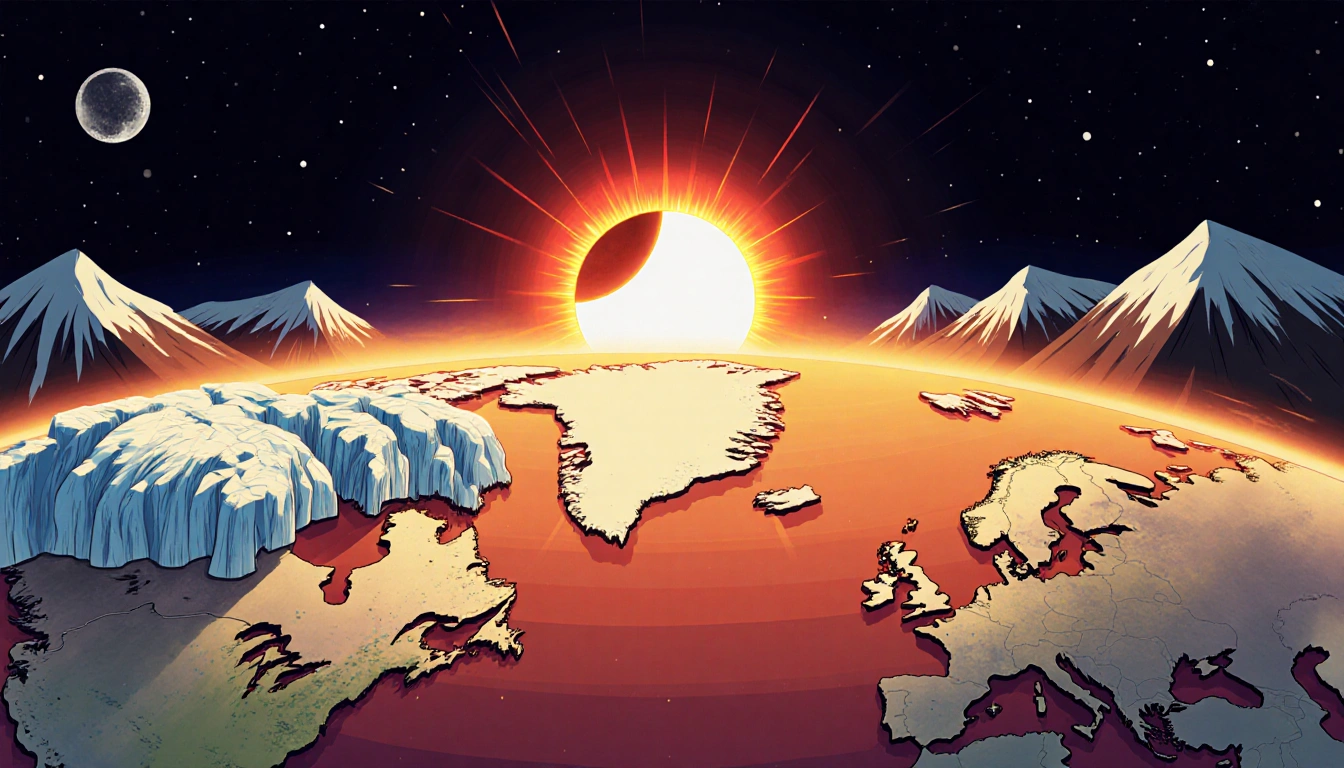
The year opens with a ring-of-fire eclipse over Antarctica on February 17, visible only from a few research stations. Two weeks later, a total lunar eclipse will occur. The highlight is a total solar eclipse on August 12 that begins in the Arctic and crosses Greenland, Iceland, and Spain, lasting 2 minutes 18 seconds.
- Feb 17 – Ring-of-fire eclipse over Antarctica (partial view in South Africa, Chile, Argentina).
- Late February – Total lunar eclipse.
- Aug 12 – Total solar eclipse from Arctic to Spain, 2 min 18 s totality.
- End of August – Partial lunar eclipse.
Planetary Parade
Around February 28, six of the eight planets will be visible in the night sky. Mercury, Venus, Jupiter, and Saturn can be seen with the naked eye after sunset, while Uranus and Neptune require binoculars. Mars will be absent that night but will join the parade in August, with Venus as the only holdout.
Supermoons
Three supermoons will light up the 2026 sky. The first on January 3 coincides with a meteor shower, though the bright moonlight will obscure many fireballs. The second arrives on November 24, and the final one- the Christmas Eve supermoon-will be the closest, passing within 221,668 miles (356,740 km) on December 23-24.
Auroras and Solar Activity
Solar eruptions are expected to increase in 2026, potentially producing more auroras. The 11-year solar cycle is beginning to decline, which may ease activity later in the year. Space weather forecasters at NOAA are excited about new data from a fall-launched observatory.
Rob Steenburgh stated:
> “2026 will be an exciting year for space weather enthusiasts,” he said in an email, with this new spacecraft and others helping scientists “better understand our nearest star and forecast its impacts.”
Interstellar Comet 3I/Atlas
The comet 3I/Atlas, an interstellar visitor, is still visible with powerful backyard telescopes but is fading after its December Earth swing. Jupiter will be the next target in March. The comet will exit the solar system in about a decade, returning to interstellar space.
NASA’s Paul Chodas said:
> “I can’t believe it’s taken this long to find three,”
> “the chance of catching another interstellar visitor will increase.”
Key Takeaways
- 2026 will host moon landings, a total solar eclipse, and three supermoons.
- The year’s sky also features auroras, a fading interstellar comet, and a strong planetary parade.
- NASA’s Artemis crew may be the first to observe the moon’s far side in 50 years.
With so many celestial events lined up, 2026 will be a year for skywatchers and scientists alike.