At a Glance
- A new $45 fee will apply to U.S. domestic travelers without a Real ID or passport starting Feb. 1 2026.
- The fee includes a mandatory biometric scan at security checkpoints.
- Travelers can avoid the surcharge by updating their driver’s license or using an alternative federal ID.
- Why it matters: The cost and extra steps could affect millions of domestic flyers.
Travelers planning to fly in 2026 should act now, as the new fee will be enforced at all U.S. airports. The Transportation Security Administration (TSA) has announced the rule to encourage timely Real ID upgrades.
What Is a Real ID?
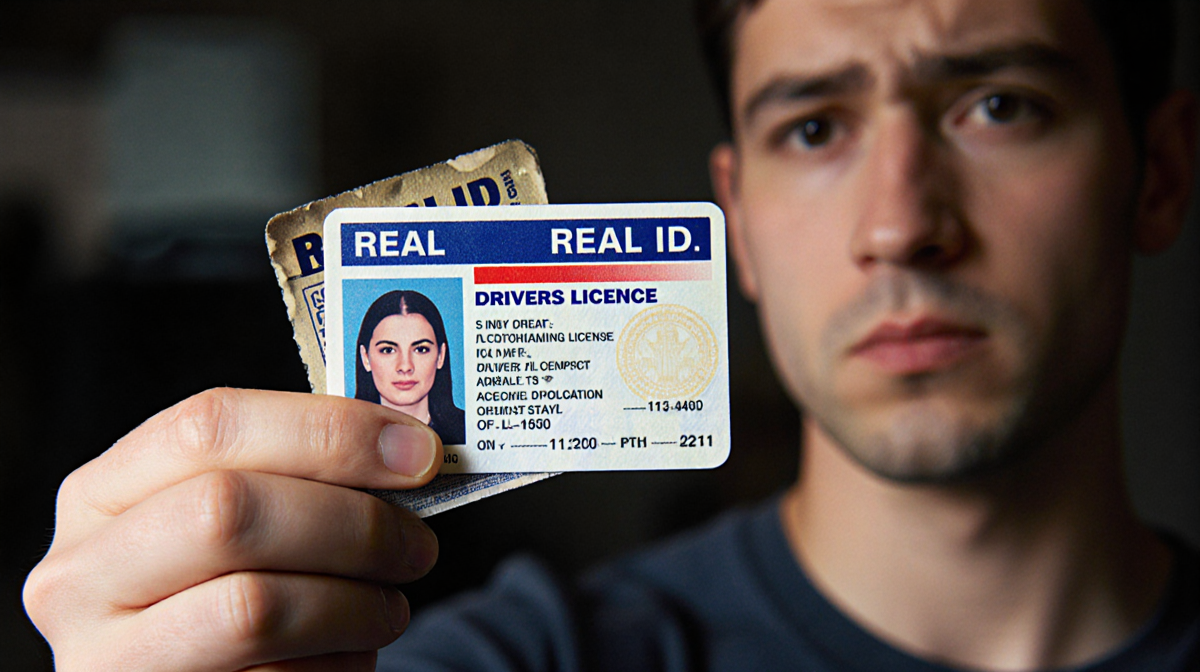
The Real ID is an enhanced driver’s license or identification card that meets federal standards set by the Real ID Act of 2005. It was created to improve security and reduce identity fraud.
The first Real ID card issued by a state will feature a small star in the upper-right corner. The star can be gold, black, or white, depending on the state’s design.
If you see a star on your license, you already have a Real ID-compliant card. If your license lacks a star, you must renew or upgrade it before Feb. 1 2026.
Why the $45 Fee?
The TSA originally floated an $18 surcharge but settled on $45 to make the penalty more impactful. The fee will be charged to anyone who shows up at a security checkpoint without a Real ID or passport.
The fee covers the cost of a mandatory biometric scan, which includes fingerprinting and facial recognition. The TSA intends to use the data for identity verification.
Travelers who have a Real ID or a valid passport will not be charged. Those who have other acceptable IDs will also be exempt.
Accepted Alternative IDs
Even if you lack a Real ID, you can still board domestic flights with:
- A valid U.S. passport
- A Department of Defense ID
- A permanent resident card
- A border crossing card
- A federally recognized tribal ID
- An enhanced driver’s license issued by Michigan, Minnesota, New York, Vermont, or Washington
These IDs are accepted for federal facility access and domestic travel.
How to Apply for a Real ID
The process is similar to a regular driver’s license renewal. You must:
- Visit your state’s DMV or licensing agency
- Provide proof of identity, U.S. citizenship or lawful status, and your Social Security number
- Submit original documents such as a birth certificate, Social Security card, or U.S. passport
Photocopies or screenshots are not accepted. After you apply, you will receive a temporary paper ID.
When Will You Receive Your Real ID?
Most states say the new card arrives by mail in about three to four weeks after application. The temporary ID can be used immediately while you wait for the permanent card.
The cost of obtaining a Real ID is the same as renewing a standard license, so there is no additional fee for the upgrade.
Timeline of Key Dates
| Date | Event |
|---|---|
| May 7 | Federal agencies begin requiring Real ID or passport for domestic flight security checks |
| Feb 1 2026 | $45 identity verification fee and mandatory biometric scan take effect |
State compliance was achieved in 2025, so all 50 states and the District of Columbia now issue Real ID-compliant licenses.
Impact on Travelers
If you have not updated your license in several years, the new fee could catch you off guard. The TSA will charge the fee at the security checkpoint, which could add stress to an already busy travel day.
The fee is designed to push travelers to renew their licenses before the deadline. A $45 surcharge is considerably higher than the previous $18 proposal.
Practical Steps to Avoid the Fee
- Check your license for a star. If it’s missing, plan a DMV visit.
- Gather required documents: birth certificate, Social Security card, and proof of address.
- Submit the application online or in person.
- Keep the temporary ID safe until you receive the permanent card.
- If you’re traveling soon, consider using a passport or another accepted federal ID.
## State-Specific Notes
Some states have unique star designs. For example, California places a white star over the state’s bear logo, while Maine uses an outline of the state. Regardless of design, the presence of a star indicates compliance.
If you live in a state that offers an enhanced driver’s license, you can obtain it through the same process as a standard license. These enhanced IDs are accepted for federal facility access and domestic travel.
FAQs
- What if I’m traveling internationally? The Real ID requirement applies only to domestic flights. International travelers need a passport regardless.
- Can I use a driver’s license that isn’t Real ID-compliant? No. The TSA will refuse to allow boarding without a Real ID, passport, or another accepted ID.
- Is the biometric scan mandatory? Yes, it is part of the new identity verification fee.
Key Takeaways
- The $45 fee will be imposed on domestic travelers without a Real ID or passport starting Feb. 1 2026.
- A mandatory biometric scan accompanies the fee, adding another layer of identity verification.
- Travelers can avoid the surcharge by updating their license, using a passport, or another accepted federal ID.
- The cost of a Real ID is the same as a standard renewal, and the card arrives within a few weeks.
- All states now issue Real ID-compliant licenses, and the star on the card indicates compliance.
Bottom Line
The new fee and biometric requirement are part of a broader effort to strengthen airport security. By acting now, travelers can avoid the $45 surcharge and ensure a smoother security experience.