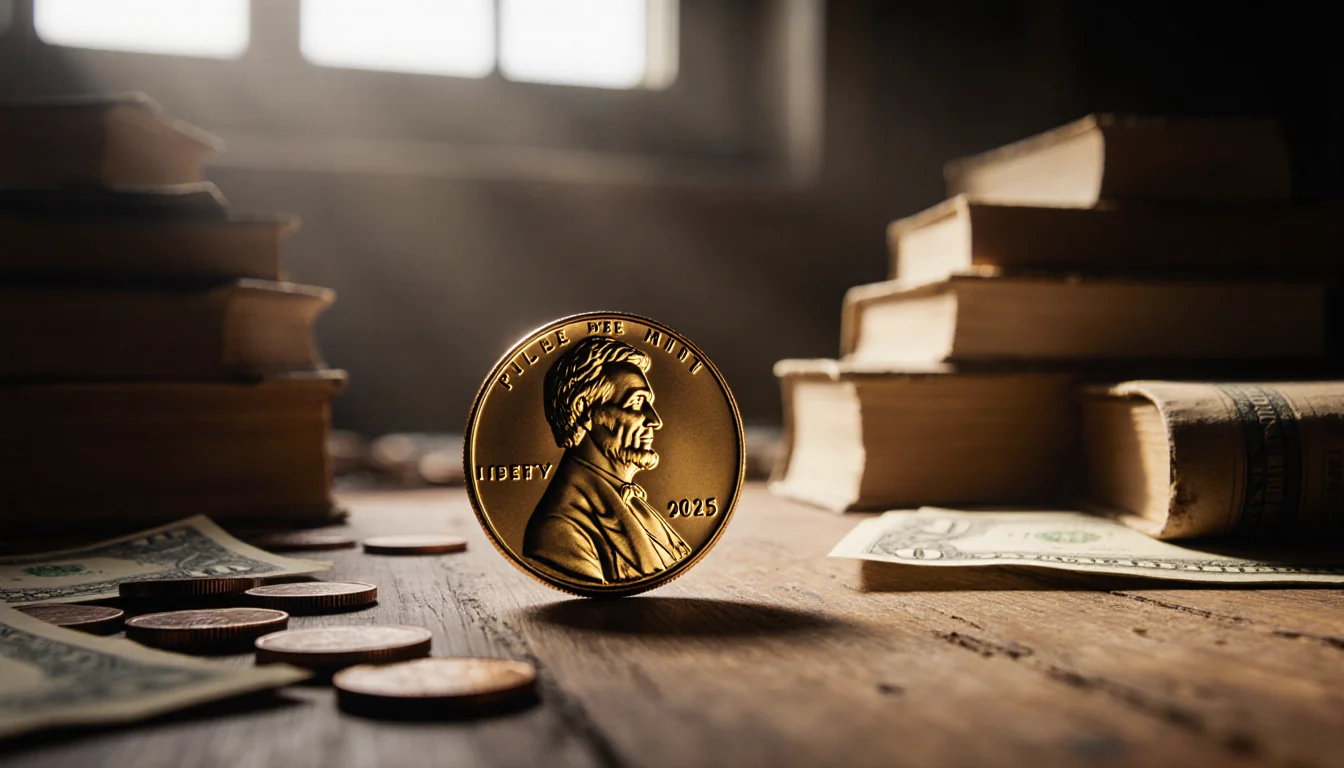
On a quiet Wednesday in Philadelphia, the U.S. Mint pressed the last penny ever struck, a moment that ended 232 years of one-cent circulation and set a new auction record. The coin, minted in the city’s Old City neighborhood, marked the final chapter of a currency that has been part of everyday life since 1793. The event was captured by NBC10’s Aaron Baskerville, who described the occasion as “two cents” of historic significance. The press of the last penny was both symbolic and practical, signaling the end of a long-running production line that had operated uninterrupted for more than two centuries.
Stack’s Bowers Galleries, a California auction house, announced that the 232 sets of three coins sold on behalf of the United States Mint garnered $16.76 million. The auction was conducted over four hours of competitive bidding, drawing unprecedented interest from collectors worldwide. Each set comprised a 2025 penny from the Philadelphia Mint, a 2025-D penny from the Denver Mint, and a special 2025 penny struck in 24-karat gold at the Philadelphia Mint. The total revenue reflected the rarity of the items and the enthusiasm of the numismatic community.
The three-coin set was carefully curated to showcase the final production run. The 2025 penny from Philadelphia is the standard copper-covered coin that has been the face of the dollar’s smallest denomination. The 2025-D penny from Denver features the Denver mint mark “D” on the reverse, a distinguishing feature for collectors. The 24-karat gold penny is a unique commemorative piece, struck in a precious metal that has never been used for circulating pennies. Together, the set represents every variant that the Mint produced before halting production.
The decision to stop producing one-cent coins came after President Donald Trump directed Treasury Secretary Scott Bessent to halt the minting of pennies as a cost-cutting measure. The directive was part of a broader effort to reduce federal spending on low-value coinage. The Philadelphia Mint responded by striking the final pennies in November, concluding 232 years of continuous circulation. The halt was intended to save the government money on the production and distribution of pennies, which had become a small but significant expense.
Acting Mint Director Kristie McNally issued a statement at the time of the final strike, saying, ”While general production concludes today, the penny’s legacy lives on.” The statement acknowledged the historical importance of the penny and emphasized that its cultural significance would persist even after production stopped. McNally’s words were broadcast to the public and underscored the Mint’s role in preserving national heritage.
Stack’s Bowers Galleries president Brian Kendrella highlighted the honor of partnering with the United States Mint for the sale. In a news release, he stated, ”It’s an extraordinary honor to again be selected to partner with the United States Mint to offer exciting numismatic rarities to the collecting public,” and continued, ”Even our staff of expert numismatists, who see the world’s most famous and valuable rare coins day in and day out, were excited by the chance to handle the very last pennies struck before the suspension of circulating production.” The auction house noted that the bidding process was highly competitive and that the sets drew attention from both seasoned collectors and new enthusiasts.
The sets sold for an average of $72,000, but the highest bids were remarkable. The first set fetched $200,000, while the last set of pennies ever struck achieved a record-breaking $800,000. The $800,000 sale surpassed the previous modern U.S. currency record of $550,000 held by a space-flown Sacagawea dollar sold in September, according to Stack’s Bowers. The record price underscored the unique value of the final pennies and the strong demand among collectors for items tied to significant historical moments.
The auction’s success highlighted the enduring appeal of coin collecting and the willingness of collectors to pay premium prices for rare items. The four hours of competitive bidding demonstrated the depth of the market for modern numismatic rarities. The sale also provided a financial benchmark for future coin auctions, illustrating how limited-edition items can command high prices when tied to historical significance.
Despite the end of production, there are still an estimated 300 billion copper coins in circulation. These coins can still be used in everyday transactions, but without new production they will gradually disappear from everyday life. Over time, the remaining pennies will survive mainly as collectibles and historical keepsakes rather than as functional currency. The transition reflects a broader shift in how the public engages with small-denomination coinage.
Key Takeaways
- 232 sets of final pennies sold for $16.76 million, averaging $72,000 per set.
- The last set sold for a record $800,000, surpassing the $550,000 Sacagawea dollar record.
- President Trump’s directive to halt penny production ended 232 years of circulation.
The auction of the United States Mint’s final pennies not only set a new record for modern U.S. currency but also marked the end of an era for one-cent coinage. As the last pennies are now in collectors’ hands, their legacy will continue to be celebrated, even as the physical coins fade from everyday use.