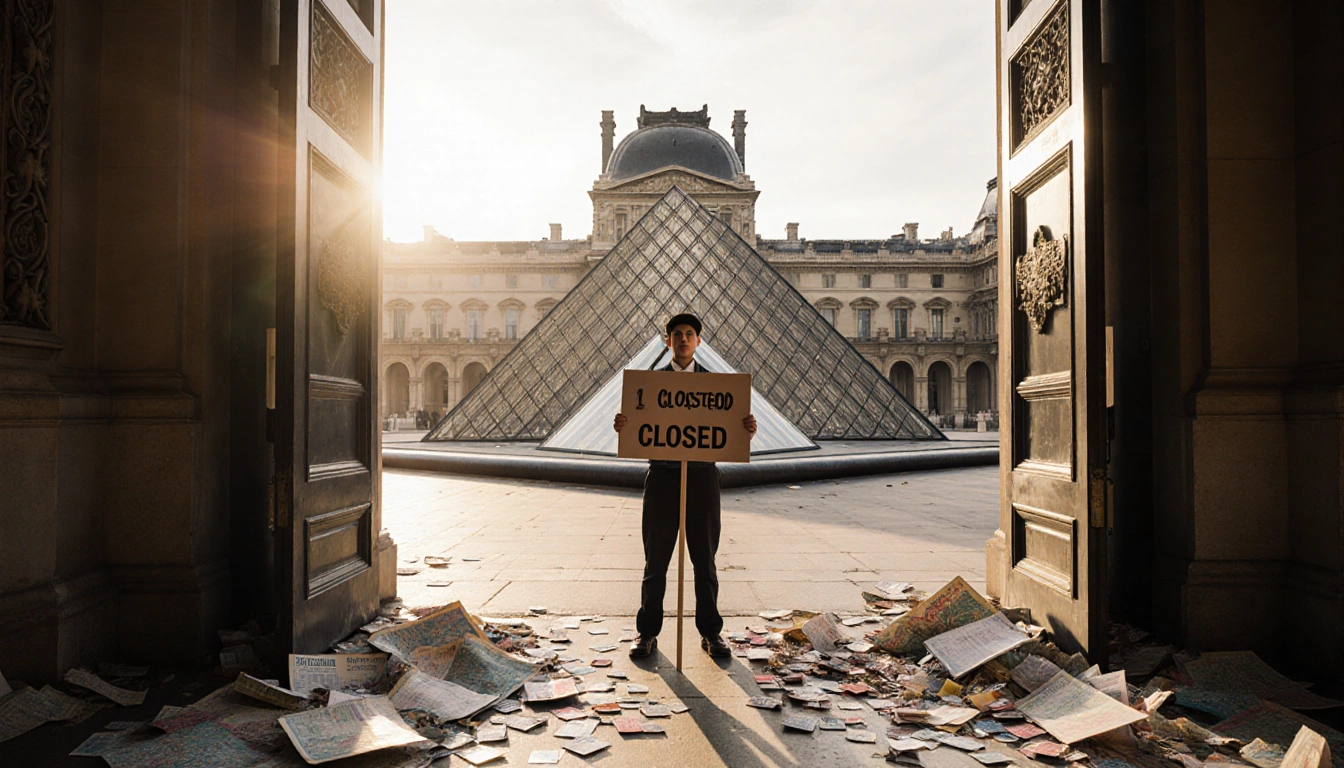
On Wednesday, the Louvre’s iconic doors remained closed for the second consecutive day, not because of its usual weekly shutdown but because workers had voted to extend a strike that has already halted operations at the world’s most visited museum.
The decision to prolong the walkout came during a morning general assembly after union members had adopted the strike unanimously earlier in the week. The museum had been closed on Tuesday for its regular weekly shutdown, leaving visitors uncertain whether it would reopen on Wednesday. Management was forced to assess staffing levels and determine whether enough employees were available to open galleries safely.
Union workers cited chronic understaffing as a major concern. They argued that insufficient personnel jeopardizes daily operations and the safety of priceless artworks. The strike also highlighted ongoing building deterioration that demands more hands on deck.
Building decay has been a long‑standing issue, with maintenance crews struggling to keep pace with the museum’s needs. Staff members report that aging infrastructure can create hazards for visitors and curators alike. The lack of adequate support staff has made routine repairs increasingly difficult.
Management decisions have further inflamed tensions, as workers feel that leadership has not adequately addressed their grievances. Employees argue that recent policy changes have added pressure without corresponding resources. The union contends that these decisions exacerbate an already strained environment.
The crown jewels heist in October added a new layer of urgency to the dispute. The daylight robbery revealed serious security lapses that have shaken confidence in the museum’s protective measures. Workers claim that the incident underscores the need for immediate action.
In response to the heist, Culture Ministry officials held crisis talks with unions on Monday. They proposed canceling a planned $6.7 million cut in 2026 funding, opening new recruitment for gallery guards and visitor services, and increasing staff compensation. Union officials said the measures fell short of what is needed.
Des Cars, the Louvre’s president, is scheduled to appear before the Senate’s culture committee later Wednesday. Lawmakers are probing the museum’s security failures in light of the heist. Des Cars has acknowledged an “institutional failure” following the robbery.
She admitted she only learned of a critical 2019 security audit after the robbery, raising questions about leadership transparency. France’s Court of Auditors and a separate administrative inquiry have criticized delays in implementing a long‑promised security overhaul. The audit’s late revelation has intensified scrutiny.
The Culture Ministry announced emergency anti‑intrusion measures last month. They also assigned Philippe Jost, who oversaw the Notre Dame restoration, to help reorganize the museum. Jost’s appointment signals a significant shift in leadership strategy.
Staff concerns remain high, with many workers demanding more robust security and better working conditions. Employees fear that inadequate staffing could compromise operations.
The strike has disrupted operations at the world’s most visited museum, affecting ticket sales, guided tours, and educational programs. The extended walkout has highlighted the museum’s operational challenges.
Key Takeaways
- Workers cite understaffing, building decay, and management decisions as core grievances.
- The 2025 crown jewels heist exposed serious security lapses and intensified demands for reform.
- The Culture Ministry’s proposals, including canceling a funding cut and recruiting new guards, were deemed insufficient by the union.
In summary, the Louvre’s extended strike reflects deep‑rooted concerns over staffing, security, and leadership accountability. The union’s push for change, the Ministry’s emergency measures, and the scrutiny of Des Cars converge on a single goal: to restore the museum’s operational integrity and safeguard its priceless collections.