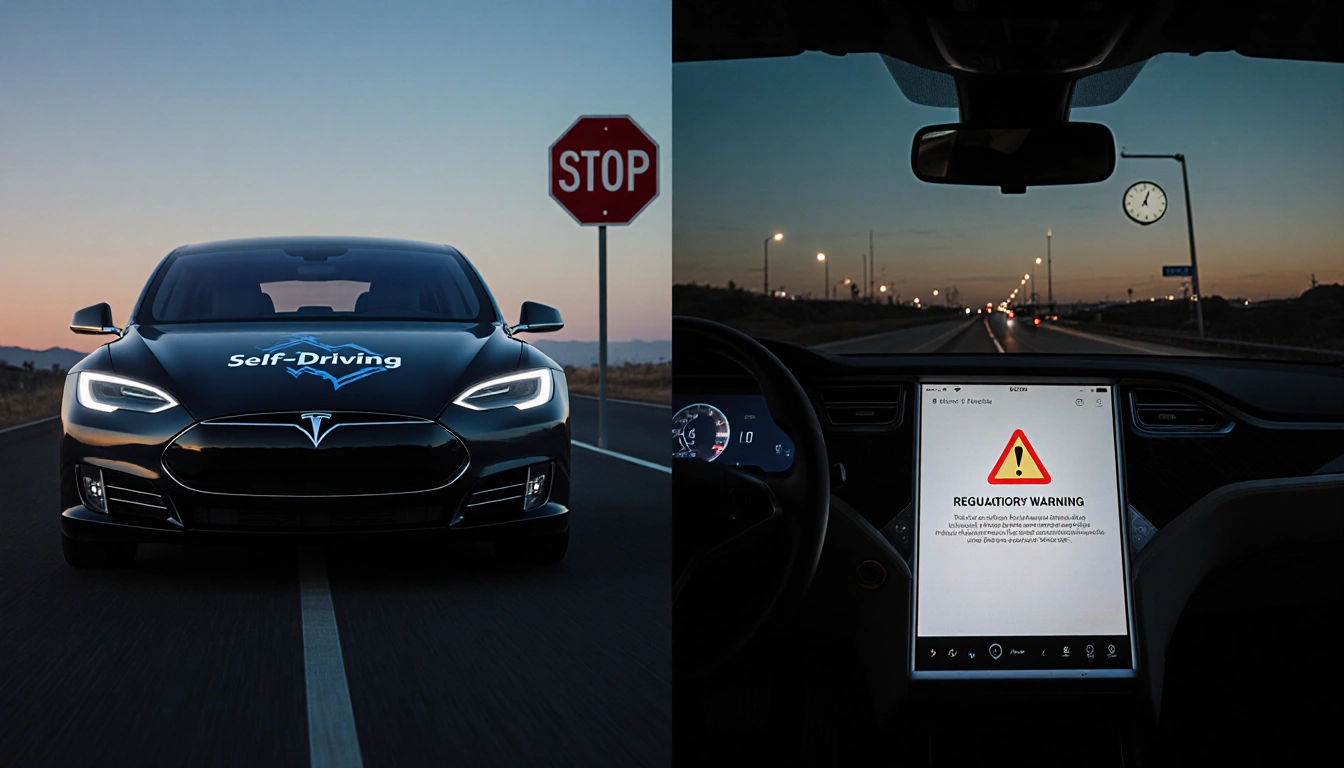
California regulators have issued a warning that Tesla could lose its right to sell cars in the state early next year if the company does not adjust its marketing of self‑driving features.
Regulatory Threat
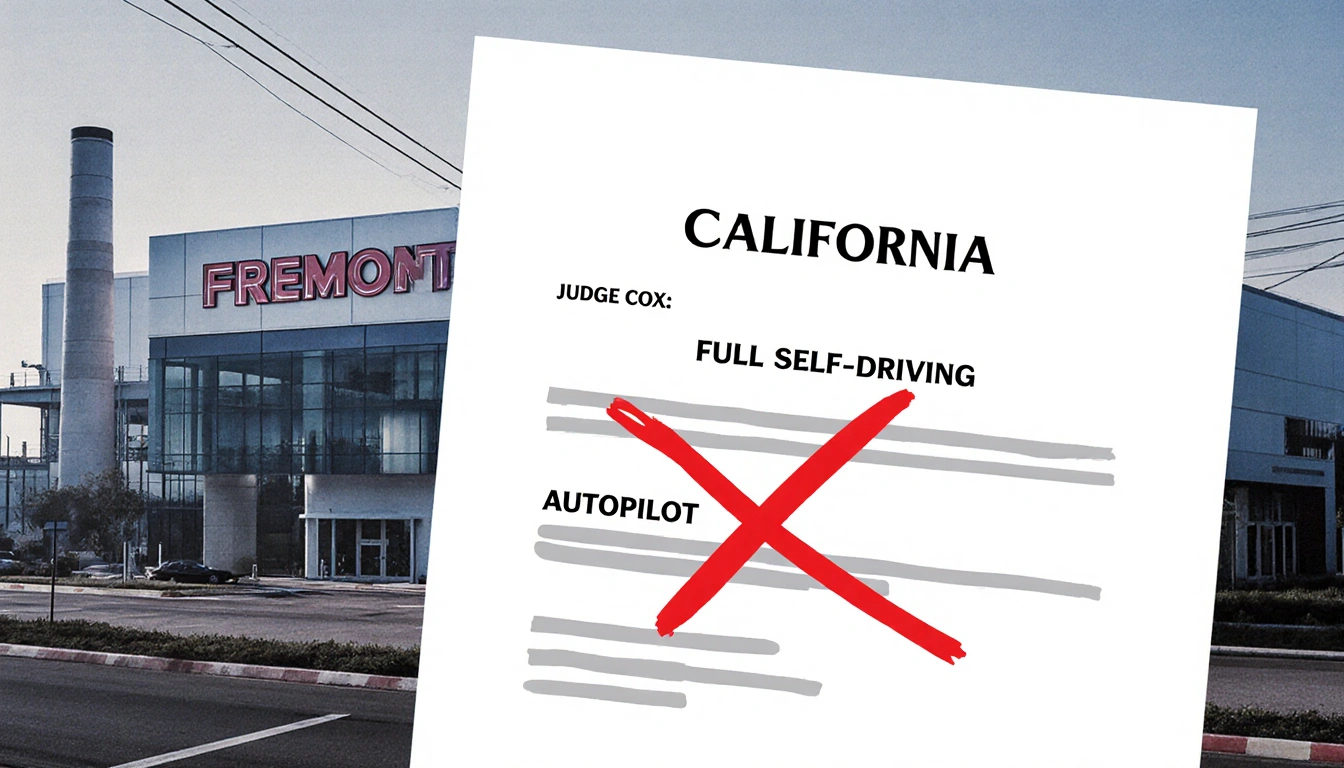
California’s Department of Motor Vehicles has announced a potential 30‑day suspension of Tesla’s sales license that would take effect early next year unless the automaker makes changes to how it advertises its autonomous technology. The decision, released late Tuesday, follows a ruling by Administrative Law Judge Juliet Cox who found Tesla had long engaged in deceptive marketing by using the terms “Autopilot” and “Full Self‑Driving” to describe capabilities that many vehicles do not fully possess.
Judge’s Findings
Judge Cox heard five days of testimony in Oakland in July. She concluded that Tesla’s use of the phrases “Autopilot” and “Full Self‑Driving” misled consumers about the level of automation actually available. Cox also recommended suspending the company’s manufacturing license at its Fremont plant, but California regulators have decided to enforce only the sales suspension, not the manufacturing penalty.
Tesla’s 90‑Day Window
Under the judge’s order, Tesla has 90 days to adopt clearer messaging that communicates the limits of its self‑driving system. The automaker has already made a significant change: it added wording to its website that states the Full Self‑Driving package still requires human supervision while it is in use. Steve Gordon, director of the California Department of Motor Vehicles, said, “Tesla can take simple steps to pause this decision and permanently resolve this issue — steps autonomous vehicle companies and other automakers have been able to achieve.”
Company Response
In a post on Musk’s X service, Tesla dismissed the order as regulatory overkill. “This was a ‘consumer protection’ order about the use of the term ‘Autopilot’ in a case where not one single customer came forward to say there’s a problem. Sales in California will continue uninterrupted.” the company said.
Market Impact
Tesla’s sales have already been pressured by a global decline in demand that began during backlash to Musk’s high‑profile role in cutting U.S. government budgets under the Trump administration. Competition has intensified, and the company’s older vehicle lineup has weighed on figures. Nevertheless, Tesla refreshed its Model Y, the world’s best‑selling vehicle, and introduced lower‑priced versions of the Model Y and Model X.
The company’s sales fell 9 % from 2024 through the first nine months of the current year, a decline that has persisted even as regulators threaten a sales suspension. Despite this slump, Tesla’s shares reached an all‑time high of $495.28 during Wednesday’s early trading before falling back below $470. The stock remains slightly higher than it was before Musk’s stint in the Trump administration, a period he recently described as a “somewhat successful” assignment he would not repeat.
Legal and Safety Context
California regulators are not the first to criticize Tesla for overstating its self‑driving capabilities. The company has maintained that its owner’s manual and website explicitly state that its autonomous features still require human oversight. Yet the automaker released a 2020 video that appeared to show a car driving on its own, a clip that remained on its website for nearly four years and was cited in the judge’s decision.
Tesla has faced multiple lawsuits alleging that its portrayal of self‑driving technology has created a false sense of safety, contributing to fatal accidents. Earlier this year, a Miami jury held Tesla partly responsible for a lethal crash in Florida that occurred while Autopilot was active, ordering the company to pay more than $240 million in damages.
Current Developments
Musk has promised that Tesla’s self‑driving technology will eventually support a robotaxi fleet across the United States. The company began testing the concept in Austin earlier this year, with a human supervisor in the vehicle to take over if needed. Just days ago, Musk announced that Tesla had started tests of its robotaxis without a safety monitor in the vehicle.
Key Takeaways
- California may suspend Tesla’s sales license for 30 days unless the company clarifies its self‑driving marketing.
- Tesla has 90 days to implement clearer messaging; it has already added a statement about human supervision.
- The company’s sales have declined 9 % in the first nine months of the year, but its stock remains near all‑time highs.
- Legal challenges over self‑driving claims continue, including a recent $240 million judgment in Florida.
Closing
The looming regulatory action underscores the tension between Tesla’s aggressive marketing of autonomous features and the legal standards that govern consumer protection. The company’s next 90 days will determine whether it can avert a sales suspension and continue to navigate a complex landscape of consumer expectations, market competition, and safety scrutiny.