> At a Glance
> – CNET reporter Olivia M. Hartwell physically handled the new Boston Dynamics Atlas robot at CES 2026
> – Atlas won Best Robot of CES and ships to Hyundai factories this year
> – Design prioritizes simplicity, repairability, and safety over human-like appearance
> – Why it matters: This humanoid robot could eventually enter homes and service industries beyond manufacturing
The moment I say I went hands-on with Boston Dynamics’ new Atlas robot, I mean I literally held its hand. This static demo unit-destined for Hyundai factories-became the undisputed star of CES 2026.
Face-to-Face With the Future
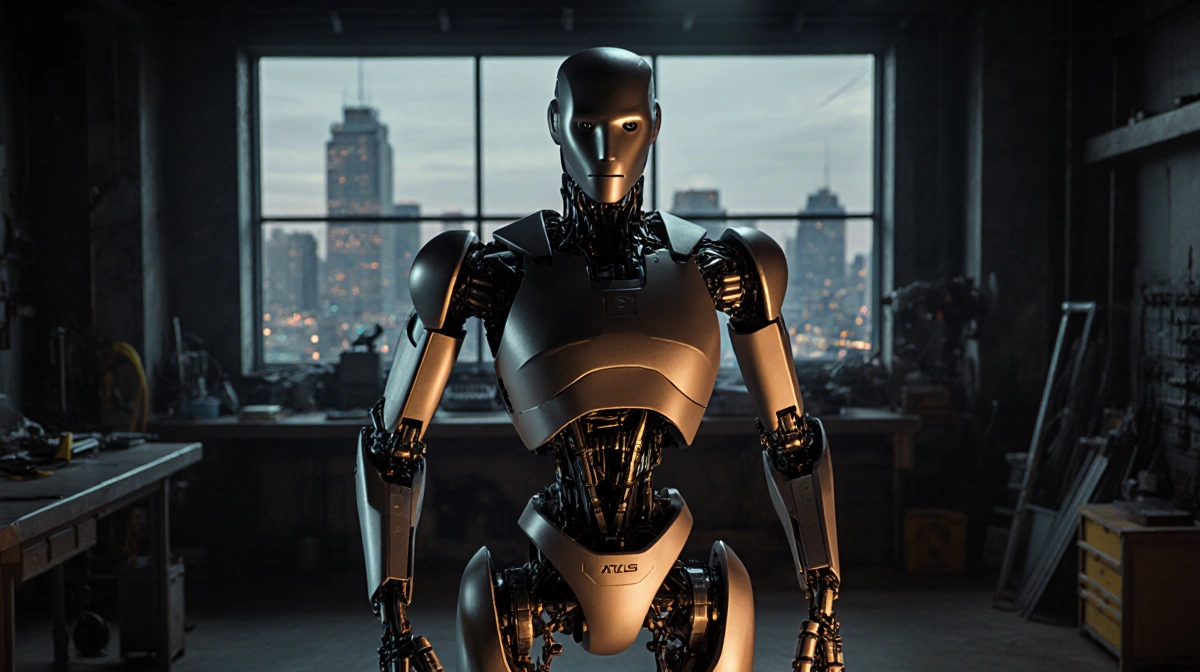
Standing eye-to-eye with Atlas triggered a whirlwind of emotions. The periwinkle blue shell feels more Dyson than industrial behemoth. Two low-set cameras sit where a mouth should be, encircled by an LED halo that gives a subtle Pixar lamp vibe.
I ran my fingers across its soft-touch plastic and gently tested the finger joints. The hands are eerily human-like-perhaps the most human thing about it.
Designed to Be a Tool, Not a Person
Boston Dynamics deliberately avoided hyper-realistic features. Zachary Jackowski, VP and general manager of Atlas, explained the philosophy:
> “It projects the wrong first impression about a robot to have it pretend to be something that it’s not.”
The narrow-set thighs, wide calves, and continuous curves strip away intimidating edges. Every design choice aims for simplicity, scalability, and safety.
What Sets Atlas Apart
Jackowski highlights three key advantages:
- Repairability: “Crazy good” modular construction
- Runtime: Extended operational periods
- Strength: “Unlike anything” in its class
| Feature | Atlas Approach | Industry Norm |
|---|---|---|
| Aesthetics | Soft curves, pastel colors | Industrial metal |
| Face Design | Cameras low, LED halo | Often featureless |
| Legs | Narrow thighs, wide calves | Human-proportioned |
From Factory Floor to Dining Room?
Atlas starts at Hyundai plants, then migrates to other industrial sites. After that, Jackowski sees it bussing tables before potentially entering homes. The robot will evolve, but this CES demo offers an early glimpse of our possible future housemate.

As I step back, I’m struck by a paradox: Atlas is both remarkably advanced and still not ready to share my living space.
Key Takeaways
- Atlas ships to Hyundai factories later this year as a general-purpose worker
- Boston Dynamics prioritizes function over human mimicry
- The robot’s simplicity belies complex engineering
- Future versions could serve in restaurants and homes
- CES 2026 attendees witnessed a potential preview of domestic robotics
For now, Atlas remains an impressive tool-powerful, repairable, and purpose-built for tasks we humans prefer to avoid.