
> At a Glance
> – VanEck projects Bitcoin could reach $2.9 million by 2050 under base-case assumptions
> – Model assumes 5-10% of global trade settled in BTC and 2.5% of central-bank reserves
> – Bear case delivers 2% CAGR to $130k; bull case reaches $53.4 million
> – Why it matters: Long-range forecast frames BTC as strategic monetary asset, not speculative bet
VanEck’s 25-year capital-market outlook turns heads with a seven-figure Bitcoin price tag, hinging on the cryptocurrency’s role in trade finance and sovereign reserves rather than short-term price cycles.
2050 Projections
VanEck Head of Digital Assets Research Matthew Sigel pegs Bitcoin’s base-case compound annual growth rate at 15% between 2026 and 2050, lifting each coin to roughly $2.9 million from an $88,000 baseline set for December 31, 2025. The valuation model treats BTC as a non-sovereign monetary asset, ignoring equity-style metrics such as discounted cash flow or price-to-earnings ratios.
The forecast rests on two addressable markets:
- 5-10% share of global trade settlement
- 2.5% weight on central-bank balance sheets
| Scenario | CAGR | 2050 Price |
|---|---|---|
| Bear | 2% | $130,000 |
| Base | 15% | $2.9 million |
| Bull | 29% | $53.4 million |
In the bull case, Bitcoin captures 20% of international trade and 10% of domestic GDP, eclipsing gold’s reserve dominance.
Near-Term Realities
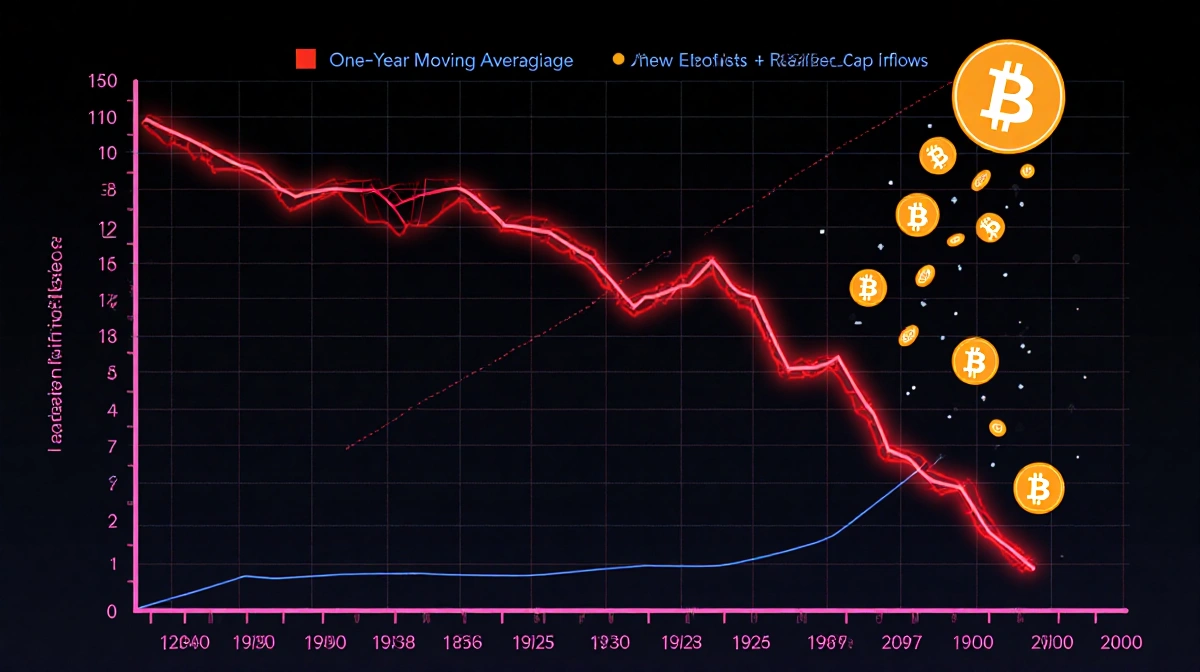
While the asset manager zooms out, Matrixport warns 2026 looks more tactical than cyclical. Matrixport notes declining volumes, weakening capital inflows, and a break below Bitcoin’s one-year moving average point to a selective, challenging environment. On-chain data show large holders distributing coins as new-address growth and realized-cap inflows stay muted.
Key Takeaways
- VanEck’s base case values each Bitcoin at $2.9 million by 2050
- Structural adoption-trade settlement plus central-bank reserves-drives the model
- Bear-case stall yields $130,000, while bull-case dominance reaches $53.4 million
- Near-term headwinds contrast with long-range optimism
Investors weighing the next trade must reconcile VanEck’s decades-long monetary thesis against today’s fragile market structure.