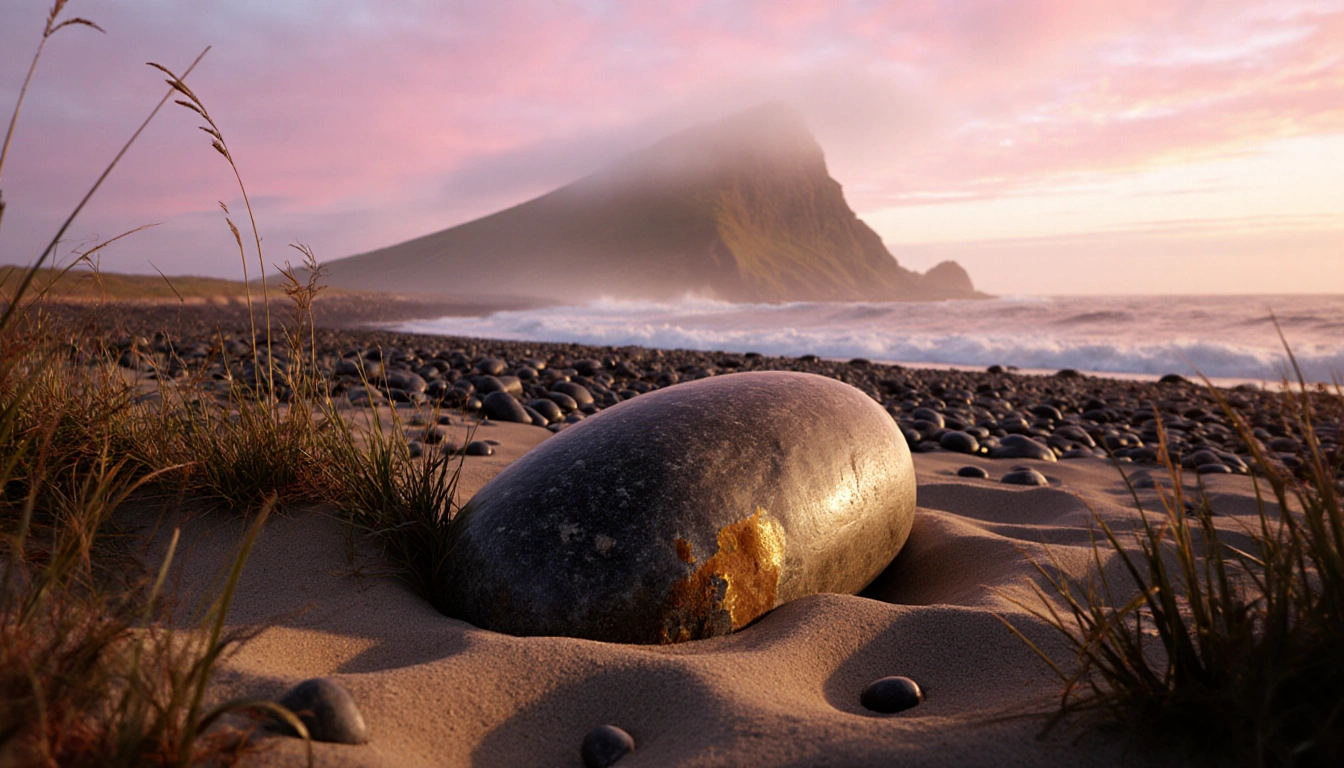
Ailsa Craig, a small uninhabited isle 10 miles off the coast of southwest Scotland, is the world’s only source of the super‑dense granite that powers Olympic curling stones. The island’s granite is prized for its “essentially unflawed nature,” a quality the Scottish Geology Trust notes makes it ideal for the sport’s demanding conditions.
Ailsa Craig: The Granite Source
Ailsa Craig rises 1,110 feet above sea level and spans a circumference of about 2 miles. Volcanic activity millions of years ago created a rock that is almost entirely microgranite. The granite’s tight surface pattern is the first thing Jim English, co‑owner of Kays Curling, looks for when he evaluates a boulder on the island. “It’s not just a case of landing a boat and then looking for granite. There’s a particular type of granite we’re looking for,” he says. “We look for ones that have got really tight surface pattern.”
The island’s common green granite forms the body of each stone, while the blue hone granite provides the waterproof running surface. “The blue hone granite is essentially waterproof, making it perfect for the running surface,” English notes. He adds that the blue hone can’t be found anywhere else in the world but Ailsa Craig.
“The granite itself has got elasticity properties in it,” says Ricky English, Kays operations manager and Jim’s son. “In a collision, energy is both absorbed and released, so the stone doesn’t split,” he explains.
Kays Curling: A Legacy of Olympic Stones
Kays Curling, founded in 1851 and based in Mauchline near Ayr, has produced every curling stone used in the Winter Olympics since curling returned as a medal sport in Nagano 1998. The company’s first Olympic stones were made for the 2006 Turin Games, the first time the company used complete Ailsa Craig granite. Prior to that, Kays had also used common green granite from a quarry in Wales.
The company’s history with the Olympics dates back to the first Winter Games in 1924 in Chamonix, France, when curling was long thought to be an exhibition event but was later confirmed as official. “We can argue that it’s probably won every gold, silver and bronze medal since the sport became a medal sport back in 1998,” says Jim English.
Kays holds the sole license to harvest granite from Ailsa Craig, which is owned by Lord David Thomas Kennedy, 9th Marquess of Ailsa.
From Quarry to Ice: The Stone‑Making Process
Harvesting the granite is a meticulous process. The common green “falls off naturally, so we just pick from the site,” Ricky English says. These boulders can weigh between 6 and 10 tons. The blue hone requires dislodging from the cliff face; engineers drill and insert a gas charge to break the rock along its natural cracks. Those boulders are under 2 tons, so higher quantities can mean fewer harvests.
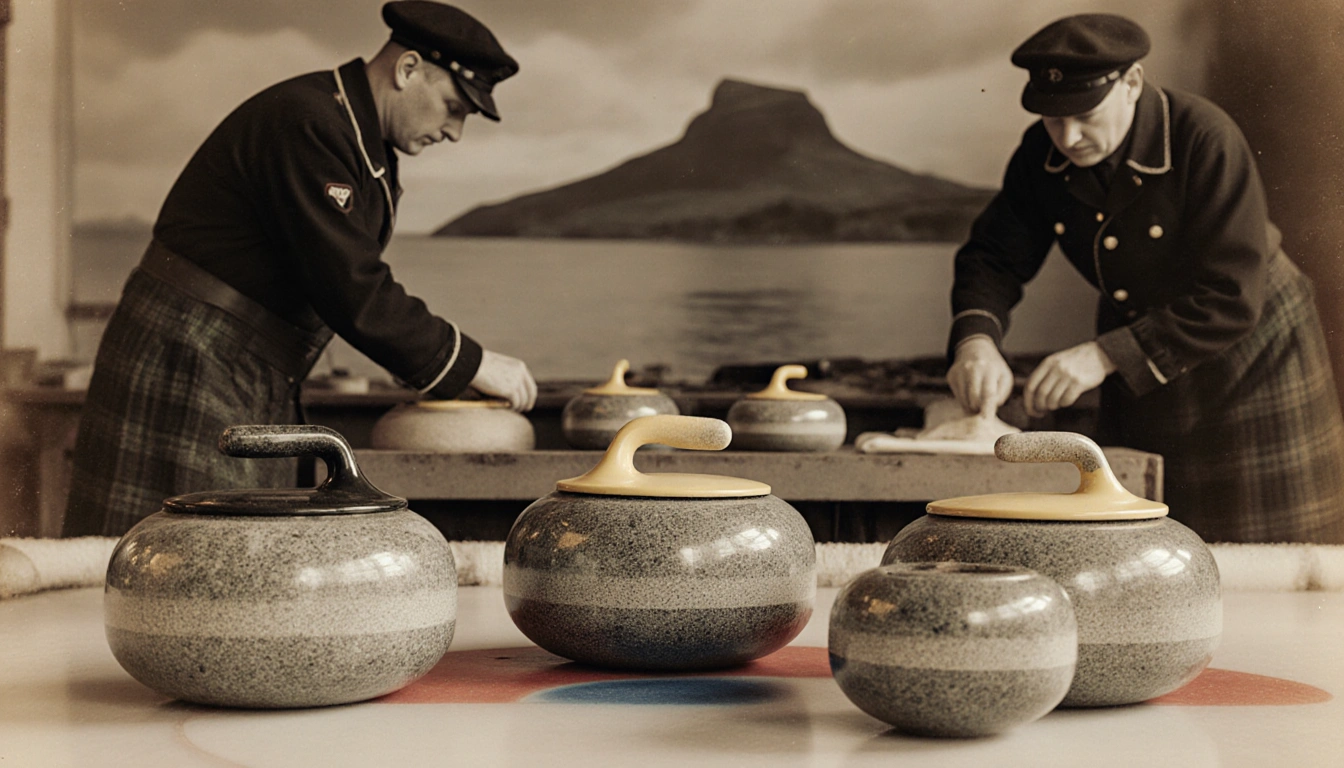
Boulders are lifted into containers and ferried back to Girvan Harbour. Galloway Granite slices the boulders and cuts round “cheeses” from them before sending them back to Kays. The common green granite forms most of the stone, including the striking band around the middle. A hole is drilled through the center of the stone, which weighs on average 42 lbs. The blue hone insert is glued in place, and the handle is attached. On a “double insert” — blue hone is attached to both sides, and the handle can screw in to either side.
The cost of a double insert is 750 pounds or $990, or 12,000 pounds or $15,860 for a set of 16. A single‑insert stone costs 704 pounds or $930.
Protecting the Island’s Wildlife
Steps are taken on Ailsa Craig to protect a large colony of gannets and some gray seals. Rat traps are set to be sure that boats from the mainland — the trip takes just over an hour — don’t reintroduce rodents to the island.
Growing Demand and the Future of Curling
Kays produces 1,800 to 2,000 stones per year. Canada is its biggest market, while China, Japan and South Korea are increasing their orders. “The market in Asia seems to be growing quite a bit,” Ricky English says. “The 2022 Olympics (in Beijing) has maybe just gave it that wee push over there.”
Scottish Curling traces the sport’s local roots back to 1540 in Paisley Abbey. Centuries later, curling is about to launch its first professional league after the Milan Cortina Winter Olympics. The Rock League will feature events in the United States, Canada and Europe.
Kays has also sent stones to less‑obvious curling spots like Qatar and Antarctica, where a travel company was using curling as part of a “luxury experience.”
Key Takeaways
- Ailsa Craig’s microgranite is the only source of the granite used in Olympic curling stones.
- Kays Curling, founded in 1851, has supplied every Olympic stone since 1998 and holds the exclusive harvesting license.
- The company’s production process involves natural boulder selection, gas‑charged dislodging of blue hone, and precise assembly, with costs ranging from 704 pounds to 12,000 pounds per set.
The story of Ailsa Craig and Kays Curling illustrates how a remote Scottish island and a century‑old company supply the world’s most coveted curling stones, while safeguarding wildlife and meeting growing global demand.