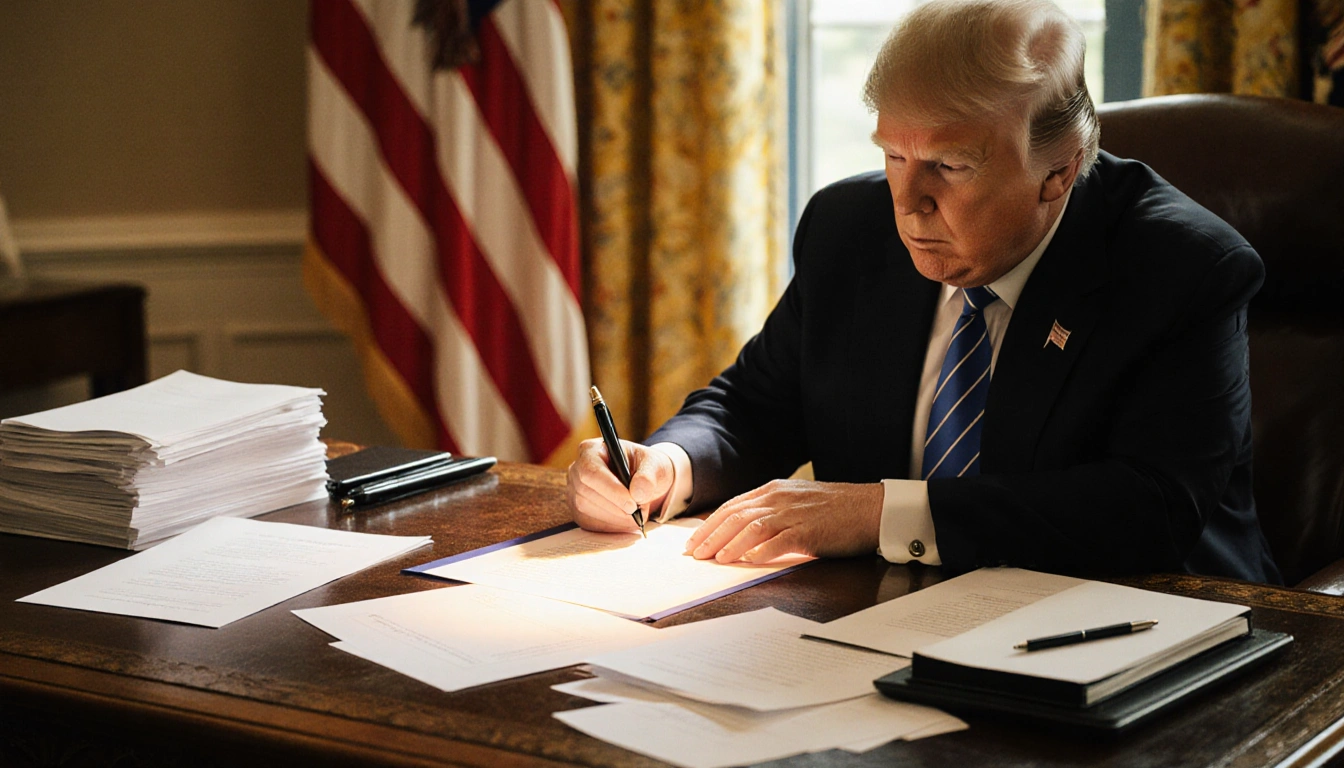
On Thursday, President Donald Trump signed an executive order that could shift marijuana from the most restrictive drug schedule to a less dangerous classification, marking a significant change in federal policy that mirrors actions taken by many states.
Executive Order and Reclassification
The order would move marijuana away from its current status as a Schedule I drug—alongside heroin and LSD—to a Schedule III substance, the same category that includes ketamine and certain anabolic steroids.
Reclassification would not legalize recreational use for adults nationwide, but it could alter how the drug is regulated and ease a heavy tax burden that the cannabis industry currently faces.
Trump said he had received a deluge of phone calls supporting the move and its potential to help patients. “We have people begging for me to do this. People that are in great pain,” he said.
Political Pushback and Support
The Justice Department, under Biden, had also proposed reclassifying marijuana to Schedule III. Unlike Biden, Trump did not have open encouragement from across his party for the change, and some Republicans voiced opposition.
A letter signed by more than 20 Republican senators—many of them Trump allies—urged the president to keep marijuana a Schedule I drug. Led by North Carolina Sen. Ted Budd, the group argued that marijuana continues to be dangerous and that a shift would undermine the president’s strong efforts to Make America Great Again.
The letter also claimed that only bad actors such as Communist China would benefit from rescheduling, while Americans would be left paying the bill. “The only winners from rescheduling will be bad actors such as Communist China, while Americans will be left paying the bill,” the letter said.
Implications for Research and Access
Reclassification typically requires a lengthy process, including a public comment period that has drawn tens of thousands of reactions from across the United States. The DEA was still reviewing the proposal when Trump took office in January, and the order is expected to speed the process, though the exact timeline remains unclear.
Many states have legalized recreational use for adults or allow it for medical purposes, but federal laws remain stricter, potentially leaving people subject to federal prosecution.
Gallup polling shows growing public support for a less restrictive approach: support for marijuana legalization has risen from 36 % in 2005 to 68 % last year.
The order also calls for expanded research and access to CBD, a legal hemp‑derived product whose benefits are debated by experts. A new Medicare program would allow older adults to access legal hemp‑derived CBD at no cost if recommended by a doctor, said Dr. Mehmet Oz, who heads the Centers for Medicare and Medicaid Services.
The letter’s authors also argued that marijuana negatively affects users’ physical and mental health, as well as road and workplace safety.
Broader Drug Policy Context
Trump has not previously committed to decriminalizing marijuana, though he had considered reclassifying it for much of his second term. He once said as a candidate that it should remain a state‑by‑state issue.
In his broader drug‑policy agenda, Trump has targeted other substances, especially fentanyl. He ordered U.S. military attacks on Venezuelan and other boats that the administration claims are ferrying drugs and signed another executive order declaring fentanyl a weapon of mass destruction.
Barrow reported from Atlanta, and Associated Press writer Seung Min Kim contributed to this report.
Key Takeaways
- Trump’s executive order reclassifies marijuana to Schedule III, potentially easing regulation and tax burdens.
- Over 20 Republican senators opposed the move, citing safety concerns and economic impacts.
- The order expands research and Medicare access to hemp‑derived CBD for older adults.
The executive order represents a pivotal shift in federal drug policy, balancing patient advocacy with partisan debate, and setting the stage for future regulatory and research developments.