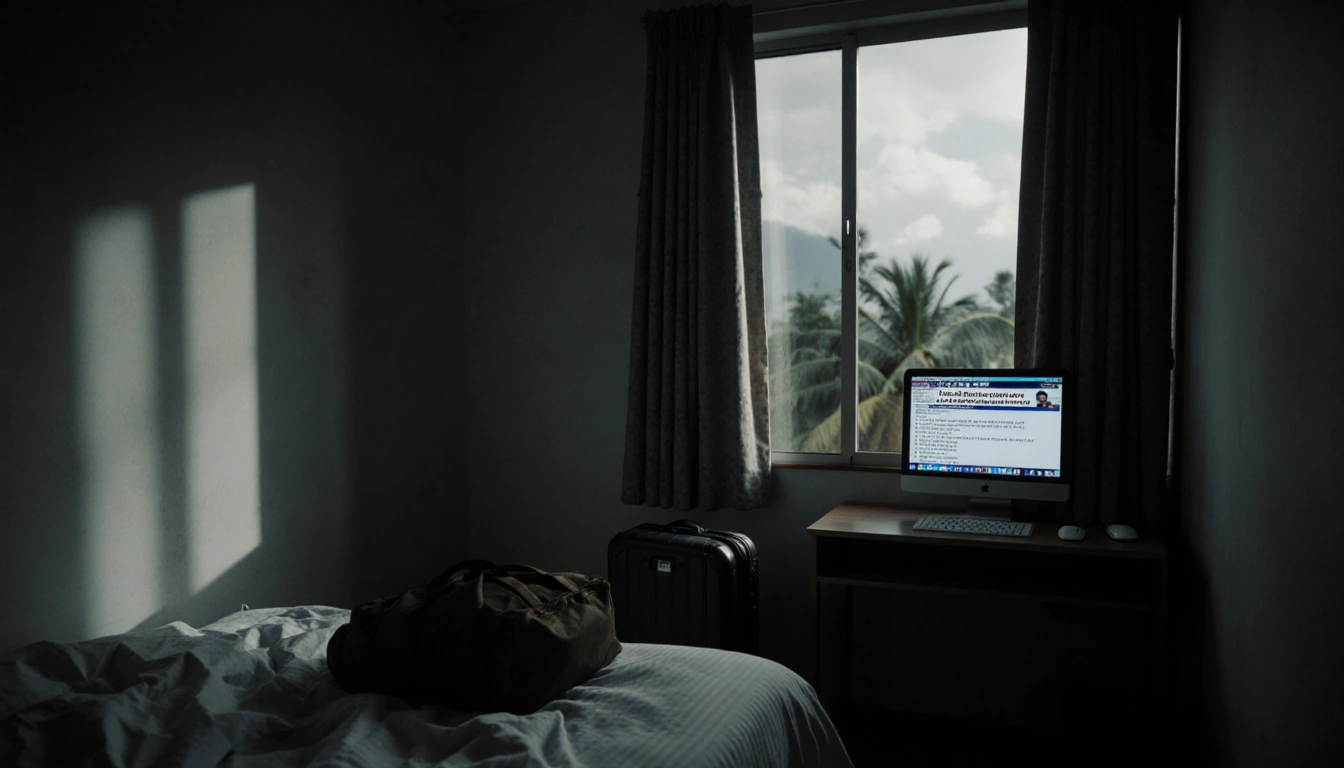
In a striking turn of events, a father and son checked into a low‑key budget hotel in Davao, Philippines, on Nov. 1 after flying from Australia. They remained in the hotel for nearly a month, largely confined to their room, before returning to Sydney where they are accused of killing 15 people at a beachside Hanukkah event.
The Davao Stay
Immigration officials confirmed that the suspects, 24‑year‑old Naveed Akram and his 50‑year‑old father Sajid Akram, traveled from Sydney to the Philippines on Nov. 1 and reported Davao as their final destination. Australian law enforcement identified the pair, noting that Sajid Akram was shot dead at the scene on Sunday and Naveed Akram was charged Wednesday with 59 offenses, including terrorism and 15 counts of murder, after waking from a coma.
The Philippine government insists the area has an outdated reputation for violent extremism and denies that the pair received any training there for the attack. The Islamic State militant group that inspired them praised the attack but did not officially claim it, referring to it in an official publication as “Sydney’s pride.”
Hotel Observations
The duo stayed at the GV Hotel, where a front‑desk staffer named Georgio told NBC News that they were “Normal guest here.” He added that the men would walk outside, buy food, and return to the hotel to sleep, describing them as “not suspicious.”
Local police visited the hotel on Wednesday and Thursday and asked for surveillance footage. Night‑desk manager Angelica Ytang, 20, reported that the men typically left their room for about an hour each day and kept to themselves. She said they “didn’t stay out long … the longest we observed was about one hour.” Ytang also noted that the pair never discussed the purpose of their stay and were “not approachable like other foreigners.”
Dashcam video from the incident shows a couple, who were killed in the attack, trying to stop one of the gunmen.
Australian and Philippine Authorities
New South Wales police said the pair’s travel had not triggered any security alerts. Australian counter‑terrorism officials confirmed they had investigated Naveed Akram for six months in 2019 over potential extremist associations.
Philippine officials state there is no evidence the pair received military‑style training during their November trip. National security adviser Eduardo Año said, “A mere visit does not support allegations of terrorist training and the duration of their stay would not have allowed for any meaningful or structured training.”
Officials in the Philippines have vehemently rejected suggestions that the country is a hot bed for terrorism, noting that remnants of extremist groups are “fragmented, deprived of leadership and operationally degraded,” and that “there have been no recorded terrorist training activities.”
Extremism in Mindanao

Mindanao, the southern island where Davao is located, has a history of Islamist insurgency. Although terrorism has declined massively in the predominantly Catholic country—especially after an anti‑terror law passed by then‑President Rodrigo Duterte in 2020—dozens of fighters supporting ISIS ideology remain fragmented around Mindanao.
Greg Barton, chair of global Islamic politics at Deakin University, warned, “Just because the insurgency has gone away doesn’t mean that these hundreds of Islamic State true believers have gone away.”
Rommel Banlaoi, chairman of the Philippine Institute for Peace, Violence and Terrorism Research, explained that “The Philippines became the main training hub of Southeast Asian fighters during the Al Qaeda days, and became the epicenter of East Asia Wilaya during the ISIS days.”
A 2014 peace deal granted broader Muslim autonomy and brought many rebel leaders into the country’s efforts against ISIS, but some groups splintered off, including the ISIS‑affiliated Abu Sayyaf, blacklisted by the U.S. for mass kidnappings, executions and deadly bombings.
In 2017, these groups captured Marawi, the country’s biggest Muslim‑majority city, but many fighters were killed in the month‑long siege and have been further weakened since.
Rohan Gunaratna, professor of security studies at Nanyang Technology University, noted that Davao has served as “one of the main points of entry” to areas where militants are still present. He added that remaining militants, perhaps only a few dozen, were still active in the southernmost part of the island, about three hours drive from Davao, and that “Their strength is very, very low.”
Australian authorities say the father and son acted alone, but the discovery of two ISIS flags in Naveed Akram’s car showed they “clearly wanted to be seen in acting in the name” of ISIS, Barton said. Even without training in the Philippines, the pair could have met “people they would respect as Islamic State militant group leaders.”
Key Takeaways
- Father and son stayed in Davao hotel for nearly a month before the Sydney massacre.
- Philippine officials deny any training occurred during the stay and reject the area’s extremist reputation.
- Extremist groups in Mindanao remain fragmented and operationally degraded.
The investigation now focuses on the suspects’ activities in Davao, the purpose of their extended stay, and any connections they may have made with local extremist actors.