At a Glance
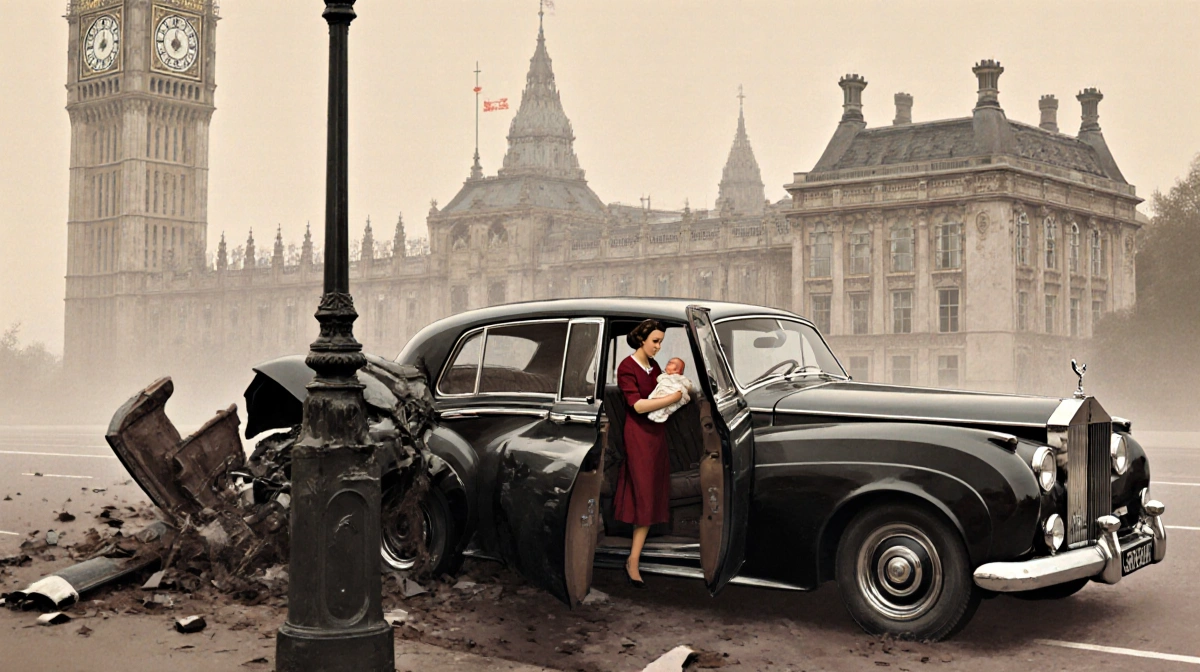
- A 1926 car crash almost caused Queen Elizabeth II’s mother to miscarry the future monarch
- The Duchess of York was uninjured but the incident shook Buckingham Palace
- Queen Elizabeth II was born via C-section on April 21, 1926
- Why it matters: A single crash could have rewritten British royal history
A century-old car accident nearly changed the entire course of British royal history when the Queen Mother, then the Duchess of York, was pregnant with the future Queen Elizabeth II. The incident, which occurred in 1926, was kept quiet by Buckingham Palace but revealed the fragile line of succession that would eventually shape the modern monarchy.
The Crash That Nearly Altered History
On January 28, 1926, the 25-year-old Duchess of York was traveling near St. John’s Wood, a northern suburb of London, when another motorist cut between her car and oncoming traffic. Her chauffeur applied the brakes, causing the vehicle to skid and collide with a motor bus. The impact threw the Duchess to the floor of the car.
The New York Times reported that she was “slightly shaken but otherwise uninjured.” However, what wasn’t publicly known at the time was that the Duchess was expecting a baby who would become one of Britain’s most consequential monarchs.
British politician Chips Channon later revealed the gravity of the situation after learning details from Buckingham Palace, stating: “She very nearly had a miscarriage!” The palace reportedly “did its best to play down the smash,” but the experience deeply affected the Duchess.
The Birth That Changed Everything
Despite the frightening ordeal, the Duchess of York successfully carried her pregnancy to term. On April 21, 1926, she gave birth via C-section to her daughter at her parents’ home in London. She and her husband, the future King George VI, named their daughter Princess Elizabeth Alexandra Mary.
The child’s birth seemed unremarkable at the time, as she was born third in line to the throne. However, circumstances would soon elevate her position in ways no one could have predicted during that anxious period following the car accident.
How the Abdication Crisis Transformed the Line of Succession
The family’s destiny shifted dramatically in December 1936 when the Duke of York’s older brother, King Edward VIII, abdicated the throne to marry Wallis Simpson, a twice-divorced American socialite. This unprecedented decision forced the Duke of York, born Prince Albert, to ascend the throne as King George VI.
With his ascension, his wife became Queen Elizabeth, later known as the Queen Mother to distinguish her from their daughter. Their two young daughters, Princess Elizabeth and Princess Margaret, suddenly found themselves in the direct line of succession.
Princess Elizabeth, then just 10 years old, became the heir apparent to the British throne, a position she would hold for 16 years until her father’s sudden death in 1952.
The Reign That Almost Never Happened
Had the car accident in 1926 resulted in a miscarriage as feared, the entire trajectory of the British monarchy would have been different. Princess Margaret would have become next in line after her father, potentially leading to a completely different monarch ascending the throne in 1952.
Instead, Princess Elizabeth became Queen at age 25 and went on to reign for a record 70 years before her death in September 2022 at age 96. Her reign saw the transformation of the British Empire into the Commonwealth, significant social changes, and the modernization of the monarchy itself.
The Palace’s Handling of the Crisis
The decision to keep the Duchess’s pregnancy and the severity of the accident quiet demonstrated the monarchy’s careful management of information even a century ago. The palace’s efforts to minimize the incident’s significance, while understandable given the times, also highlight how different royal news management was compared to today’s more transparent approach.
The fact that details emerged through political figures like Chips Channon rather than official palace statements shows the informal networks through which royal information traveled during that era.
Historical Impact of a Single Moment
This near-miss serves as a reminder of how fragile royal succession can be and how a single moment-a car skidding on a London street-could have altered the course of British history. The Queen Mother’s survival of both the accident and the subsequent anxiety allowed for the birth of Britain’s longest-reigning monarch.
The incident also underscores the personal tragedies and close calls that royal families have historically faced away from public view, only to be revealed decades later when the immediate stakes have passed.
Key Takeaways
- A 1926 car accident nearly caused Queen Elizabeth II’s mother to miscarry, which would have prevented the future monarch’s birth
- The Duchess of York was uninjured but the incident was kept secret by Buckingham Palace
- Queen Elizabeth II was born via C-section on April 21, 1926, and reigned for 70 years
- The near-miscarriage would have made Princess Margaret the heir, completely changing royal history