
At a Glance
- Maury Povich discovered he was wrong when a white woman’s accused Black partner fathered an extremely pale baby
- The 86-year-old never saw results before opening the envelope on air to keep reactions authentic
- Povich hosted his eponymous talk show from 1991 to 2022, filming thousands of paternity segments
- Why it matters: The admission shows how unpredictable live TV moments created the show’s lasting cultural impact.
Maury Povich’s signature phrase “You are not the father” became daytime-TV shorthand for drama, but the host says he stopped trying to predict outcomes after one result blindsided him.
Appearing on the January 12 episode of The View to promote the ABC News docuseries Dirty Talk: When Daytime Talk Shows Ruled TV, Povich explained why he refused to preview paternity results before taping.
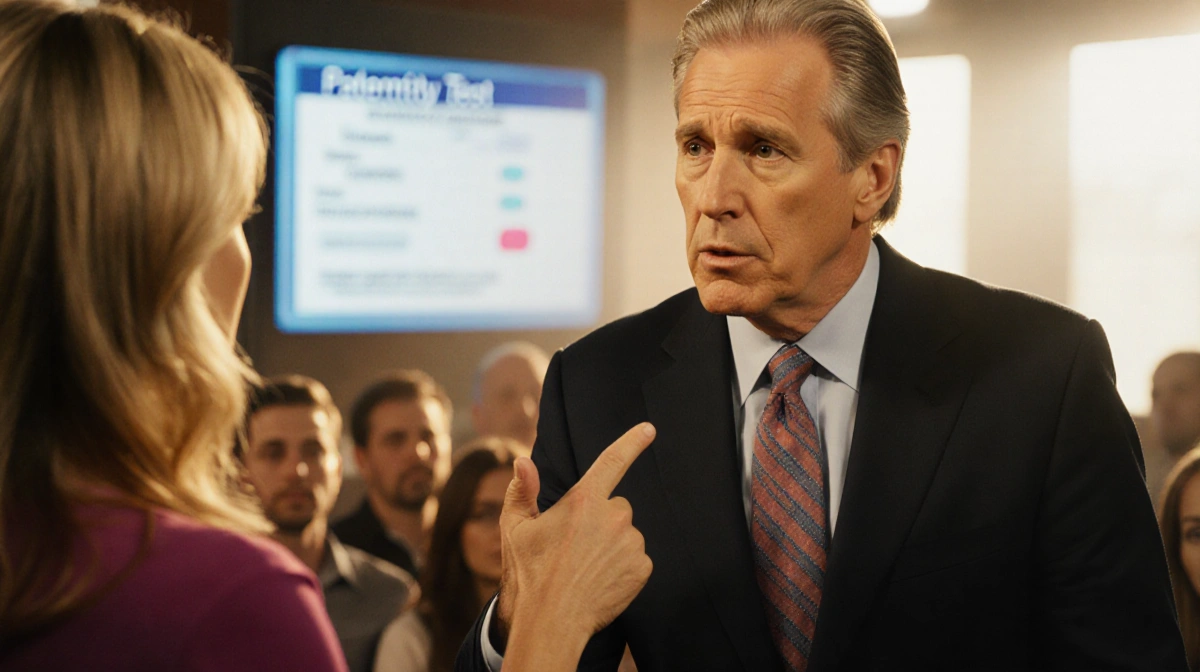
“I didn’t want to know anything more than the guest or the audience because I would skew the questions,” he told the panel. The choice let him share the same gasp-worthy reactions that kept viewers tuning in for three decades.
The Case That Ended His Guessing Game
Co-host Ana Navarro asked how often Povich sized up a baby’s photo and correctly identified the dad.
“I gave up trying to figure it out when I saw this woman come on,” he recalled. “She was white and the guy she was accusing of being the father was Black. And that baby picture came on, and that was a dead white baby.”
Whoopi Goldberg interjected, “The baby wasn’t dead,” prompting laughter.
“It was as white as it could be,” Povich continued. “And of course, the Black guy ends up being the father!” From that moment, he abandoned on-the-spot predictions, though studio audiences never stopped playing along at home.
Why Guests Chose to Air Private Pain on National Television
Co-host Sarah Haines pressed Povich on what motivated people to reveal intimate details before millions of viewers.
“I think I provided a safe space,” he answered. “You’re a talk show host. You have to knock on people’s doors. You have to be invited in. You have to be a member of their family in order to be accepted and to be able to make a connection.”
Without that bond, he argued, shows quickly disappeared. The programs that survived the brutal daytime ratings war became, in his view, early prototypes for today’s reality television landscape.
A Competitive Era Pushing Boundaries
Povich reminded the hosts that his program debuted in a crowded field.
“In the beginning of the late 80s through the 2000s, there were 20 of us on air every day, and another 50 shows were in the graveyard that didn’t work,” he said. “We were all pushing the envelope.” If a rival pulled ahead in Nielsen numbers, producers scrambled for “something racier” to reclaim eyeballs.
The tactic worked: Maury ran for 31 seasons, wrapping in 2022 and cementing Povich’s place in pop-culture history.
Verifying Stories in a Pre-Social-Media Age
Skepticism about talk-show authenticity trailed the genre, but Povich drew a hard line between his program and contemporaries like The Jerry Springer Show.
“This is not Springer,” he told News Of Losangeles in 2017. “Jerry and I have known each other a long time and I love his honesty: He says his show is wrestling. My show is not wrestling.”
He staffed seven production teams that investigated guests’ claims before taping.
“We look at these stories, they check them out back in their hometowns, they talk to their friends, they talk to their family members. This is real stuff.”
He believed participants wanted to “unburden” themselves, hoping public disclosure might offer a fresh start once cameras stopped rolling.
Legacy Cemented With Lifetime Achievement Honor
In 2023 the Daytime Emmys recognized Povich’s 37-year television career with the Lifetime Achievement Award, highlighting a resume that began long before paternity tests became daily fodder.
Dirty Talk: When Daytime Talk Shows Ruled TV premieres Wednesday, January 14 at 9 p.m. on ABC and streams the next day on Disney+ and Hulu.
Key Takeaways
- Povich’s refusal to preview results preserved genuine surprise for viewers and guests alike
- A single unpredictable outcome convinced him to abandon guessing games about parentage
- The host credits his show’s longevity to thorough fact checking and emotional connection with participants
- He views 1990s daytime talk as a direct ancestor to modern reality television formats