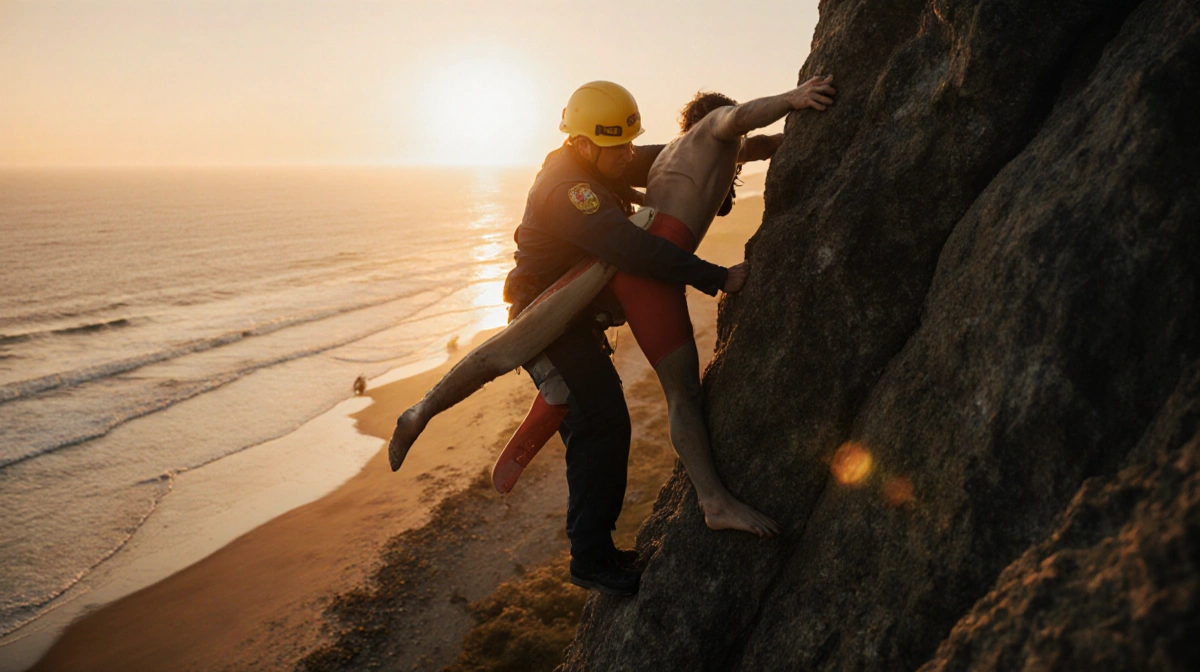
At a Glance

- A 68-year-old surfer vanished after hitting waves at Surfer’s Beach in Aguadilla on January 8
- The Coast Guard located him stranded on rocks 30+ hours later and winched him to safety
- Nighttime hoist operation succeeded despite low visibility and jagged reefs
- Why it matters: Dramatic footage shows how quickly routine ocean outings can turn life-threatening and how rescuers adapt when terrain blocks boats or foot access
A surfing trip in Puerto Rico turned into a 30-hour ordeal for a 68-year-old visitor after he failed to return from the water, prompting a multi-agency search that ended with a daring helicopter rescue caught on camera.
Last Seen at Surfer’s Beach
The man, in Puerto Rico for a short-term rental stay, paddled out at Surfer’s Beach in Aguadilla around noon on Thursday, January 8. When he did not come back to his Airbnb that evening, concern grew. By Friday morning, January 9, relatives realized he had been out of contact for more than a full day and alerted authorities.
Officials from Coast Guard Sector San Juan spoke with the surfer’s daughter, who confirmed his intended surf spot and the timeline. The agency immediately launched an inter-agency effort, dispatching an MH-60 Jayhawk helicopter from Coast Guard Air Station Borinquen to sweep shoreline and offshore areas north of the beach.
Spotted on Rocks, Out of Reach
During a low-level shoreline pass, the aircrew noticed a figure stranded on rocks just outside Surfer’s Beach. The man stood next to a surfboard and waved at the aircraft, matching the description circulated by rescuers.
The location presented a problem:
- Jagged rocks and breaking surf made boat access impossible
- No footpath reached the narrow rock shelf
- Reefs and surge ruled out swimming to safety
Night had fallen, adding low visibility to the list of hazards.
Nighttime Hoist Under Difficult Conditions
Video released by the Coast Guard shows the man gripping what appear to be walking sticks as he steadies himself on the uneven surface. A rescue swimmer deploys from the Jayhawk, guides him into a Stokes litter, and the helicopter lifts both directly into the cabin.
“The aircrew conducted a flawless hoist operation and safely recovered the individual aboard the aircraft despite difficult nighttime conditions and low visibility,” the agency stated.
The survivor, conscious and alert, was flown to awaiting emergency medical personnel; no update on his condition was provided.
Praise for Multi-Agency Response
Capt. Robert Stiles, deputy sector commander of Coast Guard Sector San Juan, coordinated the effort. In a press statement he credited the speed of activation once the 24-hour mark had passed.
“We activated the inter-agency search and rescue effort as soon as we received the information, especially after realizing that it had been more than 24 hours,” Stiles said. “It was truly a team effort and I appreciate the responsiveness and professionalism of Coast Guard Air Station Borinquen, the Sector San Juan Command Center and our local emergency responders.”
Stiles urged anyone entering local waters to file a float plan, wear life-saving gear, and tell someone exactly where they are going and when they plan to return.
The footage, shared widely by News Of Losangeles, underscores both the rapid shift from calm outing to survival situation and the specialized tactics required when terrain blocks conventional rescue craft.
Key Takeaways
- A simple surf session can turn dangerous without warning; time matters when someone is overdue
- Helicopter hoist operations allow rescues from spots unreachable by boat or foot
- Multiple agencies coordinated within hours once the missing-person window passed the 24-hour mark
- Officials emphasize pre-planning: share location details, expected return time, and safety equipment list with a friend or relative before entering the water