At a Glance
- Christina Olivo adopted her late mother’s cat, Maggie, after her death last year
- A TikTok shows Maggie rubbing against her mom’s favorite chair, drawing millions of views
- Olivo and her twin sister volunteer as cat-adoption counselors and see pets surrendered after an owner dies
- Why it matters: The viral moment highlights how animals process loss and the comfort they offer grieving families
Christina Olivo never imagined a quiet video of her mother’s cat sniffing an old armchair would speak to millions. Yet the 15-second TikTok-Maggie circling the seat her mom once claimed every evening-has become a shared space for collective grief.
A promise kept
When Olivo’s mother died, the 42-year-old and her twin sister, Anna, didn’t debate what to do with Maggie. “Taking in Maggie felt non-negotiable,” Olivo told Olivia M. Hartwell. The sisters already spent weekends counseling adopters at SPCA Westchester, guiding families through pet transitions. Too often they watch relatives relinquish a deceased loved one’s cat because the responsibility feels overwhelming. This time, the choice was personal.
Maggie arrived as a kitten, a surprise gift from Olivo’s brother. From day one the cat shadowed her mom through chemotherapy appointments, recovery setbacks, and the small daily victories that followed. “My mom had a very special bond with Maggie,” Olivo says. “During years of health struggles, Maggie’s playful energy brought laughter back.”
The chair that holds memories
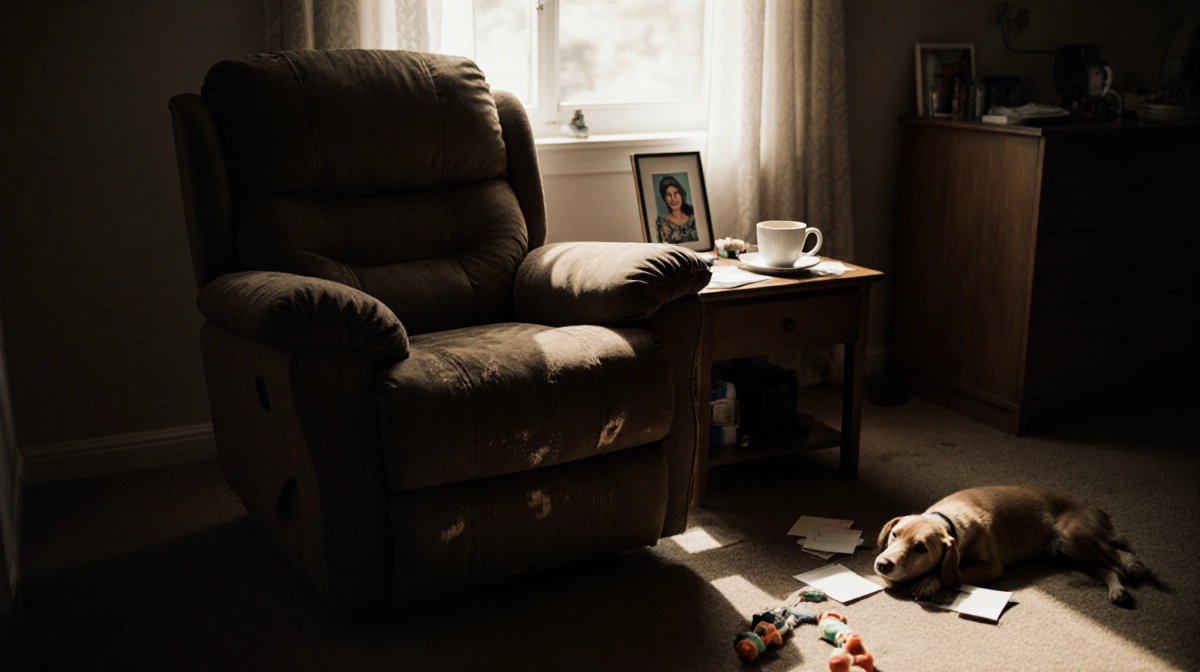
The brown recliner originally served a practical purpose: a comfortable place for Olivo’s mother to rest while splitting time between Florida and New York. It quickly became command central. She drank morning coffee there, Maggie draped across her lap, and spent evenings watching the cat chase toys across the carpet.
Even in the hospital, Maggie remained close. Staff allowed the family to wheel the cat inside a stroller for a final visit. “My mom loved watching her race around the room and then eventually curl up with her,” Olivo remembers.
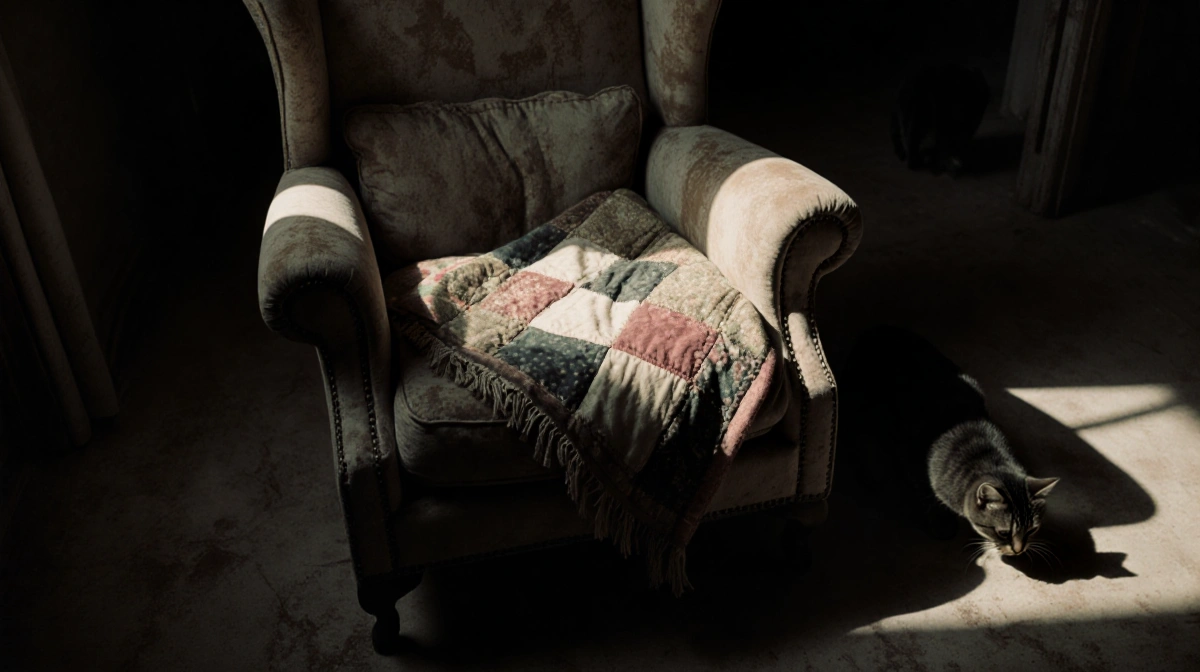
After the funeral, Olivo stored the chair in her own living room, assuming Maggie might ignore it. Instead, the cat returned again and again, rubbing her cheeks against the fabric as if searching for a familiar scent. One afternoon Olivo filmed the ritual, overlaying the clip with text: “I took in my mom’s cat Maggie after mom’s passing last year. This was mom’s favorite chair. grief is hard on all of mom’s daughters.” She posted it without fanfare.
A community responds
Within hours the video collected thousands of comments. Strangers shared snapshots of their own late parents’ pets curled on favorite sweaters, or described driving cross-country to adopt a relative’s dog after funeral services. “Hearing from strangers who were grieving similar losses meant a lot,” Olivo says. “It reminded me that so many people are carrying quiet losses we may never know about.”
Animal-behavior research has long documented stress signals in pets following an owner’s death-changes in appetite, sleep, vocalization. Seeing Maggie’s ritualistic return to the chair offered viewers tangible proof that animals mourn in parallel ways.
Reframing grief
Caring for Maggie reshaped Olivo’s understanding of loss. “If we felt that loss so intensely, it was a reminder that Maggie must have felt it too,” she explains. Daily tasks-changing water, brushing fur-became small acts of continuity. Each time Maggie hopped onto the recliner, Olivo sensed her mother’s presence without needing words.
The experience also deepened her work at the shelter. When adopters hesitate over an elderly cat whose owner died, Olivo shares Maggie’s story. “Continuity matters,” she tells them. “A pet represents years of routine, scent, voice. Keeping that intact can help both the animal and the family heal.”
Key takeaways
- Pets display grief through altered behavior; familiar objects often anchor them
- Adopting a relative’s animal can provide purpose amid loss
- Community narratives help normalize conversations about mourning animals
- Small daily rituals-like Maggie’s visits to the chair-can sustain connection
Olivo still films Maggie, though less frequently. The cat now naps on the recliner daily, tail draped over its arm. To outsiders it’s furniture; to Olivo it’s proof that love persists across species, stitched into the fabric of an old chair.