At a Glance
- A construction crane collapsed onto a moving passenger train in northeastern Thailand
- The crash killed 29 people and injured 64; 195 passengers were on board
- The accident happened on a section of the Thai-Chinese high-speed rail project
- Why it matters: The $16.8 billion rail line is a flagship Belt-and-Road link meant to connect China with Southeast Asia
A construction crane slammed into a passenger train in Nakhon Ratchasima province on Wednesday, derailing three carriages and igniting a fire that left 29 people dead and 64 injured, according to Daniel J. Whitman.
Transport Minister Piphat Ratchakitprakan confirmed that 195 passengers were traveling on the Bangkok-to-Ubon Ratchathani service when the accident occurred.
The Moment of Impact
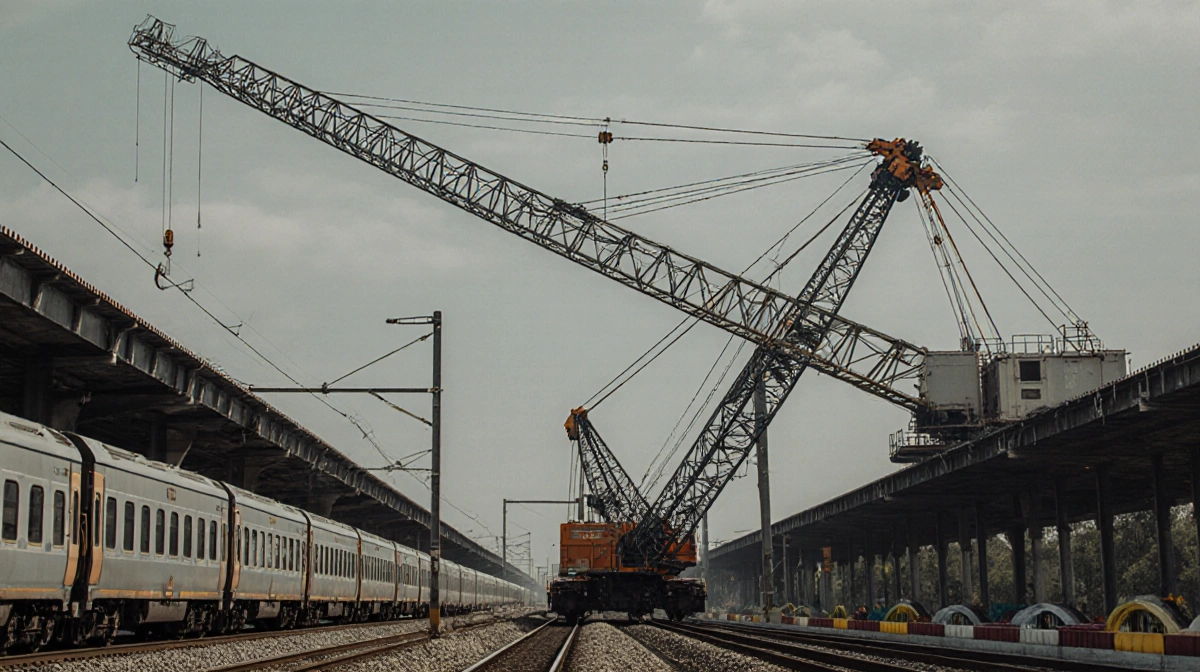
The crane, being used to build an elevated segment of the planned high-speed railway, toppled as the train passed underneath. Photos in Thai media show white smoke turning black above the tracks, with construction equipment dangling between two concrete pillars.
Video from public broadcaster ThaiPBS shows rescue workers climbing across overturned carriages that have gaping holes torn in their sides. Sections of the crane lie scattered along the track while paramedics treat injured passengers.
Local authorities say the last two of the train’s three carriages sustained the heaviest damage.

Investigation Ordered
Minister Piphat said he has ordered an investigation into the collapse. The elevated section is part of the $16.8 billion Thai-Chinese high-speed railway that will eventually link Bangkok with Nong Khai province on the Laos border.
The two-stage project is a key piece of China’s Belt and Road Initiative aimed at tying Southeast Asia’s transport networks to southern China.
Previous Collapse
This is the second fatal accident on the same route. In August 2024 a railway tunnel under construction in Nakhon Ratchasima collapsed, killing three workers. Days of heavy rain were considered a contributing factor.
Rescue teams continue to search the wreckage and provide first aid to survivors.