At a Glance
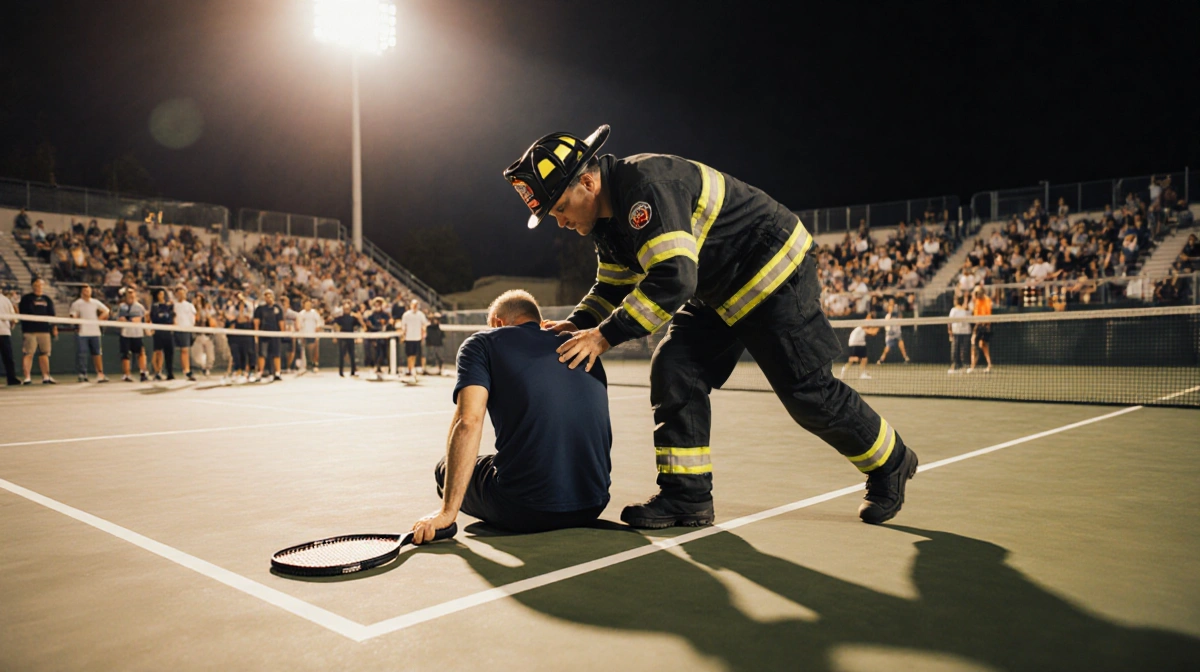
- San Juan Hills High football coach Rob Frith collapsed from cardiac arrest while playing pickleball on Dec. 19
- Off-duty firefighter John Rowlands performed 15 minutes of chest compressions until paramedics arrived
- Frith survived and reunited with rescuers on Jan. 12 to thank them
- Why it matters: Quick bystander CPR and AED use turned a usually fatal event into a miraculous recovery
A high school football coach is alive today because an off-duty firefighter happened to be playing pickleball on the next court when disaster struck.
The Collapse
Rob Frith, head football coach at San Juan Hills High School, was enjoying a routine pickleball game at a San Clemente park on December 19 when his heart suddenly stopped.
“One minute you’re there and enjoying time with friends,” Frith told KCBS. “It hit me so fast I dropped on the back of my head.”
The 47-year-old coach had no warning signs. He was healthy, active, and had no previous heart issues. Within seconds, he was unconscious on the court.
The Rescue
John Rowlands, an off-duty firefighter from Orange County Fire Authority, was playing on a nearby court when he saw Frith collapse. Without hesitation, he rushed over and began chest compressions.
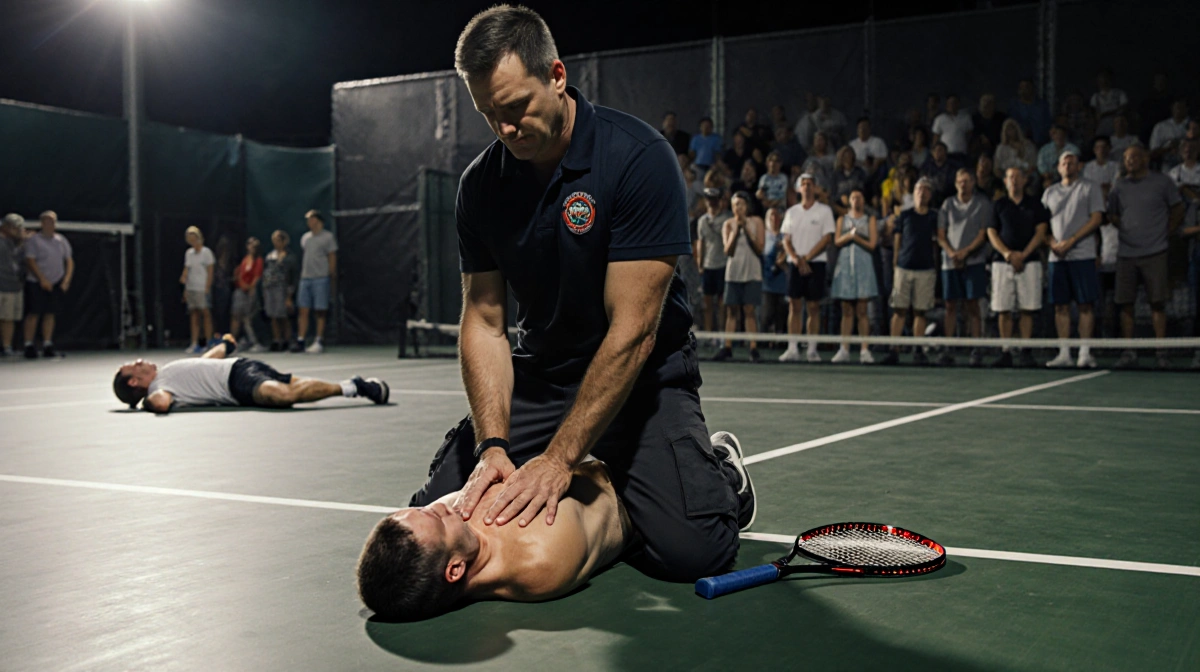
Rowlands performed CPR for approximately 15 minutes – a grueling physical effort that required him to push hard and fast on Frith’s chest to keep blood flowing to his brain and organs.
When Orange County Sheriff’s Department deputies arrived, they used an automated external defibrillator (AED) to shock Frith’s heart. Paramedics then took over advanced life support measures.
“Because of the rapid, coordinated response, Rob was awake and talking in the ambulance as he was transported from the scene,” the Orange County Fire Authority stated. “An outcome that is rare in cardiac arrest cases.”
The Recovery
Frith’s first memories after the incident came in the ambulance. He saw two paramedics looking down at him.
“I think I looked at them and just kind of said, ‘Well, if I’m looking at you two guys right now, something bad must’ve happened to me,'” Frith recalled to KTLA.
The paramedic’s response gave him chills: “No, you’re looking at us right now, so I think something good happened to you. That was Johnny saving your life.”
At the hospital, doctors diagnosed Frith with sudden cardiac arrest. Tests revealed he had a previously undetected heart defect – a condition that had likely been present since birth but never caused symptoms.
The Reunion
On January 12, Frith and his family visited Fire Station 59 to personally thank Rowlands and the other first responders who saved his life.
The emotional meeting brought tears as Tara Frith, Rob’s wife, expressed her gratitude.
“This means everything,” she told Rowlands, according to KCBS. “You are our forever hero, along with the other men that were there with you that day. I cannot thank you enough.”
The couple’s three children were also present, able to thank the man who kept their family intact.
The Hero’s Perspective
For Rowlands, the rescue wasn’t about heroism – it was about being prepared and being in the right place at the right time.
“It felt good,” he told KCBS. “It was really cool to know that we had the right people there at the right time to keep a family together.”
The off-duty firefighter emphasized that anyone can learn CPR. The American Heart Association reports that immediate CPR can double or triple chances of survival after cardiac arrest.
Key Takeaways
- Cardiac arrest is different from a heart attack – it’s an electrical malfunction that causes the heart to stop beating
- CPR within the first few minutes can keep blood flowing to the brain and organs until professional help arrives
- AEDs in public places save lives – the device used on Frith delivered a life-saving shock to restart his heart
- Bystander intervention is crucial – Rowlands didn’t wait for paramedics to start CPR
Frith has since returned to coaching, bringing a new perspective to his role mentoring young athletes. He’s become an advocate for CPR training and AED accessibility in schools and recreational facilities.
The coach’s survival story serves as a powerful reminder that cardiac emergencies can happen to anyone, anywhere, at any time. But with quick action and proper training, tragedy can be averted.
News Of Losangeles reached out to Orange County Fire Authority and the Frith family for additional comment but did not receive an immediate response.