The U.S. Department of Justice is challenging California’s new laws that ban federal agents from wearing masks and require them to identify themselves during enforcement operations.
At a Glance
- DOJ attorneys will argue before a federal judge on Wednesday to block California’s mask ban
- The laws prohibit federal immigration agents from hiding their identities during operations
- The laws took effect January 1, making California the first state with such requirements
- Why it matters: The case could determine whether states can regulate how federal law enforcement operates within their borders
The Justice Department filed suit in September against California, Governor Gavin Newsom, and state Attorney General Rob Bonta, claiming the laws unconstitutionally interfere with federal law enforcement operations.
Federal Pushback Against State Restrictions
The contested legislation emerged following Trump administration immigration raids in California during summer 2024. During these operations, masked, unidentified federal officers detained people as part of the president’s mass deportation program.
U.S. Attorney General Pamela Bondi called the laws unconstitutional and dangerous for federal officers. She argued that law enforcement officers deserve protection from harassment and doxing while performing their duties.
The lawsuit specifically targets two pieces of legislation:
- The No Secret Police Act
- The No Vigilantes Act
These laws require non-uniformed federal law enforcement officers to visibly display identification information, including their agency, name, or badge number during enforcement activities.
Constitutional Conflict
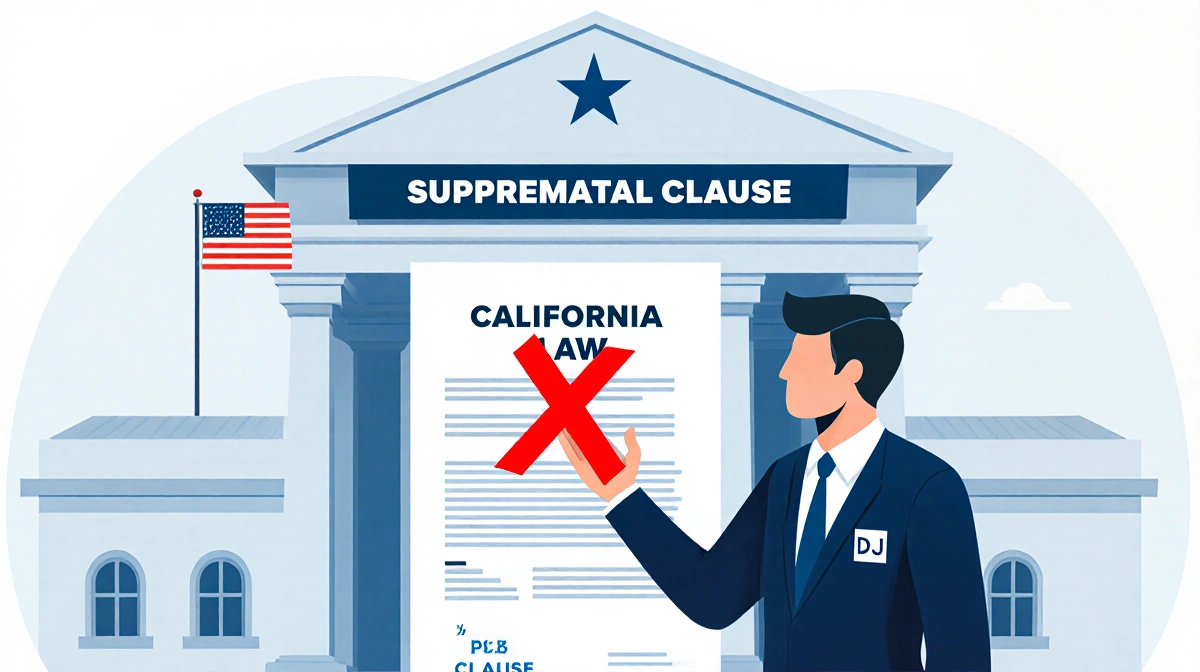
The DOJ’s complaint centers on the Constitution’s Supremacy Clause, which prevents states from controlling federal government operations. The federal government maintains that California’s laws violate this constitutional principle.
Senior U.S. District Judge Christina A. Snyder, a President Bill Clinton nominee, will hear arguments on the DOJ’s motion for a preliminary injunction. This motion seeks to pause enforcement of the new laws while the case proceeds.
The federal government has explicitly stated it does not intend to comply with the challenged laws.
Safety Concerns for Federal Agents
First Assistant U.S. Attorney Bill Essayli of the Central District of California highlighted safety concerns when announcing the lawsuit. He claimed assaults against federal agents have increased significantly, partly due to political rhetoric that delegitimizes federal law enforcement.
Essayli characterized California’s laws as “unconstitutional” and “irresponsible,” arguing they further endanger federal agents who protect communities.
The DOJ contends that the identification requirements and mask ban threaten officer safety by making agents vulnerable to harassment, doxing, and violence during enforcement operations.
State vs. Federal Authority
This legal battle represents a broader conflict over state versus federal authority in immigration enforcement. California’s legislature passed these laws to increase transparency and accountability in federal immigration operations within state borders.
The case raises fundamental questions about the extent to which states can regulate federal law enforcement activities within their jurisdictions. The outcome could set precedents affecting how federal agents operate nationwide.
The lawsuit, filed in Los Angeles federal court, seeks to permanently block enforcement of both the mask ban and identification requirements. The preliminary injunction hearing scheduled for Wednesday represents the first major legal test of these controversial laws.