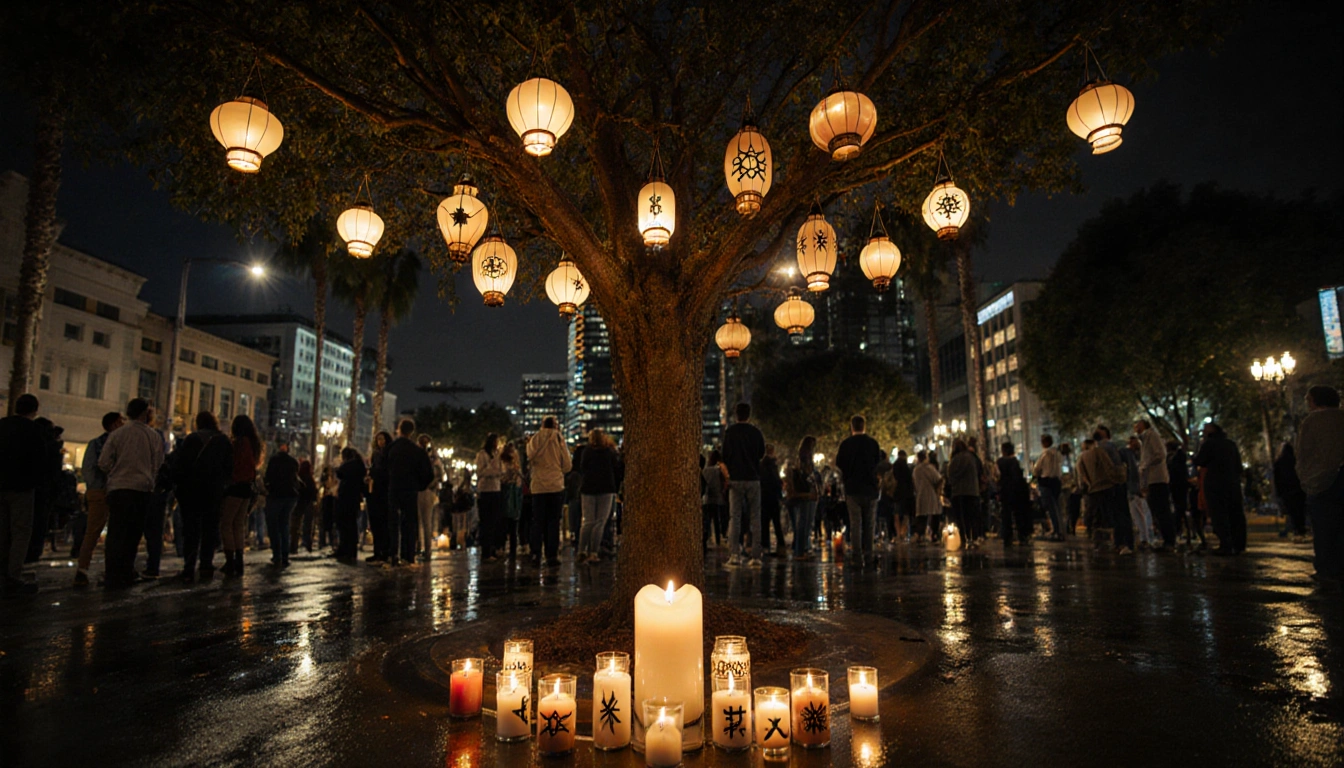
In a solemn gathering on Sunday night, the Los Angeles community united in prayer to honor the thousands of homeless people who lost their lives in 2025.
A Memorial of Light and Sound
Hymns and prayers filled the Cathedral of Our Lady of the Angels, echoing through the nave as congregants remembered the lives that many feared had been forgotten. The cathedral’s stained-glass windows glowed softly, reflecting the flames of 1,564 candles that were lit in the memorial. Each candle represented a life lost while unhoused in Los Angeles and Ventura counties this year, turning the space into a living memorial of sorrow and solidarity.
Voices of Faith and Reflection
Rabbi Susan Nanus addressed the assembly, saying that the deaths “say less about those who lost their lives on the streets, and more about those who watched it happen without fighting harder to prevent it.” She added, “We are commanded to act, to alleviate suffering, to lift up the fallen and extend our hand.” Her words resonated with the crowd, underscoring the moral responsibility that transcends religious boundaries.
The interreligious nature of the event was evident as leaders from various faith traditions spoke. Theology teacher Yvonne Huitron remarked, “Even if they died alone, they are not alone because we’re here and we pray and we think of them.” Her statement highlighted the shared sense of duty that unites the community.
Father Alexei Smith, interreligious officer for the Archdiocese of Los Angeles, emphasized that caring for the homeless is not a single religion’s concern. He declared, “The attempt to care for those on the street is not a Catholic issue, not a Christian issue, it’s a moral imperative facing all of us, of every creed, of every religion.”
Pastor Tim Compton joined the conversation, noting that while the number of unhoused people in Los Angeles County has dropped 4% from last year, faith leaders remain urgent about the estimated 72,000 souls still on the streets. He said, “I think there’s a common calling and vocation here, for all faith traditions, for all who value the dignity of human beings to look to full dignity.”
Numbers That Speak
The memorial served as a stark reminder of the scale of the crisis. More than 1,500 homeless people died in 2025, a figure that underscores the urgency of addressing the underlying causes of homelessness. The 1,564 candles, each representing a life lost, amplified the emotional weight of the event, turning a quiet ceremony into a powerful visual statement.
The community’s response was not limited to prayer. The Cathedral’s grounds were lined with signs and banners, each carrying messages of hope and calls to action. Volunteers distributed food and blankets to those in need, demonstrating that faith can translate into tangible support.
A Call to Action
The gathering concluded with a unified pledge from the assembled faith leaders to continue advocating for policies that provide shelter, healthcare, and employment opportunities for the homeless. They urged city officials, private donors, and the general public to collaborate in creating sustainable solutions.
The event also highlighted the importance of remembrance. By lighting candles and offering prayers, the community ensured that the lives lost would not fade into obscurity. The memorial became a place where grief met compassion, and where the collective conscience of Los Angeles was called upon to act.
Key Takeaways
- Los Angeles held an interreligious memorial for 1,564 homeless deaths in 2025.
- Faith leaders emphasized that caring for the homeless is a moral imperative across all religions.
- Despite a 4% drop in unhoused numbers, 72,000 people remain on the streets, calling for continued action.
The ceremony in the Cathedral of Our Lady of the Angels served as a poignant reminder that the lives lost demand more than remembrance; they demand sustained, compassionate action from every corner of the community.
Closing Reflection
As the final candle flickered, the air was heavy with a mix of sorrow and resolve. The Los Angeles community had gathered not only to mourn but to reaffirm its commitment to lifting the fallen and extending help. The memorial’s message was clear: the moral duty to alleviate suffering is shared by all, and the time to act is now.