At a Glance
- Andrea Yates drowned her five children in their Texas home in June 2001
- She was later found not guilty by reason of insanity after prosecutors agreed she suffered from postpartum psychosis
- Her ex-husband Rusty recalls seemingly innocent comments that now reveal her hidden delusions
- Why it matters: The case highlights how severe postpartum mental illness can remain masked until tragedy strikes
Nearly 25 years have passed since Andrea Yates ended the lives of her five children in the bathtub of their Houston-area home, yet the details remain as harrowing as ever. From the outside, the Yates family appeared typical: a stay-at-home mom, a working dad, and five young kids growing up in suburban Clear Lake. Beneath the surface, however, Andrea battled a rare and devastating form of postpartum psychosis that convinced her the only path to save her children from eternal damnation was to kill them.
The Day That Shattered a Family
On June 20, 2001, police responded to a 911 call and found Andrea standing outside the house. She calmly confessed: “I just killed my children.” Inside, officers discovered the bodies of Noah, 7, John, 5, Paul, 3, Luke, 2, and 6-month-old Mary. Each child had been submerged in the bathtub, one by one. Afterward, Andrea placed the four youngest on her bed, covered them with a sheet, and made the call that would unravel the tragedy.
According to court testimony, Andrea told jail psychiatrist Melissa Ferguson that religious delusions drove her actions. “My children weren’t righteous,” she said. “They stumbled because I was evil. The way I was raising them, they could never be saved. They were doomed to perish in the fires of hell.” She believed killing them would guarantee their passage to heaven before Satan could claim them.
Signs Hidden in Plain Sight
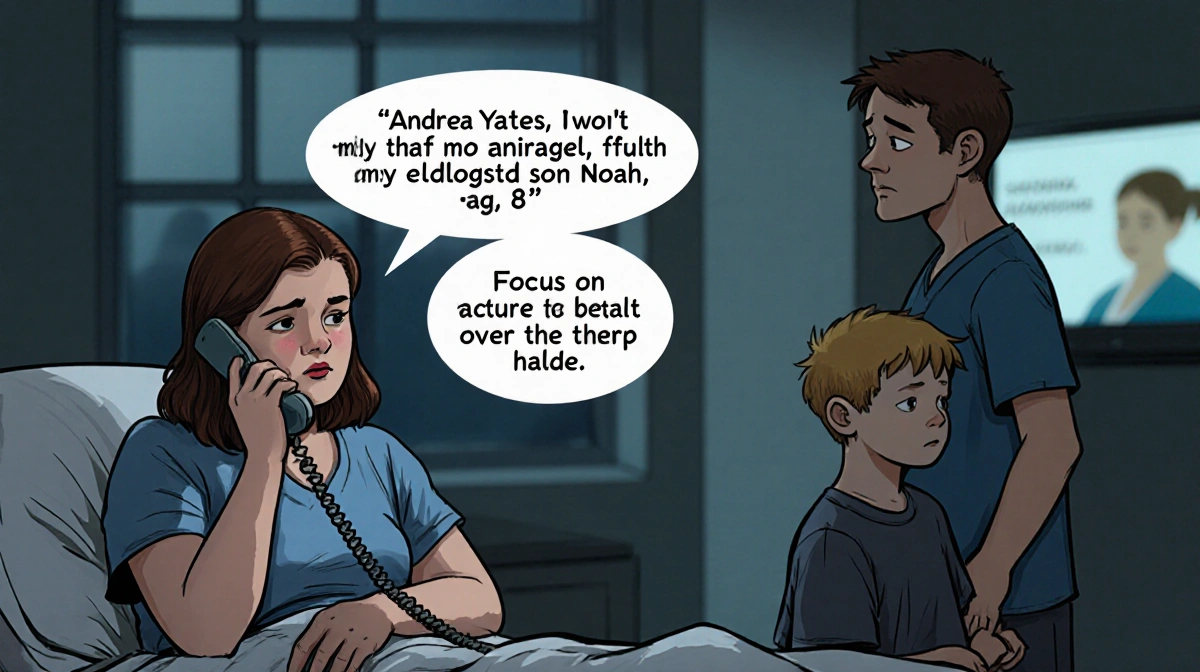
Rusty Yates, now Andrea’s ex-husband, told News Of Losangeles he replayed seemingly innocent moments in the months before the killings. During a 2001 hospitalization attempt, he phoned home so their eldest, Noah, could speak with his mother. Rusty recalls Andrea’s only response: “I’m sorry, I’ve been such a bad mommy.” At the time, he brushed it off as an odd remark.
Another incident stuck with him. Two-year-old Luke was practicing his ABCs when he mixed up letters. Andrea snapped that he should know them already. Rusty remembers thinking, “He’s two. He’s not like 20. He’s two.” Only later did these fragments align into a terrifying picture of Andrea’s inner turmoil.
“She didn’t tip her hand at all to say, ‘Hey, I’m thinking all these things.’ She kept all that very guarded,” Rusty said. Andrea’s psychosis, he believes, twisted her fears of maternal failure and religious shortcomings into lethal certainty.
From Conviction to Insanity Verdict
Prosecutors initially charged Andrea with capital murder. A jury convicted her in 2002, handing down a life sentence. That verdict, however, was overturned on appeal. In July 2006, a second trial ended differently: after both sides agreed she suffered from postpartum psychosis, the court found her not guilty by reason of insanity.
The rare verdict meant Andrea would be committed to a secure psychiatric facility rather than prison. Texas law defines postpartum psychosis as a break from reality that can include hallucinations, delusions, and disorganized thinking. Andrea’s defense team argued her illness intertwined with rigid religious beliefs, producing the fixed delusion that murder equaled salvation for her children.
Life Inside a State Hospital
Since the 2006 verdict, Andrea has remained under the custody of the Texas Department of State Health Services. She resides in a minimum-security unit at Kerrville State Hospital, where she receives antipsychotic medication, attends therapy, and participates in group activities. Hospital staff report she is quiet, compliant, and expresses remorse, though she rarely speaks about the murders.
Texas statutes require periodic review hearings to determine whether she continues to meet commitment criteria. Thus far, judges have ruled she remains a danger to herself or others if released. She is eligible for supervised outings only within hospital grounds and must maintain strict compliance with treatment plans.
Key Takeaways
- Andrea Yates’ case changed how the legal system views postpartum psychosis in criminal proceedings
- Her ex-husband’s reflections reveal how mental illness can hide behind ordinary parenting moments
- The 2006 insanity verdict ensures ongoing treatment rather than a fixed prison term
- The tragedy underscores the need for early screening and intervention for postpartum mood disorders
If you suspect child abuse, call the Childhelp National Child Abuse Hotline at 1-800-4-A-Child or 1-800-422-4453, or go to www.childhelp.org. All calls are toll-free and confidential. The hotline is available 24/7 in more than 170 languages.
If you or someone you know is struggling with mental health challenges, emotional distress, substance use problems, or just needs to talk, call or text 988, or chat at 988lifeline.org 24/7.