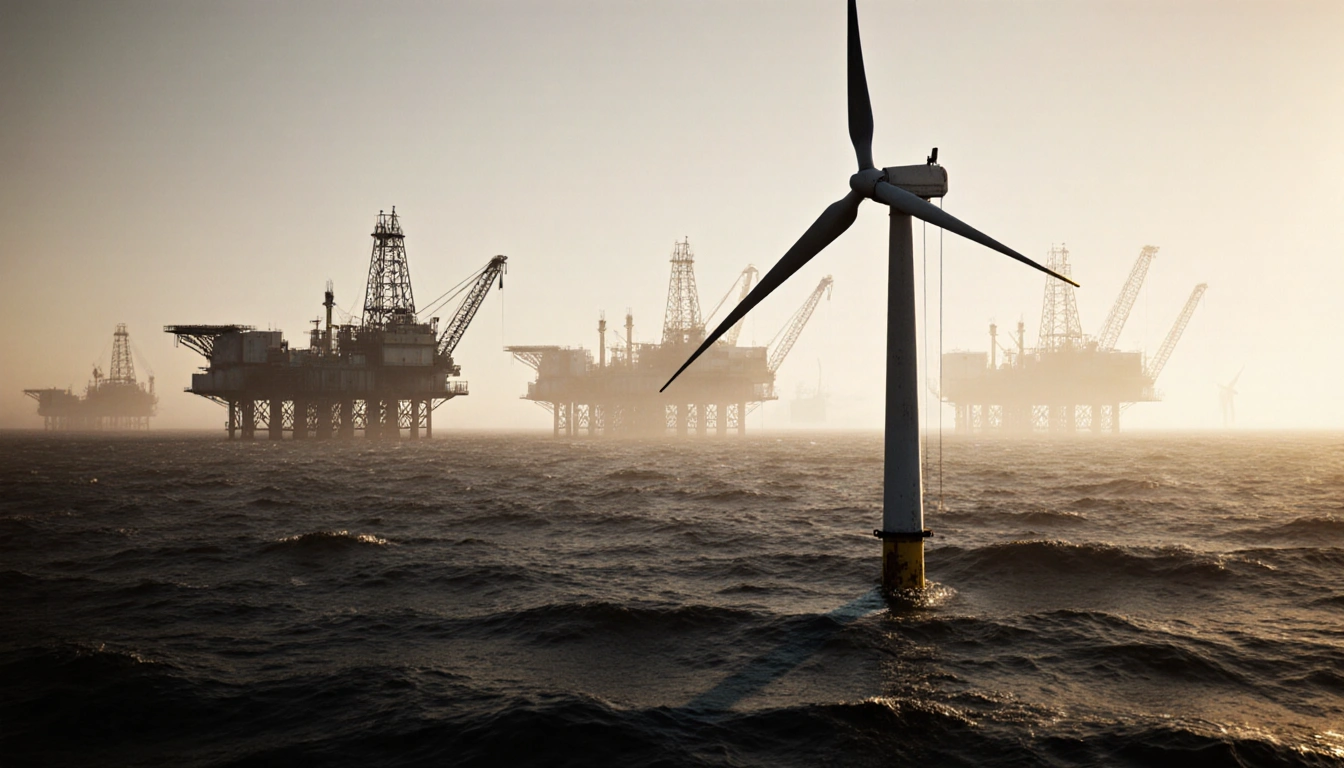
The Trump administration announced on Monday that it would suspend leases for five large-scale offshore wind projects along the East Coast, citing national security risks identified by the Pentagon.
Immediate Suspension
The pause takes effect immediately and is the latest effort by the administration to slow the expansion of offshore wind. Interior Secretary Doug Burgum said the move gives the Interior Department time to work with the Defense Department and other agencies to assess mitigation options. The statement did not specify an end date for the pause. The action follows a federal judge’s ruling that the president’s executive order blocking wind projects was unlawful.
National Security Claims
Burgum noted, “The prime duty of the United States government is to protect the American people.” He added, “Today’s action addresses emerging national security risks, including the rapid evolution of the relevant adversary technologies, and the vulnerabilities created by large-scale offshore wind projects with proximity near our east coast population centers.”
Interior Department Details
The Interior Department said unclassified reports have long shown that massive turbine blades and highly reflective towers create radar clutter. This clutter can obscure legitimate moving targets and generate false targets near wind projects. The department’s statement highlighted the potential for radar interference but did not elaborate on specific security risks. It framed the pause as a precautionary measure.
Judge Vacates Executive Order
Judge Patti Saris of the U.S. District Court for the District of Massachusetts vacated President Donald Trump’s Jan. 20 executive order that halted leasing of wind farms on federal lands and waters. Saris ruled the order was “arbitrary and capricious” and violated U.S. law. The ruling was in favor of a coalition of state attorneys general from 17 states and Washington, D.C., led by New York Attorney General Letitia James. The decision came two weeks before the administration’s lease suspension.
Projects Affected
The paused leases include Vineyard Wind in Massachusetts, Revolution Wind in Rhode Island and Connecticut, Coastal Virginia Offshore Wind, and two New York projects: Sunrise Wind and Empire Wind. All five projects were under construction when the suspension was announced. They had been awarded permits after years of review by state and federal agencies, including the Coast Guard, Naval Undersea Warfare Center, and the Air Force. The projects were also vetted for security concerns.
Critics Question the Rationale
Former USS Cole commander Kirk Lippold disputed the national security argument. He said, “The record of decisions all show that the Department of Defense was consulted at every stage of the permitting process.” Lippold added that the projects would benefit national security by diversifying the country’s energy supply. He emphasized that the permitting process had already addressed security issues.
Wind Proponents Respond
Ted Kelly of the Environmental Defense Fund called the move illegal and said offshore wind provides some of the most affordable, reliable electric power. Kelly said, “For nearly a year, the Trump administration has recklessly obstructed the build-out of clean, affordable power for millions of Americans, just as the country’s need for electricity is surging.” He added, “Now the administration is again illegally blocking clean, affordable energy. We should not be kneecapping America’s largest source of renewable power, especially when we need more cheap, homegrown electricity.”
Attorney General’s View
Connecticut Attorney General William Tong described the lease suspension as a “lawless and erratic stop-work order.” He said it revived an earlier failed attempt to halt construction of Revolution Wind. Tong noted the project had been vetted through every layer of federal and state regulatory process. He warned that each day the project is stalled results in lost work, higher energy costs, and continued fossil-fuel use.
Anti-Wind Group Praise
Robin Shaffer, president of Protect Our Coast New Jersey, praised the administration’s action. He said, “Today, the president and his administration put America first.” Shaffer added, “Placing largely foreign-owned wind turbines along our coastlines was never acceptable,” arguing the projects posed serious national security risks. He applauded the pause as a defense-first decision.
Conservation Law Foundation Critique
The Conservation Law Foundation’s Kate Sinding Daly condemned the pause. She called it “a desperate rerun of the Trump administration’s failed attempt to kill offshore wind.” Daly said the pause “tramples on the rule of law, threatens jobs and deliberately sabotages a critical industry that strengthens – not weakens – America’s energy security.”
Key Takeaways
- The Trump administration suspended leases for five offshore wind projects on the East Coast due to alleged national security risks.
- Interior Secretary Doug Burgum cited emerging adversary technologies and radar clutter as concerns.
- The pause follows a federal judge’s ruling that Trump’s executive order blocking wind projects was unlawful.
The suspension highlights the administration’s ongoing opposition to offshore wind development. Legal challenges continue, and the future of the affected projects remains uncertain. The debate underscores the tension between national security claims and the push for renewable energy.
Closing
The administration’s decision to pause leases has sparked a sharp divide among stakeholders. Wind developers and environmental groups view the move as an obstruction to clean energy progress. Critics of the pause argue that the national security rationale is overstated and that the permitting process had already addressed potential risks. As the legal and political battles unfold, the status of the five projects will likely remain a point of contention for months to come.