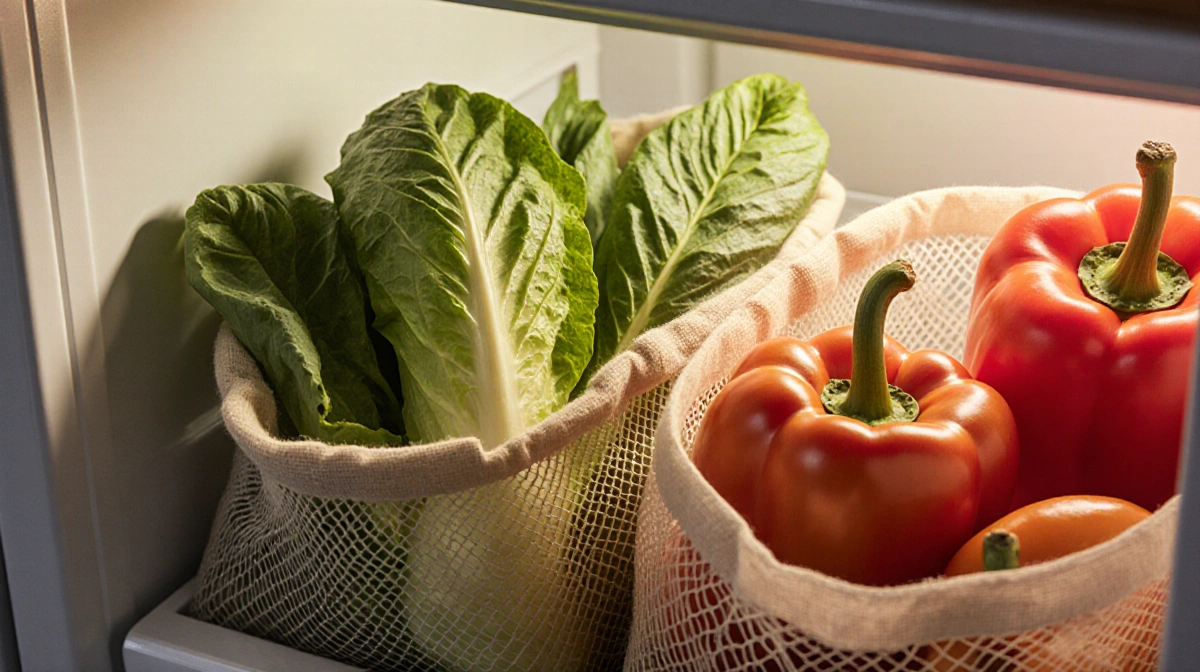
I tested three kinds of produce bags-free compostable, mesh, and linen-to see which actually keeps food fresh the longest. After 13 days inside the same refrigerator drawer, the linen bags kept romaine lettuce and red bell peppers in noticeably better shape than the other two options.
At a Glance
- Linen produce bags outperformed mesh and compostable after two weeks of storage
- Lettuce in compostable bags grew mold and had to be discarded before the test ended
- Chef and dietitian Vahista Ussery says linen’s moisture control and antimicrobial traits explain the win
- Why it matters: Proper storage can cut food waste and grocery bills
The Test Setup
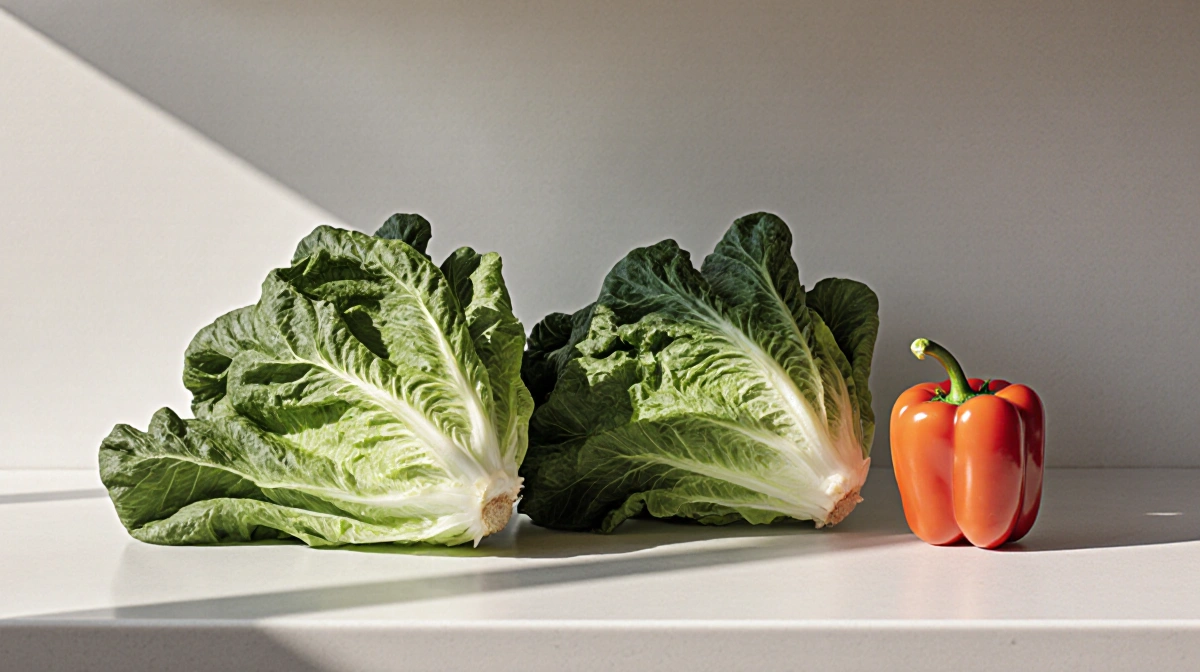
I bought red bell peppers and romaine lettuce from Trader Joe’s, washed everything, and placed each item in its own bag. The compostable bags, made from 100% vegetable starch, were free in the store’s produce section. I also used Thrive Market mesh bags and Ambrosia linen bags. All produce went into the same refrigerator drawer.
Linen instructions said to keep produce damp, so I lightly misted the lettuce and peppers before sealing. The USDA FoodKeeper app lists 14 days as the max for refrigerated peppers and lettuce, so I checked progress on days 1, 4, 8, and 13.
Day-by-Day Results
Day 1
All produce looked identical-crisp lettuce and firm peppers with no visible flaws.
Day 4
- Romaine in the compostable bag wilted fastest; outer leaves drooped
- Mesh and linen lettuce showed minor wilting, but one mesh leaf sagged more
- All peppers developed light wrinkles; stems on mesh and linen versions browned slightly
Day 8
- Compostable lettuce spoilage crept inward
- Mesh lettuce browned more than linen
- Peppers wrinkled further; linen pepper stem looked drier than mesh, likely because it was longer and had more surface area
Day 13
- Compostable lettuce was moldy and went straight to compost
- Mesh lettuce had several fully wilted outer leaves; still edible after trimming
- Linen lettuce looked freshest
- Peppers mirrored the pattern: compostable had deepest wrinkles, mesh slightly more than linen
Expert Take on Why Linen Wins
Chef Vahista Ussery, registered dietitian and founder of To Taste, wasn’t surprised. “Linen helps control moisture, absorbing excess that could cause produce items to spoil quickly,” she said. “At the same time, it still allows air to circulate, providing the produce with the oxygen it needs, as well as allowing ethylene gas to escape.”
She added that linen is naturally antimicrobial, slowing bacteria and mold. “Linen bags are truly the way to go for produce quality and environmental sustainability,” Ussery said.
Mesh and Compostable Limitations
Mesh bags offer more airflow but absorb less moisture. Ussery suggests dropping in a paper towel for leafy greens to curb dehydration. Compostable bags, while eco-friendly at checkout, start breaking down when exposed to moisture inside a fridge. They also trap ethylene gas and provide zero moisture absorption. “They are better used just for purchasing versus storing,” Ussery noted.
Holistic nutritionist Ana Bueno, founder of BuenoSeeds Nutrition, stressed tailoring storage to each fruit or vegetable. “The ‘one-size-fits-all’ approach rarely works,” she said. “Understanding how to store each type of food is key to reducing food waste and preserving nutritional value.”
Key Takeaways
- Linen bags kept produce freshest over two weeks
- Mesh bags finished second; add a paper towel for greens
- Compostable bags should be used only for transport, not storage
- Keeping produce slightly damp inside linen and allowing ethylene gas to escape extends shelf life and cuts grocery waste