At 37 weeks pregnant, Ashley Caldwell spent the last weekend before her delivery shoveling 11 truckloads of dirt out of her driveway. The work was her version of nesting, a familiar ritual for a woman who has spent her life training in the air.
A Nesting Weekend
Caldwell’s husband, Justin Schoenefeld, tried to intervene. “‘Ashley, we don’t have to do all of it,'” he said. “She was like, ‘No, we’re doing it all.'” The comment was light, but it highlighted how little could deter the 32-year-old from tackling a difficult task.
From Lake Placid to Olympic Gold
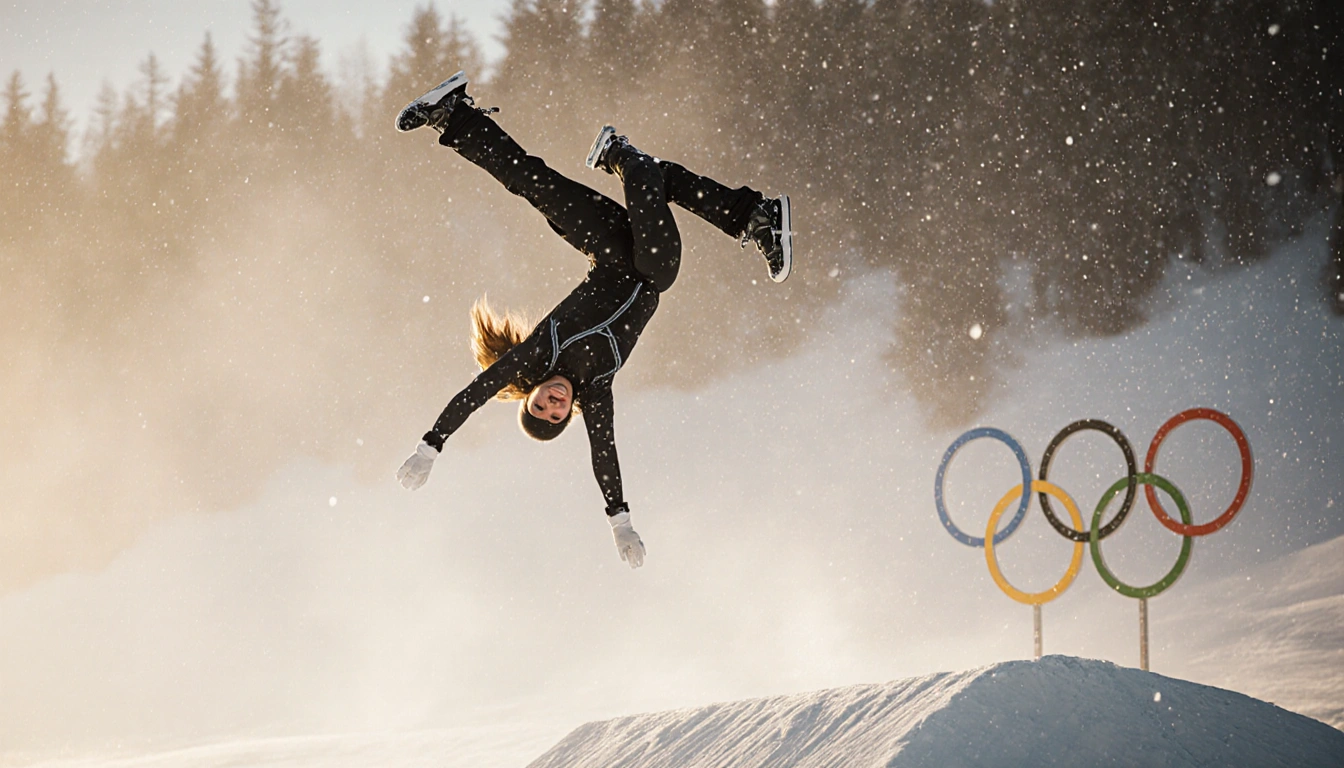
At 13, Caldwell left her family in Virginia for an elite winter sports academy in Lake Placid, New York. She trained as an aerialist, gliding down snowy slopes before launching upward to perform tricks. The result was historic: she became the only woman to land a quadruple-twisting triple backflip.
Caldwell joined the U.S. Ski and Snowboard national team in 2010, recovered from two ACL operations, and competed at four Olympics. In 2022 she earned a gold medal as part of a team that also included Schoenefeld, whom she met a decade earlier on the aerials world circuit.
Marriage and Early Motherhood
The couple wed in February after backcountry skiing 45 minutes up a mountain above Park City. The bride wore brilliant-white snow pants and a matching snow jacket, trimmed in gold, and they wed in snow boots.
Soon after the wedding, Caldwell learned she was pregnant. She began plotting what she considered her hardest feat yet: qualifying for the 2026 Winter Olympics in Italy, less than a year after giving birth and after missing nearly all of her typical summer training.
The Birth and Immediate Return
On July 16, three days after shoveling, two days after mountain biking, and one day after she gingerly squatted nearly 100 pounds in the U.S. Ski and Snowboard Association’s training center near Park City, Caldwell delivered a baby boy named Harvey after 26 hours of labor.
Seven months remained until the Olympics. By the time she was home from the hospital, she was already considering what it would take to qualify.
“Right away,” she said. “How quickly can I drop weight? How quickly can I get my stomach muscles back? How quickly can I be strong enough and get my ligaments back together?”
Balancing Motherhood and Training
Caldwell’s training is a 100 percent performance endeavor, she said, and that mindset is hard to maintain once you have children. She reflected on how her career choices-leaving home at 13, risking her body-would have shaped her child’s future.
She spoke with fellow Olympian Faye Gulini, a U.S. snowboarder who had given birth three weeks before her. Gulini said, “The very reason I thought I was done snowboarding, having kids and starting a family, was the very reason that I wanted to return.”
Caldwell’s motivation also came from her sense of empowerment. “It’s female empowerment,” she said. “That’s been my thing my entire career, is you can push boundaries of what people expect.”
Support and Resources for Olympian Parents
The U.S. Olympic & Paralympic Committee created a five-page guide listing all its offerings for parents, including private lactation spaces and psychological support. The IOC announced that athletes attending Milan Cortina with their children would receive a “Little Champions” kit from Pampers and that breastfeeding would be allowed.
Caldwell works for a private equity firm that lends to real estate developers. She said she falls into the category of athletes who have a full-time second job to support travel and training costs.
She also received grants from USOPC, including one for injury-related costs and a one-time family fund for child care and infant supplies. Outside organizations, such as the Women’s Sports Foundation, offered additional grants.
Looking Ahead to Milan Cortina
Qualifying for the U.S. aerials team would require travel to Australia in November, a month in Finland, and two weeks in China. She would need additional family help for weeks at a time.
Caldwell expressed that she was not retiring from the sport, but she would not attempt an Olympic comeback this winter. She said finances played a role and that more child-care support might have changed her decision.
“Do I think it would be really cool to go to the Olympics with my kid? For sure,” she said. “But I don’t know. … I was ‘OK, I want to be the best in the world at freestyle skiing.’ Now I want to be the best in the world of being a mom. And it’s just a total switch of mindset.”
Key Takeaways
- Caldwell shovels 11 truckloads of dirt at 37 weeks pregnant and gives birth to Harvey after 26 hours of labor.
- She has already mapped out her return to training, focusing on weight loss, core strength, and ligament recovery.
- Support from USOPC, IOC, and private grants helps Olympian parents balance family and elite sport.
In the weeks leading up to Milan Cortina, Caldwell will weigh her options, knowing that her career has already achieved historic milestones. Whether she chooses to chase a fourth Olympic medal or focus on motherhood, her story exemplifies the resilience of athletes who navigate both worlds.