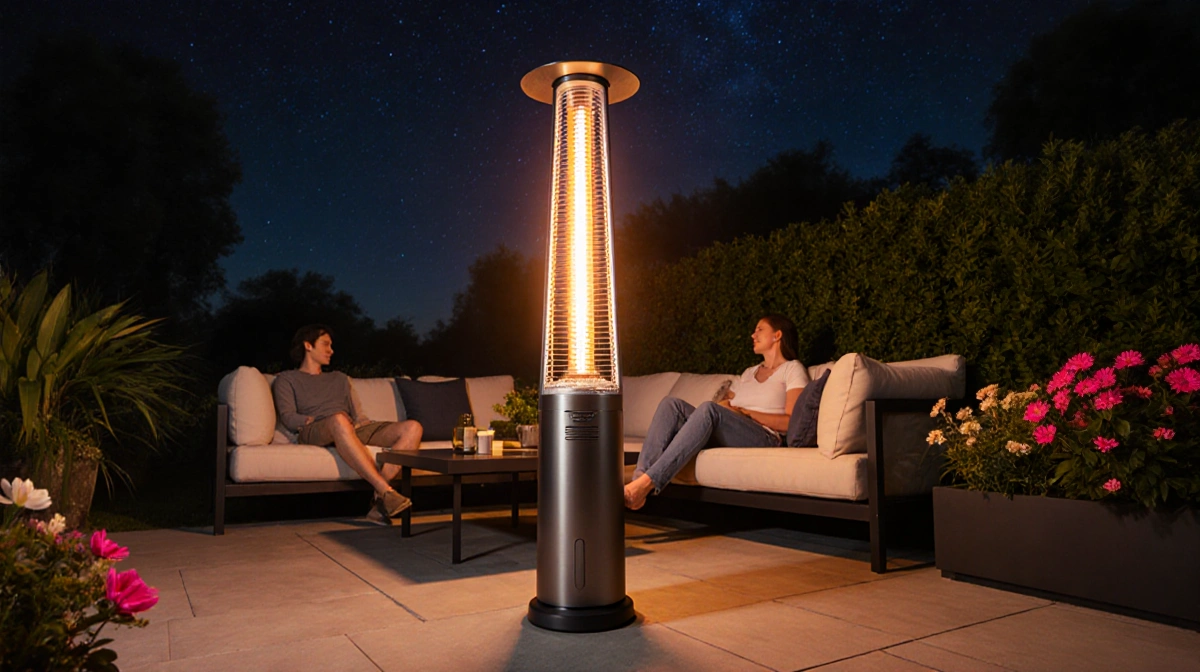
At a Glance
- The Cuisinart COH-400 topped 2026 tests with a 360-degree swivel arm that aims heat without moving the whole unit
- Hiland HLDS01 pyramid heater hit the highest 1-foot average rise of 11.72°F, beating 10 rivals
- Amazon Basics model costs only $103 and assembles fastest, but heat fades beyond 3 feet
- Why it matters: Picking the right style-swivel, pyramid, or budget pole-can stretch outdoor season for $103-$500
A patio heater can add months to your backyard season, and News Of Los Angeles testing shows the gap between the best and worst models is bigger than their nearly identical looks suggest. After recording 44 temperature points on each unit and logging more than 24 hours of burn time, one clear winner emerged for shoppers who want maximum flexibility.
Swivel Style Wins for Aim-Anywhere Heat
The Cuisinart COH-400 Perfect Position stands out by moving only the burner, not the whole heater. An overhead arm swings 360 degrees and locks in place, letting diners sit around a table while heat follows them. The design demands more patio space-an arm juts outward-and the extra hardware pushes assembly time past that of simpler pole models.
In News Of Los Angeles measurements, output stayed steady:
- 1 foot away: average jump of 12.73°F
- 4 feet away: drop of only 4.5°F
Cuisinart rates the unit at 38,200 BTUs. The downward-curved dome helps aim warmth toward chairs instead of the sky.
Pyramid Glass Tube Delivers Highest One-Foot Rise
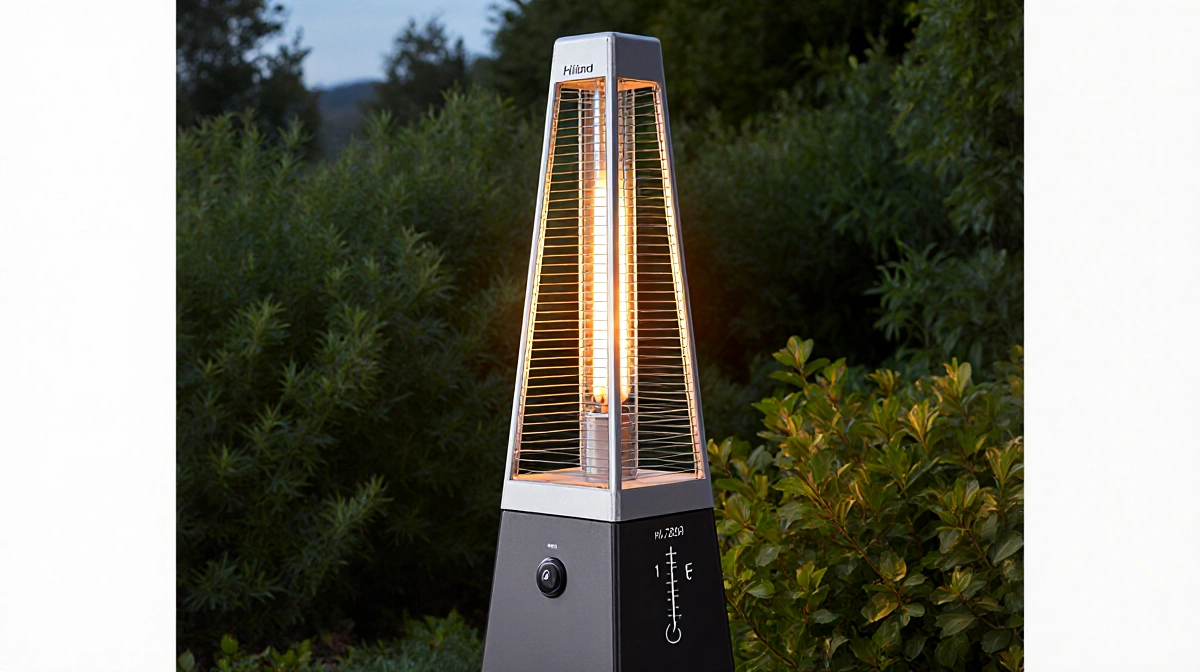
Shoppers who prize looks and proximity heat may prefer the Hiland HLDS01 pyramid heater. A glass tube carries the flame the full 7 feet, creating a fire-column effect that doubles as patio lighting. It warmed the 1-foot sensor by 11.72°F on average, the strongest reading in the lineup.
The Hiland is heavy, and the glass makes wheeling across rough concrete nerve-wracking. The door hinges already showed bending after mild moves. Its 40,000 BTU rating and one-year warranty place it mid-pack in price, and the bright glow may overwhelm some decks.
Budget Pole Heater Cuts Cost, Not Assembly Time
At $103, the Amazon Basics vertical heater undercuts most rivals yet still lights on the first try. A 46,000 BTU burner sits in a compact saucer, but the small deflector plate lets heat escape upward rather than out. The result is a steep fall-off:
- 1 foot away: respectable warmth
- 4 feet away: mere 1.23°F above air temperature
Assembly is minimal-no door to fight when loading a 20-pound grill tank-yet the savings cost you coverage area.
Pellet Model Cranks Out 90,000 BTUs
The Timber Stoves Big Timber swaps propane for wood pellets, delivering 90,000 BTUs across the full height of a tall firebox. Heat feels even from foot level to head level, recording a 10.13°F rise at 1 foot and still 3.48°F at 4 feet. A 20-pound pellet hopper runs about two hours, leaves little ash, and fuel costs less than propane.
Drawbacks include a $600 optional safety cage, hot surfaces all the way up, and the need to store bags of pellets. For raw output, nothing else tested comes close.
Test Method: 44 Sensors, Same Hour, Same Sky
Daniel J. Whitman mounted 11 thermocouples on a rail, then raised the rig to four heights-10, 20, 30, 40 inches below each heater’s cap-producing 44 data points per run. Tests started at the same time of day to equalize air temperature, and each unit burned a full 20-pound load. A separate sensor logged ambient temperature so every reading shows net gain, not raw thermometer value.
Results show most heaters deliver perceptible warmth to about 4 feet, matching the useful radius for a typical seating group.
Propane, Natural Gas or Electric: Quick Guide
- Propane heaters dominate sales. They run off portable tanks, need no wiring, and reach the highest BTUs. Expect roughly 10 hours from a 20-pound tank.
- Natural gas units tie into household lines. They demand pro install but never need refills.
- Electric models plug into outdoor outlets. Output is lower, yet they work in semi-enclosed porches where combustion units cannot go and add no CO₂.
Key Buying Factors Beyond Style
Coverage radius: Most warm a 10-foot circle; buy two if your space is deeper.
Cost range: Reliable models start near $150 and climb to $500 for high-BTU or decorative designs.
Eco impact: Propane units emit CO₂, so they’re for open-air use only. Electric heaters raise power bills but release no on-site pollution.
Accessories: Clip-on tables or wheels seem handy, yet a hot steel column is a risky place to rest drinks.
Key Takeaways
- Choose the Cuisinart COH-400 if you want to aim heat without dragging a full heater
- Pick the Hiland HLDS01 for the highest one-foot rise and a dramatic flame show
- Grab the Amazon Basics model when upfront cost matters more than wide coverage
- Expect 10 hours of burn time per 20-pound propane tank on most pole units