
At a Glance
- Four astronauts will splash down off San Diego at 12:41 a.m. Thursday after a medical emergency cut their ISS mission short
- This marks the first medical evacuation in the station’s 25-year history
- The crew spent 167 days in orbit, departing months ahead of schedule
- Why it matters: The rare emergency return highlights the risks of long-duration spaceflight and tests new West Coast recovery procedures
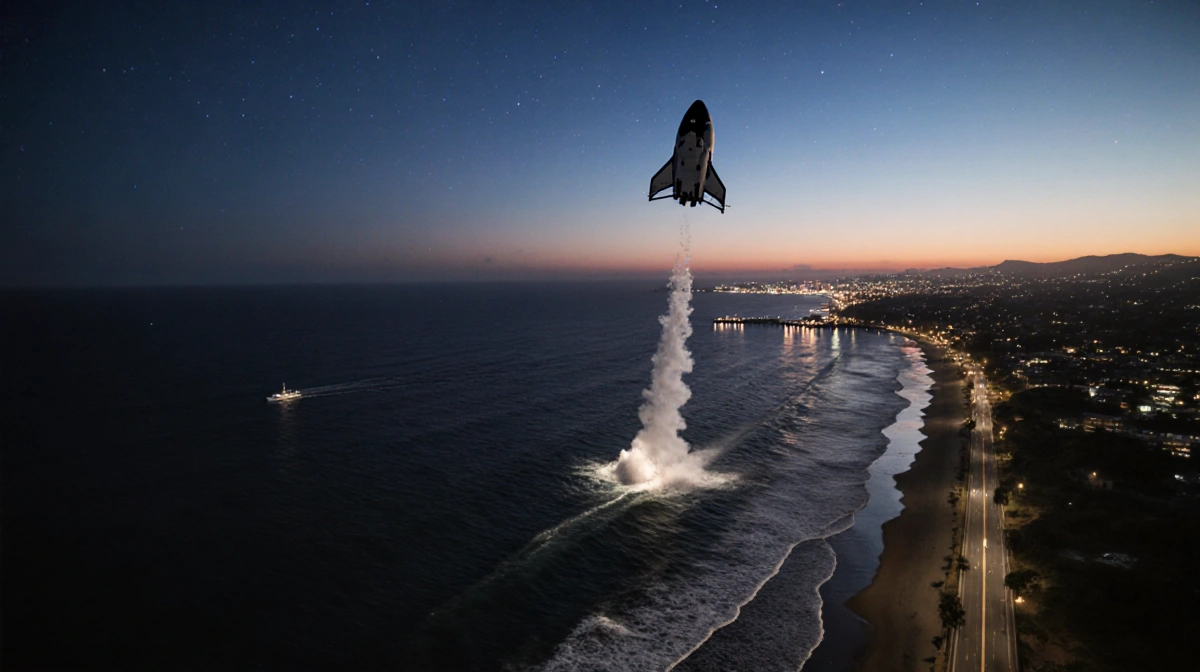
Four astronauts from the SpaceX Crew-11 mission are set to splash down off the San Diego coast early Thursday, ending a 167-day stay on the International Space Station that was abruptly shortened by a medical issue-the first such evacuation in the orbiting lab’s quarter-century history.
NASA confirmed the astronaut in question is stable but has withheld further details, citing medical privacy. The U.S.-Japanese-Russian crew-NASA’s Mike Fincke and Zena Cardman, Japan’s Kimiya Yui, and Russia’s Oleg Platonov-launched last August and had been scheduled to remain aboard until late February.
Splashdown Timeline
- 11:15 p.m. PT: Live coverage begins
- 12:41 a.m. Thursday: Target splashdown
- ~11:30 a.m.: Crew expected back on shore
NASA and SpaceX shifted splashdown operations from Florida to the Pacific last April, choosing a broader recovery zone that ensures any surviving pieces of the jettisoned trunk fall safely into the ocean. The capsule will hit the water at about 25 mph after a 10.5-hour descent that includes a deorbit burn 51 minutes before entry, followed by dual parachute deployments.
David Neville, communications director with the San Diego Air and Space Museum, explained the recovery process: two ships-one to hoist the capsule aboard and another to secure it-will be waiting. Recovery teams are based in San Diego, making the region a new hub for human spaceflight returns.
The last Pacific splashdown occurred in 1975, when three NASA astronauts returned from the historic Apollo-Soyuz mission. Tonight’s event will not be visible to the naked eye; the public can watch live on YouTube.
Key Mission Facts
| Detail | Value |
|---|---|
| Days on station | 167 |
| Planned return | Late February |
| Actual return | 12:41 a.m. Thursday |
| Splashdown speed | 25 mph |
| Recovery zone | Off San Diego coast |
Computer models had predicted a medical evacuation once every three years, yet NASA had never faced one in 65 years of human spaceflight until now.
Neville sees the high-profile return as a local teaser for next month’s Artemis II launch, which will send a crew around the moon-the farthest humans have traveled from Earth since 1972.