At a Glance
- Ilia Malinin landed the first-ever quadruple axel in competition in September 2022
- The jump had been deemed impossible due to its extra half-rotation from a forward-facing entry
- Figure skating may have reached the limit of human athletic potential with this feat
- Why it matters: The sport now faces a crisis of innovation as athletes hit physical boundaries and scoring rules discourage creativity
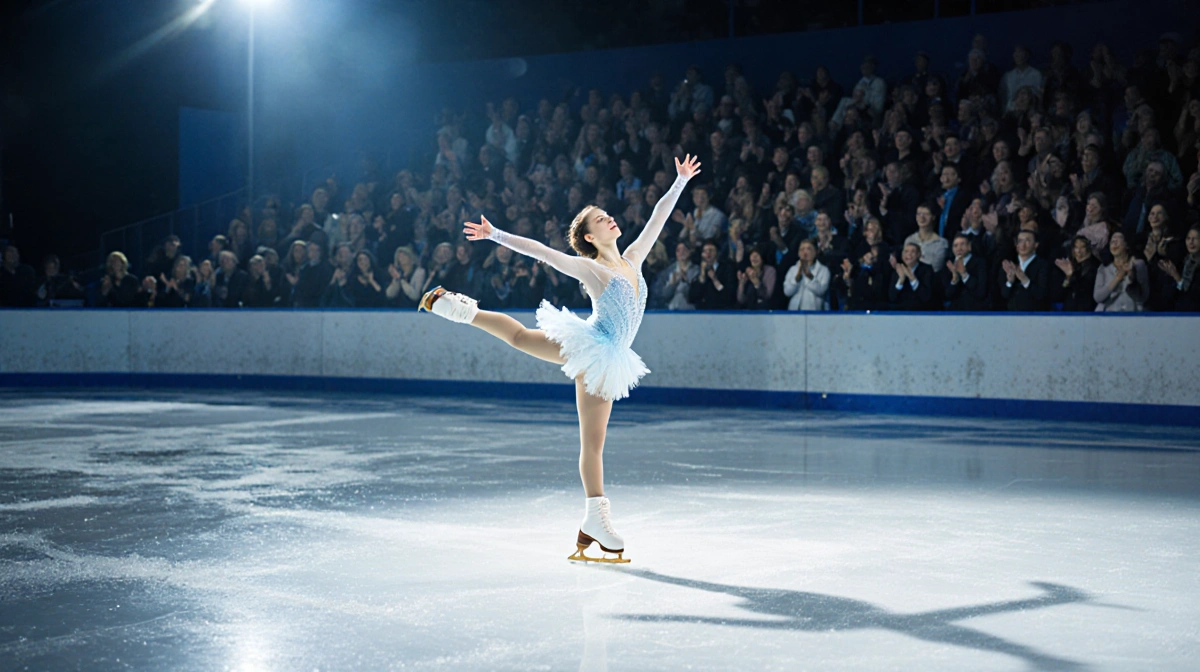
Ilia Malinin changed figure skating forever when he landed the first quadruple axel in competition during a September 2022 event in Lake Placid, New York. The historic jump, performed inside the arena famous for the 1980 U.S. Olympic hockey upset, sent shockwaves through the skating world and made global headlines.
The Impossible Jump
The quadruple axel represents the ultimate technical achievement in figure skating. Unlike other jumps that start backward, the axel begins with a forward-facing entry, requiring an extra half-rotation that makes four full revolutions nearly impossible. Previous attempts by other skaters had always ended in falls.
“My mind was just blown,” said two-time Olympic skater Jason Brown.
Malinin’s successful quad axel at the relatively minor competition marked the culmination of decades of progression in jump difficulty. The six main jumps in figure skating have remained standard since the early 1900s, with evolution coming only through adding revolutions.
Timeline of jump innovations:
| Year | Skater | Achievement |
|---|---|---|
| 1948 | Dick Button | First double axel |
| 1952 | Dick Button | First triple jump |
| 1988 | Kurt Browning | First quad (toe loop) |
| 1998 | Timothy Goebel | First quad salchow |
| 2022 | Ilia Malinin | First quad axel |
Athletic Limits Reached
Sports scientists believe five-revolution jumps exceed human capabilities. The speed and amplitude required for such rotations appear impossible, potentially leaving figure skating at a crossroads where further athletic innovation seems unattainable.
“I think it’s kind of natural that we were going to get to this point,” said Malinin, the overwhelming favorite for gold at the Milan Cortina Olympics. “But I haven’t reached my top, whether it’s in the technical and how much I can jump and spin, but also in the creativity.”
Malinin has won two world titles and three U.S. National Championships, partly due to his mastery of the quad axel.
Creativity vs. Scoring
The 20-year-old skater points to his signature “raspberry twist” – a somersaulting spin he created himself that electrifies audiences. However, this innovative move highlights a fundamental problem with trying to be creative in competitive skating.
The International Skating Union maintains strict requirements for programs, making deviation from standard elements risky. Malinin might not earn significant points for his raspberry twist since it’s not among the six standard jumps, but failing to land it could cost him dearly.
“Absolutely, there are a lot of things I’ve wanted to try,” Malinin told Amanda S. Bennett. “Because I think it would be really cool and appealing. But it’s a bigger risk for the program itself, and the system and scoring means it doesn’t make sense.”
Rule Restrictions
Current rules severely limit creative expression, according to top skaters.
“There are so many rules in your programs that you don’t have too much wiggle room,” said Alysa Liu, the reigning world champion. “A lot of these rules really restrict us. Like, all of our spins look the same now, but they could look so different.”
Amber Glenn, a three-time U.S. champion and Olympic hopeful, described training mate Sonja Himler’s innovative approach: “She spins the other way, jumps the other way – really cool things that, you know, someone who’s watched a little bit of skating will be like, ‘Oh, I’ve never seen that before.'”
However, Glenn noted that conventional skating performed well typically scores higher than Himler’s more impressive innovations.
Balancing Innovation and Safety
Justin Dillon, manager of high performance at U.S. Figure Skating, acknowledged having difficult conversations with skaters about limiting unique elements due to scoring risks.
“I encourage individuality, and bringing it to the ice,” Dillon said. “But if they do something so avant-garde that it doesn’t check those boxes, then it really doesn’t serve them.”
The governing body has relaxed some restrictions recently. Backflips, banned for decades due to safety concerns, are now permitted but carry minimal scoring weight.
The Artistic Alternative
Jason Brown, who relies on triple jumps and exceptional artistry rather than quad jumps, suggests the next innovation might not involve athletic ability at all.
“I have so much respect for the ways in which people are pushing the sport technically,” he said. “But I think the more that people fixate on executing an element, the less risk people take artistically, because they’re already taking these risks technically.”
Brown’s approach consistently challenges for podium placements in major competitions, proving that artistry remains a viable path to success.
Key Takeaways
- Ilia Malinin’s quad axel represents both the pinnacle of skating athleticism and potentially its final frontier
- The sport’s scoring system actively discourages the creativity needed to engage audiences
- Physical limitations may prevent further technical innovations beyond four revolutions
- Artistic innovation could provide the next evolution in figure skating, but current rules restrict creative expression
- The conflict between risk-taking and point-scoring leaves the sport searching for new directions to maintain popularity