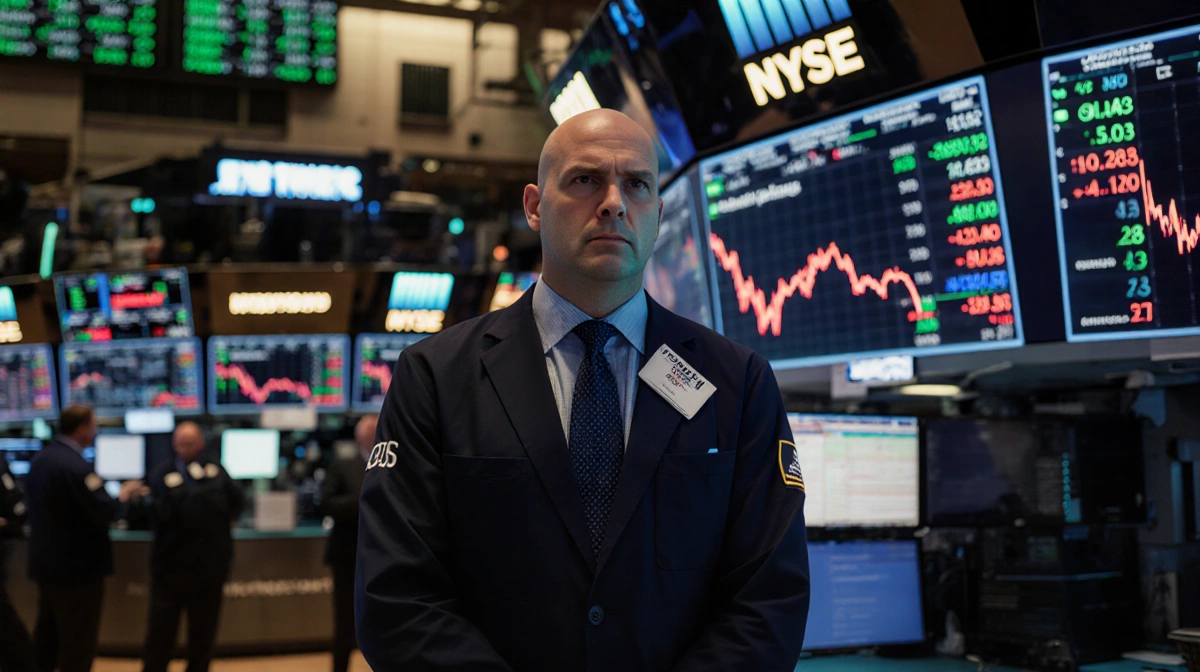
U.S. stocks nose-dived Monday after China hit back at fresh American tariffs, erasing the market’s post-election euphoria and sending the Dow Jones Industrial Average into its worst session since 2022.
At a Glance
- The Dow plunged 617 points, its steepest one-day drop since March 2022
- China retaliated with 34% levies on U.S. goods after Washington raised its tariff rate to the same level
- All 30 Dow components finished lower; the S&P 500 sank 2.1%
- Why it matters: Investors are reassessing how quickly trade tensions could dent corporate profits and global growth
The sell-off accelerated late in the day as Beijing matched the 34% U.S. rate on a wide range of American exports. Every sector in the S&P 500 closed in the red, with industrials and materials bearing the brunt.
Tariff Escalation Triggers Global Rout
China’s finance ministry said the new tariffs will apply to $50 billion of U.S. products, including aircraft, autos and soybeans. The move came hours after Washington formally raised its own tariff rate on Chinese imports to 34%.
- Boeing shares slid 5.4%, the biggest drag on the Dow
- Caterpillar fell 4.8%, its largest drop in eight months
- Deere, 3M and Dow Inc. each lost more than 4%
“The speed of retaliation caught traders off guard,” said News Of Los Angeles senior markets writer. “Markets had priced in a quick trade deal, not an escalating tit-for-tat.”
Tech, Energy Sectors Hammered
The Nasdaq Composite tumbled 2.4%, led by Apple (-3.2%) and chipmakers. The Philadelphia Semiconductor Index sank 3.5% after China hinted it could restrict rare-earth exports critical to tech supply chains.
Energy stocks also sank as crude futures slid 3%. West Texas Intermediate crude settled at $71.40 a barrel, its lowest close since June.
| Sector | S&P 500 Change | Key Decliners |
|---|---|---|
| Industrials | -3.1% | Boeing, Caterpillar |
| Materials | -2.9% | Dow, Freeport-McMoRan |
| Tech | -2.6% | Apple, Nvidia |
| Energy | -2.5% | Exxon, Chevron |
Small caps fared even worse. The Russell 2000 dropped 3%, wiping out its post-election rally and turning negative for 2024.
Bond Yields Sink as Investors Flee Risk
Treasury prices surged as investors sought safety. The 10-year yield plunged 14 basis points to 4.02%, its lowest level since May. The two-year yield slid 12 basis points to 3.75%.
“The bond market is pricing in a much higher chance of a global slowdown,” said News Of Los Angeles columnist. “Trade wars have historically been negative for growth, and bond traders are front-running that reality.”
Gold jumped 1.8% to $2,050 an ounce, its highest close since August. The dollar index edged up 0.2% against major currencies.
Earnings Optimism Evaporates
The sell-off erased early-week optimism after JPMorgan Chase and Wells Fargo beat quarterly estimates. JPMorgan shares reversed a 2% premarket gain to finish down 1.6%. Wells Fargo ended flat after being up 3% at the open.
Analysts now expect S&P 500 earnings to grow just 5% in the fourth quarter, down from 7% last week, according to News Of Los Angeles data.
- JPMorgan posted Q3 EPS of $4.37, topping views
- Wells Fargo earned $1.42 a share, beating by $0.09
- Both banks cited higher loan-loss provisions tied to trade uncertainty
Market Breadth Collapses
Declining stocks outnumbered advancers by 7-to-1 on the NYSE. Volume spiked 25% above the 20-day average, indicating heavy institutional selling.
- Only 11 S&P 500 stocks closed higher
- 486 finished lower
- 3 were unchanged
The Cboe Volatility Index (VIX) surged 28% to 23.4, its highest level since March.
Key Takeaways
- Trade-war escalation has replaced rate-cut hopes as the market’s primary driver
- Industrial and tech sectors are most at risk if China restricts rare-earth exports
- Bond yields are signaling increased recession odds
- Small caps have given up their post-election gains
- Earnings season may not provide a floor if trade tensions persist
Monday’s rout left the Dow down 1.8% for 2024, while the S&P 500 is now up just 8% year to date.