
At a Glance
- President Trump is privately pressing Canada to boost Arctic defenses against Russia and China
- He wants a 2025 deal for joint patrols, early-warning upgrades, and more military drills
- Trump is not proposing to buy Canada or deploy U.S. troops on its northern border
- Why it matters: A stronger Canadian Arctic is central to Trump’s plan to keep U.S. rivals out of the Western Hemisphere
President Donald Trump has stepped up closed-door complaints that Canada is failing to defend its Arctic frontier from Russia and China, pushing aides to secure a bilateral security agreement this year that would tighten the northern border without putting American boots on Canadian soil, according to six current and former U.S. officials.
The president’s private focus on Canada has intensified as his administration pursues a separate effort to acquire Greenland, the semi-autonomous Danish territory that sits astrategically vital shipping lanes and mineral deposits. While Greenland remains the flashier prize, Trump views Canada’s vast, sparsely defended north as the softer entry point for U.S. adversaries, the officials said.
Private Complaints, Public Leverage
In recent weeks Trump has repeatedly told senior staff that Ottawa spends too little on defense and leaves a “massive gap” that Moscow or Beijing could exploit, according to a senior administration official and three former officials briefed on the conversations. He has not revived last year’s taunt about turning Canada into the 51st state, the sources said, but he is demanding concrete Canadian commitments ahead of the 2026 federal budget cycle.
“Trump is really worried about the U.S. continuing to drift in the Western Hemisphere and is focused on this,” one current official said.
The White House has not floated stationing American troops along Canada’s northern border, the officials stressed. Instead, negotiators are weighing:
- Modernizing Canada’s aging North Warning System radar chain
- Expanding joint Arctic air and maritime patrols, including U.S. icebreaker sorties
- Holding more combined military exercises above the Arctic Circle
- Sharing real-time intelligence on Russian and Chinese ship and aircraft movements
A Pentagon Arctic working group has already told the White House that Canada’s exposure along its northern coast is “among the biggest issues facing the U.S. in the region,” according to current and former officials.
Carney’s Beijing Trip Raises Eyebrows
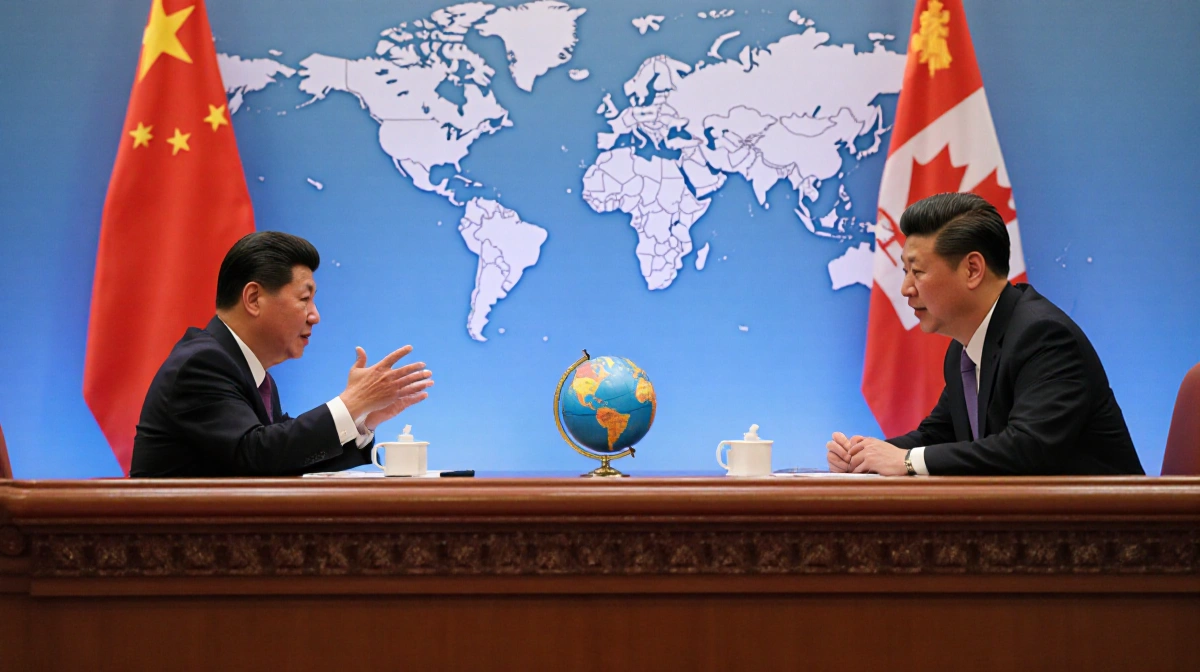
The behind-the-scenes push coincides with Canadian Prime Minister Mark Carney’s first visit to China since 2017. Carney met President Xi Jinping in Beijing on Friday and spoke of “the new world order,” prompting questions about whether Ottawa is hedging against Washington.
Asked about Carney courting Beijing, Trump told reporters: “That’s what he should be doing. If you can get a deal with China, you should do that.”
Trump’s public tone has cooled since last year’s tariff threats and “51st state” jokes, but aides say the president still regards Canada’s defense spending as unacceptable. NATO figures show Canada will reach only 1.76 % of GDP on defense in 2025, well below the alliance’s 2 % guideline.
Budget Season Looms
White House spokesperson Anna Kelly pointed to an April executive order that “underscores the United States’ commitment to ensuring both freedom of navigation and American dominance in the Arctic waterways.”
Administration officials say Trump wants new Arctic line items in next year’s defense bill, including additional U.S. icebreakers that could operate jointly with Canadian vessels. The emerging U.S.-Canada talks are expected to continue through a series of lower-level military and diplomatic meetings this spring, with a target of announcing cooperation measures by late 2025.
No Invasion Talk
While Trump has refused to rule out military force to secure Greenland, he told NBC’s “Meet the Press” last year that armed seizure of Canada is “highly unlikely.”
Privately, aides say, his objective is to lock in Canadian commitments before any rival power establishes a permanent Arctic foothold. “At the end of the day, this is to stop Russia and China from having a further presence in the Arctic,” the senior administration official said. “Canada stands to benefit from the U.S. having Greenland.”
Key Takeaways
- Trump is pushing for a 2025 security deal, not a land purchase
- Canada’s Arctic radar and patrol capabilities are the immediate focus
- The president’s quieter public tone hinges on whether negotiations progress