At a Glance
- The Dow Jones Industrial Average fell 1,000 points intraday
- S&P 500 and Nasdaq each dropped more than 3%
- President Trump announced new tariffs on Mexico, Canada, and China
- Why it matters: Investors fear a global trade war could push the U.S. into recession
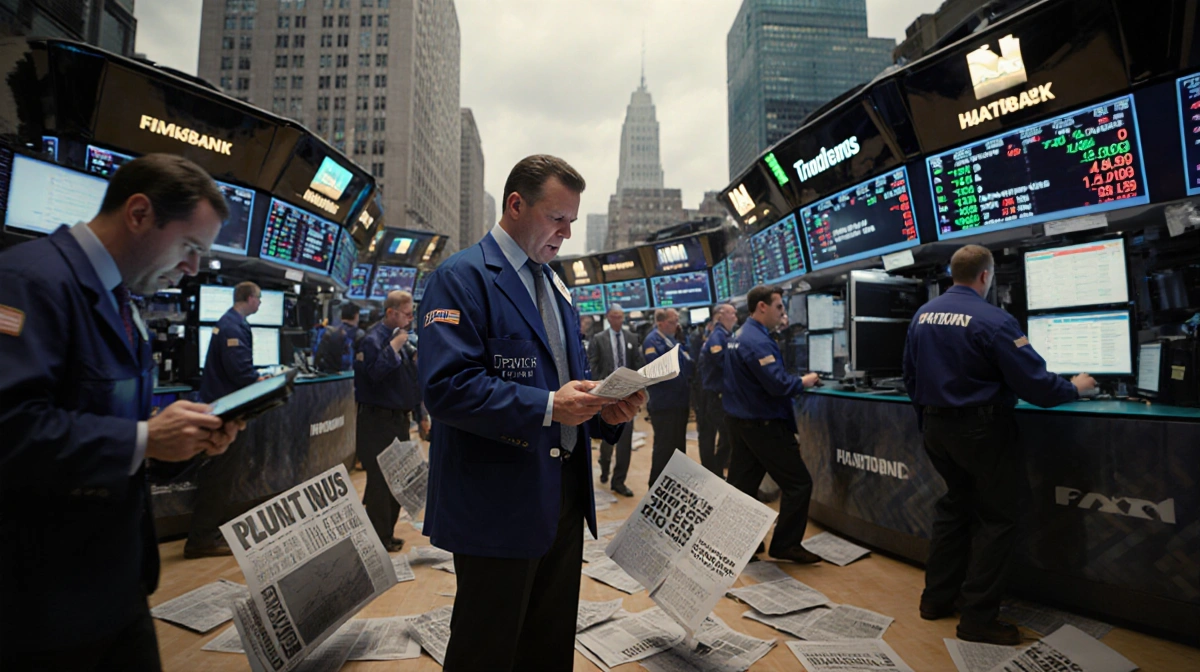
Stocks crashed Tuesday after President Trump unveiled sweeping new tariffs on America’s three largest trading partners. The Dow Jones Industrial Average plunged 1,000 points at its low, while the S&P 500 and Nasdaq each sank more than 3%.
Market Carnage Spreads Across Wall Street
The selloff hit every major sector. Technology, financial, and industrial stocks led the decline. The Cboe Volatility Index, Wall Street’s fear gauge, spiked above 25 for the first time since October.
Small caps fared even worse. The Russell 2000 slid 4.2%, wiping out nearly all its 2025 gains. Trading volume surged to the highest level since the August flash crash.
Tariff Shock Triggers Investor Exodus
Trump announced the measures late Monday, catching markets off guard. The actions target:
- 25% tariffs on all Mexican imports
- 25% tariffs on Canadian goods
- 10% tariffs on Chinese products
The president cited illegal immigration and fentanyl trafficking as justification. He warned the tariffs could rise further if neighboring countries don’t tighten border security.
Corporate America Sounds Alarm
Major exporters bore the brunt of selling. General Motors sank 8% after warning the tariffs could cost $6 billion annually. Ford dropped 7.5%.
Agricultural giants Deere and Caterpillar each fell more than 6%. Farm equipment makers face double damage from retaliatory tariffs on U.S. crops and higher steel costs.
Airlines cratered on fears of reduced cross-border travel. United and Delta each slid roughly 9%. Cruise operators Royal Caribbean and Carnival plunged more than 10%.
Bond Yields Collapse as Recession Fears Mount
The 10-year Treasury yield plummeted 20 basis points to 3.85%, its lowest level since May. Investors piled into safe-haven government debt as stocks tanked.
The yield curve inversion deepened further. The gap between 2-year and 10-year yields widened to -45 basis points, signaling growing recession risks.
Gold surged 2.5% to $2,750 per ounce, hitting fresh record highs. Bitcoin tumbled 8% as investors dumped risk assets across the board.
Dollar Strengthens Despite Trade Tensions
The U.S. dollar index jumped 1.2% against major currencies. The greenback rallied as investors sought safety in dollar-denominated assets.
The Mexican peso collapsed 4% versus the dollar. The Canadian dollar slid 2.5% to its weakest level since 2020.
Earnings Season Adds to Market Woes
Several major companies reported disappointing results, adding to the tariff-fueled gloom:
- 3M cut its full-year outlook, citing supply chain disruptions
- UPS missed revenue estimates as package volumes declined
- Chipotle warned of margin pressure from rising labor costs
Individual Stock Highlights
Beyond the broad market carnage, several individual names made notable moves:
Tesla bucked the trend, rising 3% after announcing record deliveries. The electric vehicle maker has limited exposure to the affected countries.
Netflix gained 2% as investors bet the streaming giant could benefit from consumers staying home during trade disruptions.
Moderna surged 12% after reporting positive trial results for its new cancer vaccine.
Technical Damage Extensive
The S&P 500 broke below its 5,400 support level, a key technical barrier. The index now sits 8% below its recent high, approaching official correction territory.
The Nasdaq’s 50-day moving average failed to provide support. The tech-heavy index has dropped 10% from its peak.
Only 23% of S&P 500 stocks trade above their 200-day moving averages, the lowest reading since the October 2023 bottom.
Trading Volume Explodes
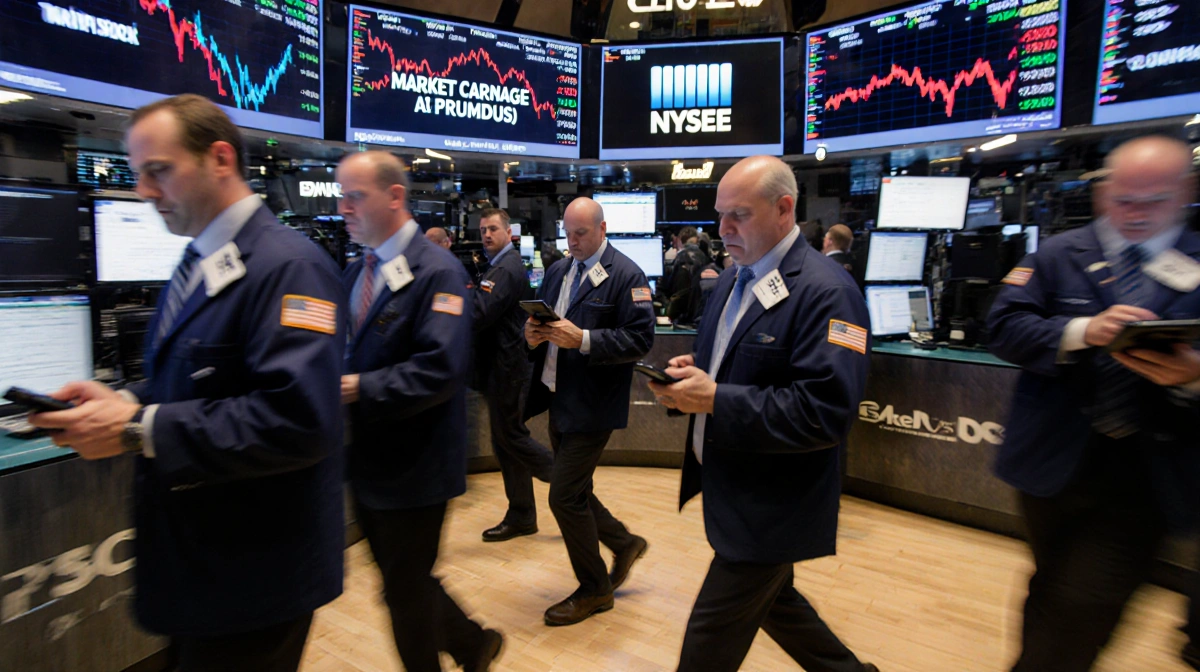
More than 15 billion shares changed hands, triple the average daily volume. Options activity surged to record levels as investors scrambled to hedge portfolios.
The NYSE Arms Index, a measure of market breadth, hit its highest level since March 2020. This indicates panic selling across the board.
Sector Performance Breakdown
| Sector | Change |
|---|---|
| Technology | -3.8% |
| Financials | -4.2% |
| Industrials | -4.5% |
| Materials | -5.1% |
| Energy | -3.1% |
| Consumer Discretionary | -4.7% |
| Communication Services | -3.3% |
| Real Estate | -2.9% |
| Utilities | -1.2% |
| Consumer Staples | -2.4% |
| Healthcare | -2.8% |
International Markets React
European stocks opened sharply lower. The FTSE 100 fell 2.5% in London. Germany’s DAX dropped 3.2%.
Asian markets had already closed when the tariff news broke. Japan’s Nikkei had ended flat, while Hong Kong’s Hang Seng rose 0.8%.
Fed Policy Implications
Traders now price in a 70% chance of a rate cut by March. Before the tariff announcement, markets had priced in just a 30% probability.
The central bank faces a dilemma. Cutting rates could fuel inflation, but standing pat risks a deeper economic slowdown.
Historical Context
Tuesday’s plunge ranks among the worst single-day drops of Trump’s presidency. The market has fallen more than 2% in a day only 12 times since 2017.
The last 1,000-point Dow drop occurred in March 2024 during the regional banking crisis. Markets took six weeks to recover those losses.
Retail Investors Flee
TD Ameritrade reported a 300% surge in sell orders. Robinhood saw the highest single-day outflows since going public.
The AAII Investor Sentiment Survey showed bearish sentiment jumping to 55%, the highest reading since October 2022.
Corporate Buybacks Provide Some Support
Several companies announced accelerated share repurchase programs:
- Apple authorized an additional $50 billion for buybacks
- Berkshire Hathaway revealed it bought back $2.4 billion in stock
- JPMorgan announced a $10 billion buyback program
However, the buyback activity failed to stem the market slide.
Key Takeaways
- Trade war fears sparked the worst stock selloff since October
- New tariffs on Mexico, Canada, and China threaten corporate profits
- Bond yields collapsed as investors seek safety
- Technical damage suggests more downside ahead
- Fed rate cut expectations surge amid recession risks