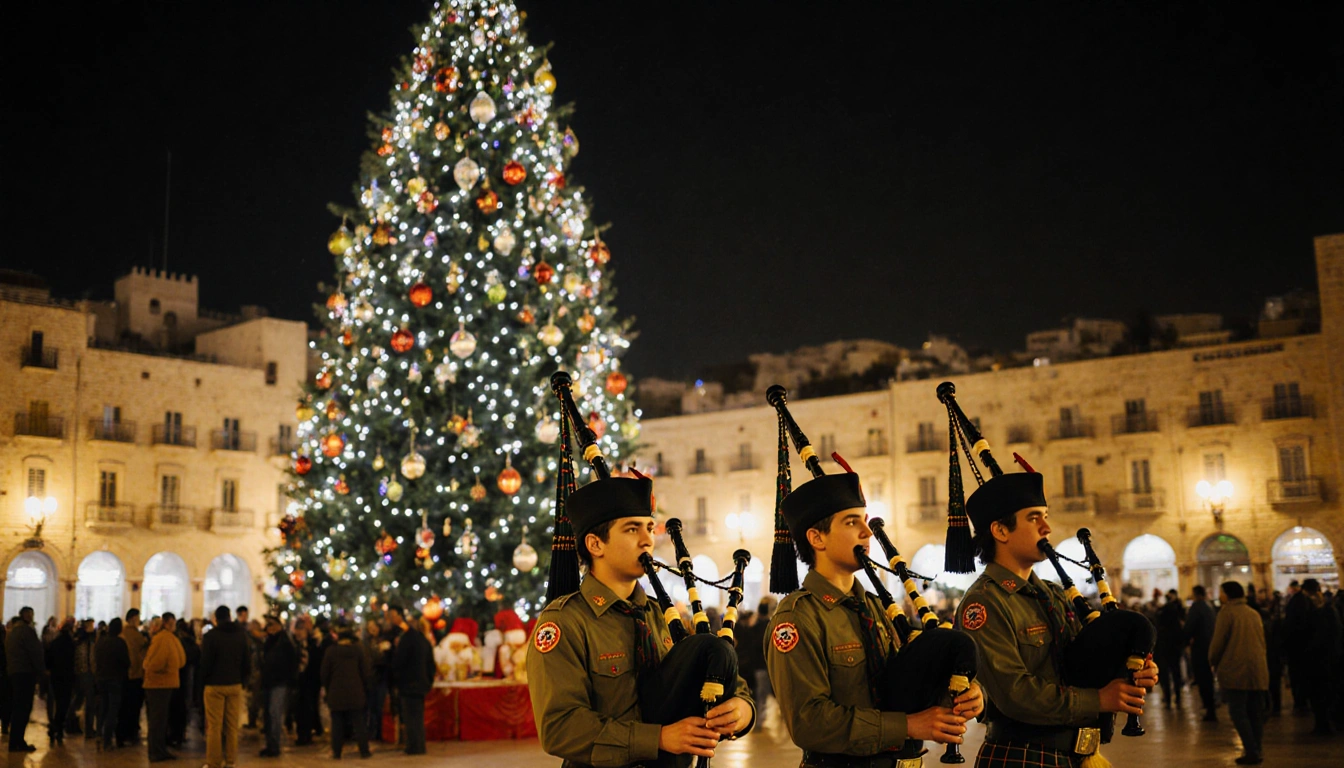
Thousands of people gathered in Bethlehem’s Manger Square on Christmas Eve, marking the first real celebration in the city since the Israel-Hamas war began. A giant Christmas tree, missing during the conflict, was unveiled on Wednesday, standing tall above a parade of scouts who played bagpipes. The sight of the tree and the music signaled a return to normal life for many residents.
Return of the Tree and the Scout Parade
The tree’s re-appearance was a centerpiece of the festivities. It followed a procession that began in Jerusalem and ended in Bethlehem, during which Cardinal Pierbattista Pizzaballa, the highest Catholic official in the Holy Land, delivered a message of hope. He urged, “a Christmas full of light.”
Scouts from across the West Bank marched silently for two years as a protest against the war. This year, they streamed through Bethlehem’s streets with Palestinian flags and tartan draped over their bagpipes, drummers spinning mallets adorned with pompoms. The sight of the marching bands was described by residents as “very emotional” and a sign that people are trying to celebrate peace and love.
Cardinal Pizzaballa’s Message of Light
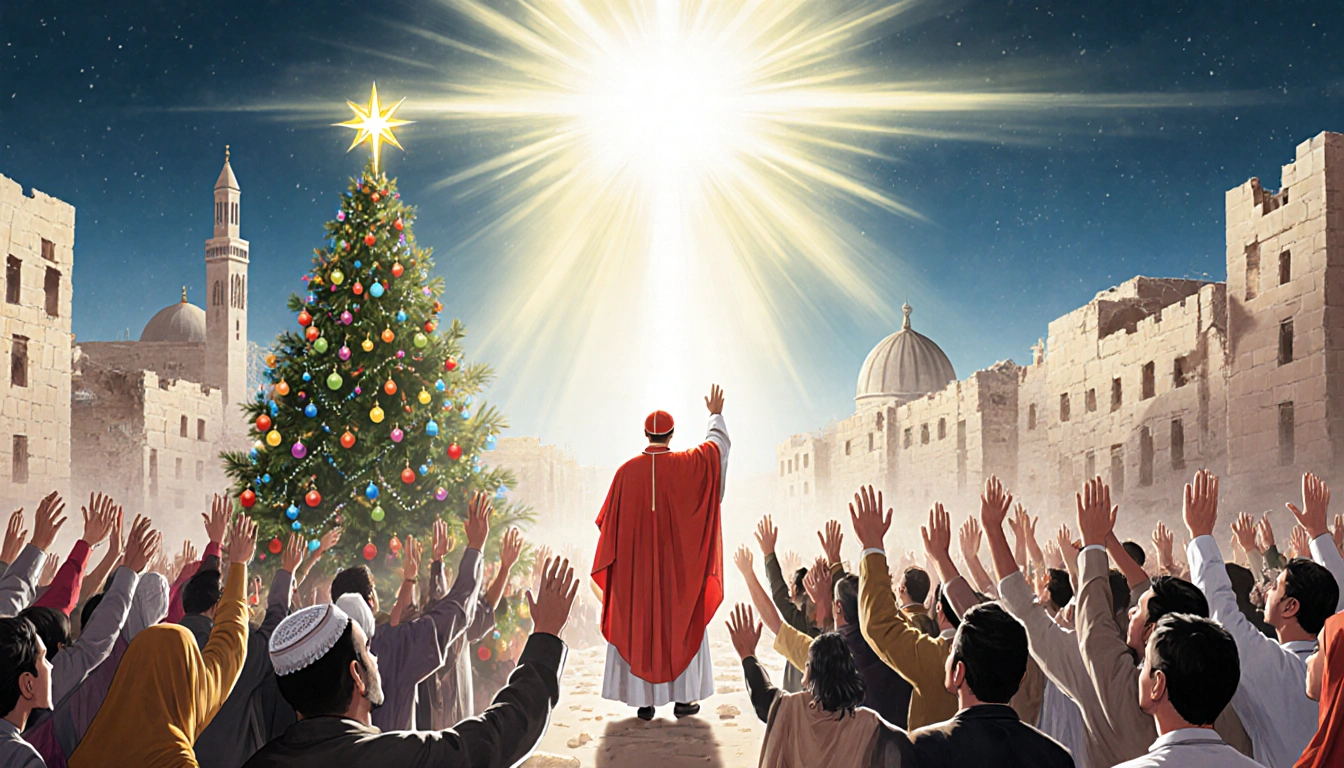
Upon arriving in Manger Square, Pizzaballa spoke to thousands of Christians and Muslims. He said he came bearing greetings from Gaza’s tiny Christian community, where he had held a pre-Christmas Mass on Sunday. He added that among the devastation he saw a desire to rebuild. He declared, “We, all together, we decide to be the light, and the light of Bethlehem is the light of the world.”
The Cardinal’s remarks came at a time when the city’s economy has been severely affected. Around 80% of Bethlehem’s residents, who live in a Muslim-majority city, rely on tourism-related businesses, according to the local government. The return of the tree and the parade signals a possible rebound for these businesses.
Tourism and Economic Impact
The impact of the war on tourism has been profound. The unemployment rate in Bethlehem jumped from 14% to 65% during the Gaza war, as stated by Mayor Maher Nicola Canawati earlier this month. About 4,000 residents have left the city in search of work, a trend that concerns the Christian community, which now accounts for less than 2% of the West Bank’s roughly 3 million residents.
Tourism statistics underscore the significance of the holiday. The Israeli Ministry of Tourism estimates that 130,000 tourists will visit Israel by the end of December, including 40,000 Christians. In 2019, a banner year before the pandemic, the ministry reported that 150,000 Christian tourists visited during Christmas week alone.
Personal Stories of Hope
Georgette Jackaman, a tour guide, welcomed the day with optimism. “Today is a day of joy, a day of hope, the beginning of the return of normal life here,” she said. She and her husband Michael, both guides from established Christian families, have never celebrated a real Christmas for their two children, aged 2½ and 10 months, due to the war.
During the conflict, the Jackamans created a website selling Palestinian handicrafts to support others who had lost their livelihoods. Their story illustrates how residents are finding new ways to cope and rebuild.
French visitor Mona Riewer explained her motivation: “I came because I wanted to better understand what people in Palestine are going through, and you can sense people have been through a very hard time.” She added that being in Bethlehem helped her appreciate the holiday’s meaning. “Christmas is like hope in very dark situations, a very vulnerable child experiencing harshness,” she said.
Fadi Zoughbi, who once oversaw logistics for tour groups, noted the excitement of his children as they watched the marching bands. He described the parade as a symbol of resilience and a step toward normalcy.
Irene Kirmiz, now living in Ramallah, recalled the parade as one of her favorite Christmas traditions. Her 15-year-old daughter plays the tenor drum with the Ramallah scouts. Kirmiz shared that the family had to wake at 5 a.m. to reach the parade, waiting up to three hours at Israeli checkpoints-an increase from the 40-minute drive before the checkpoints became more frequent.
Broader Context of Conflict and Resilience
Despite the Gaza ceasefire that began in October, tensions remain high across the West Bank. Israel’s military continues frequent raids, citing a crackdown on militants. Attacks by Israeli settlers against Palestinians have reached their highest level since the United Nations humanitarian office began collecting data in 2006. Israel captured the West Bank in the 1967 Middle East war.
The Palestinian Authority has limited autonomy in parts of the territory, including Bethlehem. President Mahmoud Abbas is expected to attend midnight Mass for the first time in two years, according to the mayor. This attendance would mark a significant moment for the Christian community.
During the past two years, heads of churches in Jerusalem urged congregations to forgo “any unnecessarily festive activities.” They encouraged priests and the faithful to focus on Christmas’s spiritual meaning and called for “fervent prayers for a just and lasting peace for our beloved Holy Land.”
Key Takeaways
- Bethlehem’s first real Christmas in two years featured a revived tree and a lively scout parade.
- Cardinal Pizzaballa emphasized unity and light as the city’s guiding principles.
- Tourism and employment are slowly rebounding, but challenges remain for a city heavily reliant on visitor income.
The return of the tree, the music of the scouts, and the hopeful words of residents signal a tentative step toward normalcy in Bethlehem, a city that has endured prolonged conflict and economic hardship. As tourism slowly resumes and communities gather, the spirit of Christmas offers a beacon of hope for the future.