At a Glance
- Greenland hosts the world’s largest untapped rare earth reserves, yet zero active mines
- China controls 98% of global gallium and 60% of germanium, key tech minerals also in Greenland
- Only two mines operate on the island despite 140+ active mineral licenses
Why it matters: Access to these minerals could reshape U.S. tech supply chains, but economic and logistical hurdles remain massive.
President Donald Trump’s renewed interest in acquiring Greenland has spotlighted the island’s vast but largely untapped mineral wealth, including critical materials essential for modern technology and national security.
House Speaker Mike Johnson told The Hill that America’s pursuit of Greenland “has to do with national security and critical minerals and many other reasons,” though Trump himself stated in December, “We need Greenland for national security, not for minerals.”
The U.S. Geological Survey identifies 60 minerals as critical for American economy and security. A subset of these, called rare earth elements like neodymium and dysprosium, power magnets and motors in America’s tech industry. Others drive semiconductors fueling the artificial intelligence boom.
China dominates rare earths production and refining, using access as a negotiating chip. On Thursday, bipartisan lawmakers introduced legislation to establish a $2.5 billion strategic rare earths reserve.
Greenland’s Mineral Potential
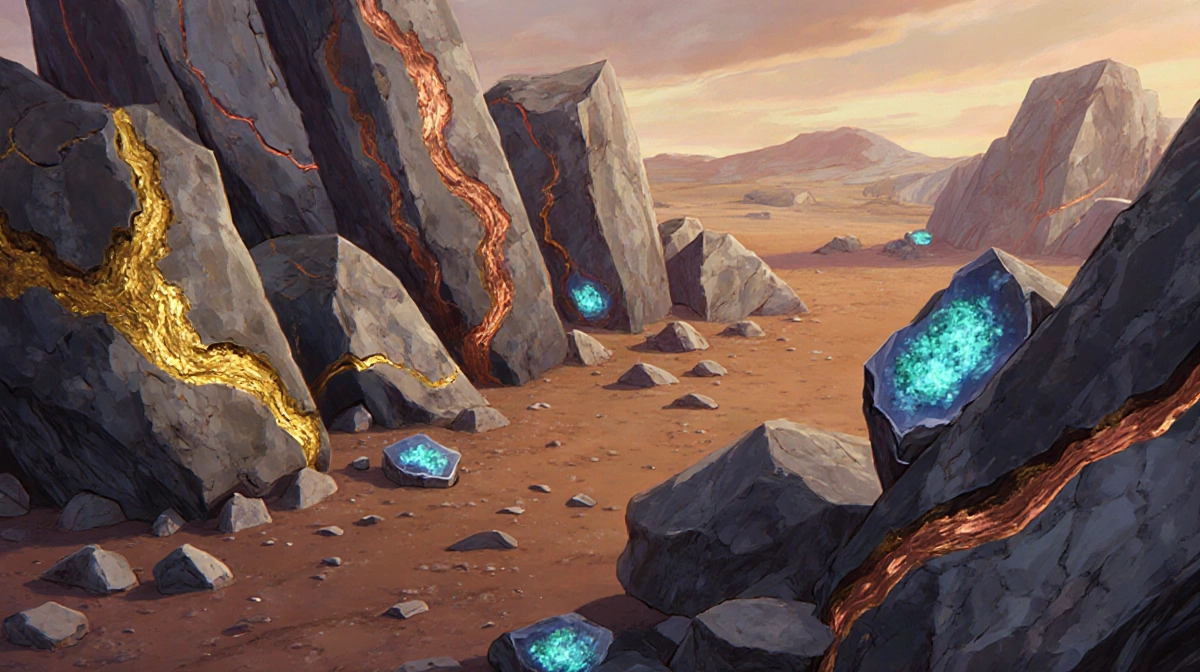
Ancient geological processes left Greenland with valuable deposits from gold and iron to copper and graphite. The USGS states Greenland holds the world’s largest rare earth reserves of any territory without active mines.
Ted Feldmann, mineral exploration expert and Durin Mining Technologies founder, supports expanding American presence in Greenland “to counter Russia and China” but warns: “I don’t think we should go there for the minerals.”
The Tanbreez deposit in southern Greenland ranks among the world’s largest rare earth mineral deposits. However, Feldmann notes the mineral contains such a small percentage of valuable metal that shipping it “probably isn’t economically viable.”
Beyond rare earths, Greenland possesses the world’s third-largest known land deposit of these elements, plus extensive germanium and gallium stores. Germanium components fiber-optic wires while gallium semiconductors power consumer electronics, data centers, and quantum devices.
China controls approximately 98% of global gallium and 60% of germanium supplies, particularly dominating mineral refining post-extraction.
Mining Challenges
Jack Lifton, Critical Minerals Institute co-chairman, emphasizes that refining presents the real challenge: “There are lots of rare earths around the world, but the issue is refining them. The American rare earth industry could fit inside of a large bus.”
Greenland’s isolation, harsh conditions, environmental stewardship, and mining industry price sensitivity leave most resources untapped. The island hosts over 140 active mineral licenses but only two operational mines.
Eldur Olafsson, Amaroq Ltd. CEO, operates one of Greenland’s two active mines – a gold mine in southern Greenland. He argues successful Greenlandic mining requires more than capital.
“Denmark is not really a resource-driven country, so the capital support up until this date has not been enough to get more mining going,” Olafsson told News Of Los Angeles. “For mining you need more than money. You also need people. You need to physically move people and build infrastructure, make roads, bridges, harbors, all of these different things.”
Greenland’s climate and sparse population – roughly 60,000 people across the territory – don’t deter Olafsson. He notes that Alaska, Canada, Norway, Sweden, and Russia all operate major Arctic mines.
“We always need new mining areas, or we need to reprocess metal, to have enough metal for the revolution that is coming, which is AI and similar technology,” Olafsson said.
Market Volatility
Even operational mines face closure from mineral price fluctuations. The Black Angel lead-zinc mine at Maarmorilik operated from 1973 until 1990 before shutting down with substantial untapped reserves. Low zinc prices prevented reopening.
To support America’s rare earth industry, the Department of Defense entered a unique 10-year public-private partnership with MP Materials in July. The initiative aims to bolster America’s rare earth supply chain and reduce dependence on Chinese magnet sources through a Colorado mine.
The Trump administration has also mentioned Venezuela’s critical minerals as potential grounds for American intervention. Commerce Secretary Howard Lutnick cited the country’s “steel” and “all the critical minerals” with “a great mining history that’s gone rusty.”
Lifton dismisses Venezuela’s rare earth potential: “We do not know anything about rare earths in Venezuela. I’ve been in this business for decades. I’ve never heard of Venezuela mentioned as a source of rare earths.”
He attributes such claims to political naivete: “People who don’t have any idea what they’re talking about are talking about rare earths in Venezuela. I mean, my God, this is ridiculous.”