At a Glance
- Agatha Christie vanished on Dec. 3, 1926 after a fight with her unfaithful husband and was found 11 days later checking into a Yorkshire spa under the surname of his mistress.
- Police feared suicide; more than 10,000 volunteers joined the search while Sir Arthur Conan Doyle consulted a medium using one of her gloves.
- The official explanation was amnesia, but letters she wrote that night, her use of the mistress’s name, and later memoir hints keep the motive debated.
**Why it matters: The episode shaped Christie’s life and public image, inspiring books, films and endless speculation about what really happened during those missing days.
Agatha Christie’s 1926 disappearance remains one of literary history’s most enduring riddles. After a fierce argument with her husband, Colonel Archibald Christie, the 36-year-old crime writer drove off into the night, abandoned her car and evaded detection for nearly two weeks, only to resurface registered at a spa under the last name of her spouse’s lover. Police files, contemporary reports and Christie’s own later hints still leave the central question-why she vanished-unanswered.
The Night She Drove Away
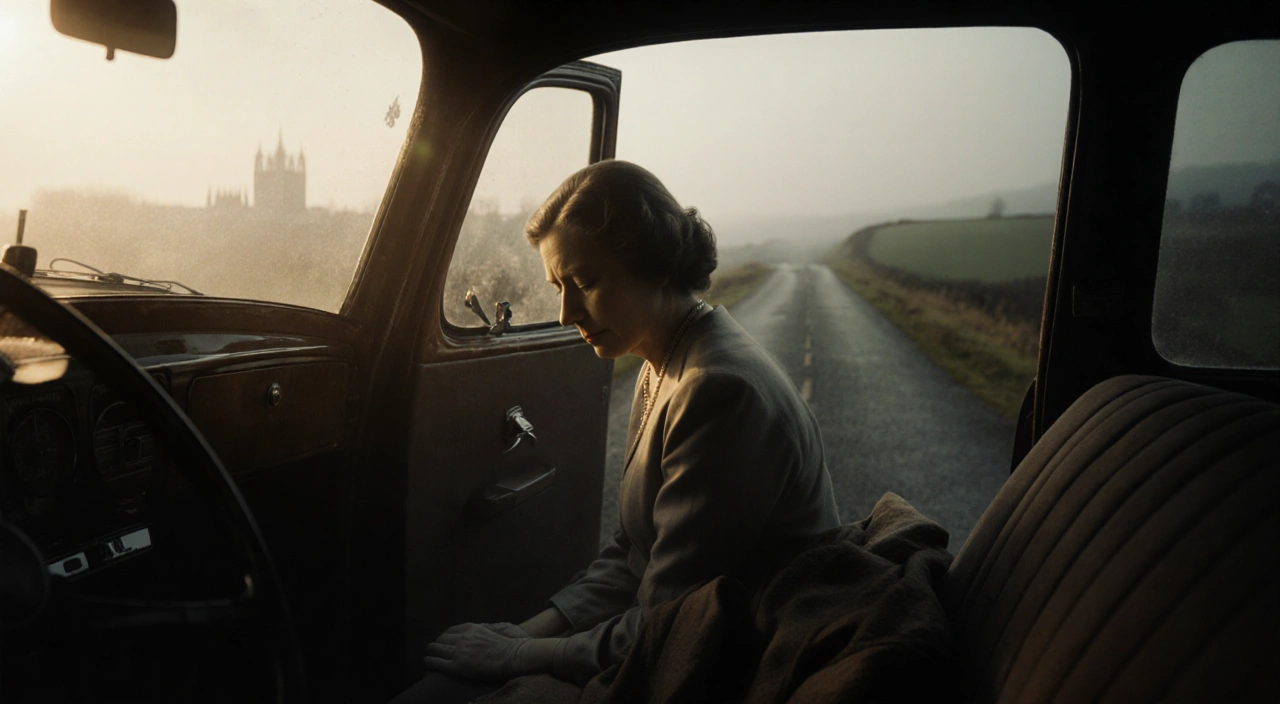
Christie left her Berkshire home around 9:45 p.m. on Dec. 3, 1926, kissing her sleeping 7-year-old daughter Rosalind goodbye. She packed a small suitcase, her driver’s license, a photo of the child and cash before steering her green Morris Cowley roadster into darkness.
The car was discovered the next morning perched above a chalk quarry at Newlands Corner, Guildford. Inside or nearby, officers found some of her garments, her license and a bottle labeled “poison lead and opium.” The New York Times of Dec. 6 described the vehicle as “actually overhanging the edge,” prevented from plunging in only by “a thick hedge-growth.”
The Marriage Under Strain
Archie Christie, a former World War I pilot, had asked for a divorce that August, confessing he was involved with a younger woman, Nancy Neele. The couple argued on Dec. 3, after which Archie departed to spend the weekend with friends-including Neele-leaving Agatha alone. Their daughter was not in the car during the incident.
The pair would divorce in 1928. Two years later Christie married archaeologist Sir Max Mallowan, a union that lasted until her death.
Massive Search Effort
News of the missing novelist exploded across front pages worldwide. One hundred policemen scoured the countryside that first weekend. Detectives briefly paused the hunt when Christie’s brother-in-law produced a letter claiming she had gone “for rest and treatment” in Yorkshire, but skepticism revived the search amid suicide fears.
More than 10,000 volunteers, bloodhounds and even Sir Arthur Conan Doyle joined the effort; Doyle gave one of Christie’s gloves to a medium.
Police floated several theories:
- She had drowned herself in a local spring.
- She had fled to London disguised in men’s clothes.
- Archie was eyed as a possible suspect but had an alibi.
Investigators learned she had posted four letters:
- A note to her secretary saying she would not return that evening.
- A message to her brother-in-law.
- A letter to her best friend Charlotte, stating she needed to “get away from here” because “it just wasn’t fair.”
- A sealed note to her husband, which, according to National Geographic, he read then destroyed.
## Discovery 200 Miles Away
On Dec. 15, 1926, Christie was recognized at the Swan Hydropathic Hotel in Harrogate, Yorkshire-more than 200 miles from her abandoned car. She had signed the register as “Teresa Neele,” adopting her rival’s surname.
When reporters pressed, Archie relayed that she “does not know who she is … she has suffered from the most complete loss of memory,” The New York Times quoted.
Theories on Why
Revenge scenario
Using Nancy Neele’s surname has fueled speculation Christie staged the episode to embarrass Archie, forcing him to leave his fiancée and return to her side, at least publicly, until the divorce could proceed.
Psychological collapse
Biographer Janet P. Morgan described a “hysterical fugue,” an amnesiac state triggered by extreme stress. Former doctor Andrew Norman, author of Agatha Christie: The Finished Portrait, told The Guardian in 2006 he believed she was suicidal and slipped into psychogenic amnesia after depression.
Publicity stunt
Archie told The Daily Mail Christie had “discussed the possibility of disappearing at will,” hinting the notion could have fed her fiction.
Christie’s Own Words
In a 1928 interview with The Daily Mail, Christie recalled driving past a quarry on the night of Dec. 3:
> “It came into my mind the thought of driving into it … I dismissed the idea at once” because Rosalind was in the car.
She continued:
> “That night I felt terribly miserable … I left home … with the intention of doing something desperate … When I reached a point … near the quarry, I turned the car off the road … let the car run … I was flung against the steering wheel, and my head hit something. Up to this moment I was Mrs. Christie.”
She never spoke publicly about the incident afterward. In her memoir she wrote, “For the first time in my life I was really ill,” listing forgetfulness, tears and insomnia as signs of “the beginning of a nervous breakdown.”
Echoes in Her Fiction
While no novel replicates the exact events, themes of disappearance, mistaken identity and unreliable memory thread through Christie’s work.
- The Murder of Roger Ackroyd, published the year before, features a narrator who is the killer and employs ellipses that suggest gaps in recollection.
- Unfinished Portrait, written under her Mary Westmacott pen name, follows a divorcing woman contemplating suicide, mirroring Christie’s emotional turmoil.
Cultural Aftershocks
The mystery endures nearly a century later, spawning books, films and television episodes:
- 1977 novel Agatha by Kathleen Tynan
- 1979 movie Agatha starring Vanessa Redgrave and Dustin Hoffman
- 2008 Doctor Who episode “The Unicorn and the Wasp”
- 2018 British TV movie Agatha and the Truth of Murder
- Recent novels A Talent for Murder (2017), The Mystery of Mrs. Christie (2022) and The Christie Affair (2022)
Nina de Gramont told The New York Times the detail that hooked her was Christie’s choice to register under the mistress’s surname: “That sort of made a story start to come into shape.”
Key Takeaways
- Christie’s 11-day absence was never fully explained; the amnesia claim satisfied police but not public curiosity.
- Her use of “Neele” as an alias links the episode directly to her husband’s infidelity, suggesting emotional retaliation.
- The massive search, media frenzy and literary legacy ensure the puzzle remains potent material for historians, biographers and screenwriters alike.
Even now, each retelling revives the same unanswered question: Was the Queen of Crime’s vanishing act a calculated revenge, a psychological break-or simply the perfect mystery she never needed to solve?