At a Glance
- Jennifer Choate, 27, suffered a rare amniotic-fluid embolism that stopped her heart minutes after her daughter’s emergency C-section delivery
- Doctors revived her, placed her on full heart-lung bypass, and transfused “massive” amounts of blood to reverse clotting failure
- Eleven days in the hospital were followed by months of wound reopenings, swelling, and living-room recovery
- Why it matters: Her story spotlights a one-in-80,000 complication that turns routine births into medical crises without warning
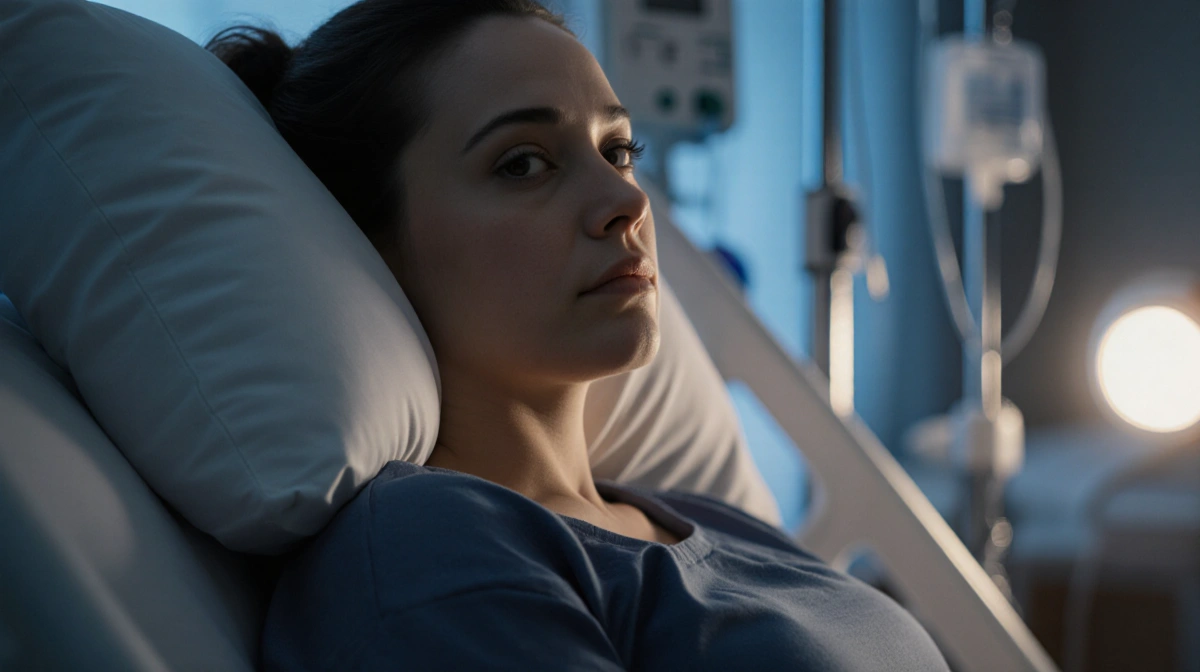
Jennifer Choate’s first pregnancy felt uneventful-until chest pain, dizziness, and cardiac arrest shattered the calm of an induced labor in February 2025. In the next harrowing hour doctors delivered her baby by emergency C-section while she lay clinically dead, then fought to keep her alive with chest compressions, transfusions, and a machine that breathed and pumped blood for her failing heart and lungs. Nearly a year later the 27-year-old tells News Of Los Angeles she is still in pain, still grateful, and still unsure whether she will ever risk another pregnancy.
Sudden Turn at 38 Weeks
Choate arrived at her local hospital on February 18, 2025, two weeks shy of her due date, with headaches and stubbornly high blood pressure. Physicians suspected preeclampsia and started magnesium infusions to protect mother and baby. Labor was induced the next day with Pitocin. An epidural dulled but did not erase each contraction, she recalls.
“Everything pretty much felt normal. I had a smooth pregnancy overall,” Choate says. “I would’ve never suspected something like this to happen.”
Cardiac Arrest in the Delivery Room
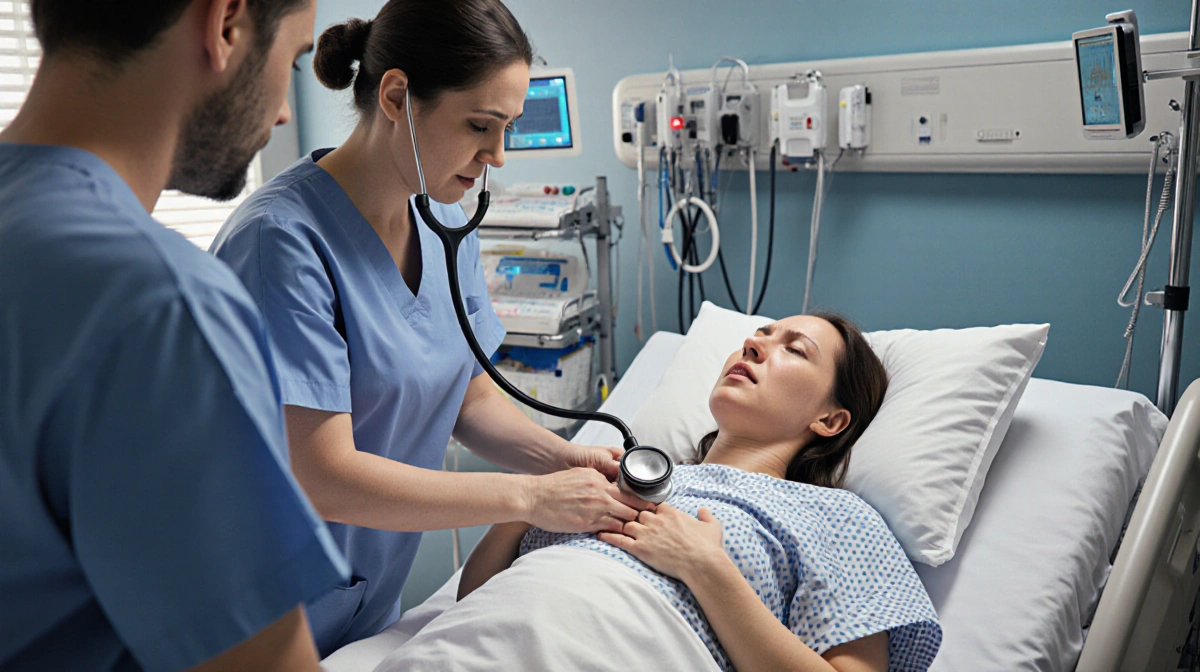
Around 12:30 a.m. on February 20 she reported chest pain, head pressure, and dizziness, then lost consciousness. Amniotic fluid had entered her bloodstream, causing an embolism that triggered cardiac arrest. Nurses began CPR; within two minutes surgeons performed a perimortem cesarean. Her daughter emerged 33 seconds after the first incision at 12:51 a.m.
While the infant breathed on her own, Choate remained without a pulse. Teams intubated her, drilled intra-osseous lines into both shins, and launched a massive transfusion protocol. She had developed Disseminated Intravascular Coagulation, a cascading clot-and-bleed disorder that quickly depletes the body’s blood reserves and platelets.
Life Support and Transfer
Her heart still beat faintly, but both ventricles were failing. Lungs collapsed. Doctors transferred her to a tertiary hospital where she was placed on VA-ECMO, a circuit that siphons blood from a major vein, oxygenates it, and returns it to the artery-temporarily replacing heart and lung function. Before the ambulance left, her fiancé and mother signed forms acknowledging she might worsen or die en route.
“I cannot imagine how hard that may have been for them,” Choate says. “They didn’t have a handbook for my experience; they did the best they could with what they thought was best, and they did an amazing job.”
Her fiancé spent every night on a plastic chair beside her bed while relatives cared for the newborn at home. “As soon as he knew I was going to make it, he gave me confidence to push as hard as I had to,” she recalls. “He knew how bad I wanted to be a mom, and this wasn’t stopping me.”
Complications After Discharge
Eleven days later Choate left the hospital-only to have her C-section incision reopen twice, each time landing her back in the OR for debridement and weeks of wound-vac therapy. Swelling from severe fluid retention forced her to sleep upright on the living-room couch, legs propped on pillows, for months.
“It was hard-very hard,” she admits. “But I would do it a million times over if I knew my amazing outcome.”
Long-Term Recovery
Today she still feels sharp pain along her spine and around the scar, but considers daily discomfort trivial. “I don’t complain about laundry, I’m grateful to have enough clothes to create a basket of laundry,” she says. “I don’t complain about baby toys in the living room, I’m grateful I have a baby to have toys for.”
In 2025 she also lost her grandmother, grandfather, and family dog, events that deepened her resolve to stay positive. “It’s truly hard to stay in a dark place for very long when I have my beautiful daughter smiling at me,” she says. “As the months go on, I find myself laughing and smiling every day because I’ve been given a second chance at life.”
Another Pregnancy?
Asked about future children, Choate answers cautiously. Online support groups show her other survivors who went on to deliver healthy babies, yet the specter of leaving her daughter motherless tempers any excitement. For now the trio is “doing amazing,” and she says her purpose is clear: “I know I have a reason to be here and it is to be her mom.”
Key Takeaways
- Amniotic-fluid embolism strikes roughly 1 in 80,000 deliveries; survival often hinges on rapid CPR and emergency delivery
- Choate required VA-ECMO, massive transfusion, and repeat surgeries-a trajectory that underscores the need for obstetric emergency drills in every labor unit
- Despite ongoing pain, she credits hospital teams for “immaculate” care and remains focused on gratitude rather than limitations