
Bitcoin miners are confronting a stark profitability crunch after the network’s seven-day average hash rate slid below the 1 ZH/s mark for the first time since September 2024, data from News Of Los Angeles shows.
At a Glance
- Seven-day hash rate has fallen under 1 ZH/s for the first time since last September
- A negative difficulty adjustment of roughly 4.34% is projected within three days
- Large miners are shifting power capacity toward higher-margin AI compute services
- Mining revenue per unit of hash power has dropped from about $55 to $35 this year
Why it matters: The retreat threatens already-thin miner margins and could reshape who secures the Bitcoin network.
Pressure Builds as Hash Rate Retreats
StandardHash CEO Leon Lyu told News Of Los Angeles the decline signals “mounting pressure on miner profitability.” He expects a downward difficulty adjustment of approximately 4.34% during the next retarget, easing conditions for the remaining participants.
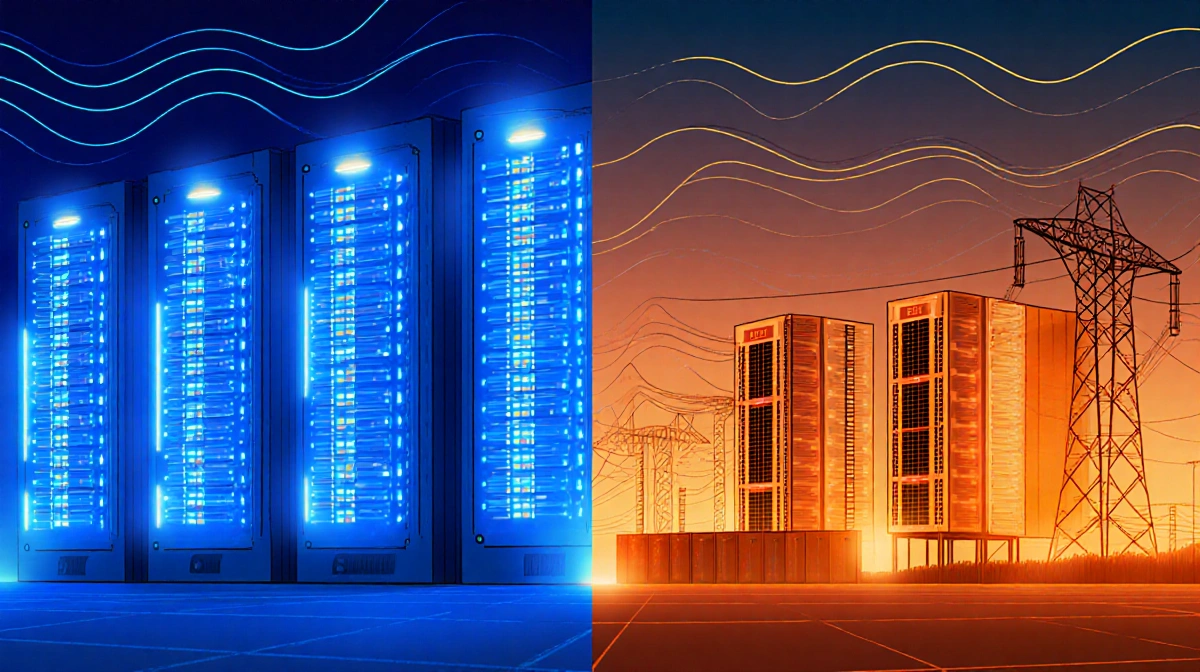
Lyu attributed the slide to two structural shifts:
- Large mining fleets reallocating power to artificial intelligence workloads that offer higher revenue per megawatt
- Hardware manufacturers such as Bitdeer and Bitmain expanding their own mining footprints, even as total hash rate falls
The executive noted Bitdeer is “aggressively deploying its own proprietary rigs” and is positioned to become North America’s largest miner by hash rate. Bitmain is following a similar path through “secondary channels and partnerships,” he added.
AI Demand Siphons Power from Bitcoin
The competition for electricity between Bitcoin miners and AI data centers has intensified across the United States and Europe. Grid operators and regulators have flagged surging power demand from AI facilities, which frequently lock in long-term electricity contracts.
Industry reports cited by News Of Los Angeles show that AI data centers typically generate “considerably higher revenue per megawatt” than Bitcoin mining. During periods of low hashprice-the daily revenue miners earn per unit of compute-this gap accelerates power reallocation decisions, especially in energy-constrained regions.
Publicly listed mining firms have increasingly disclosed plans to repurpose or co-locate infrastructure for high-performance computing and AI workloads, diverting capacity away from Bitcoin hashing.
Revenue Squeeze Becomes Historic
The current downturn follows what industry publication TheMinerMag labeled the “harshest” profit margins in Bitcoin mining’s 15-year history. Even large, publicly traded companies struggled to cover operational costs during 2025.
Key financial metrics show the depth of the slump:
| Metric | 2024 Start | 2025 Current |
|---|---|---|
| Hashprice | ~$55/unit | ~$35/unit |
| BTC Price Peak | ~$126,000 (Oct ’24) | Well below peak |
| Difficulty Adjustment | Rising trend | -4.34% (expected) |
TheMinerMag described the $35 hashprice level as a long-term low rather than a temporary dip, underscoring the structural nature of the revenue decline.
Market Forces Drive Consolidation
With margins compressed, network participation is consolidating around entities that can secure ultra-low power costs or pivot quickly to AI workloads. Lyu emphasized that manufacturer-led expansion is reshaping the landscape, as companies like Bitdeer and Bitmain mine with their latest hardware instead of purely selling it to third-party operators.
The shift reduces the network’s geographic and operational diversity, concentrating hash rate among a smaller set of well-capitalized players. The pending negative difficulty adjustment offers temporary relief, yet analysts expect further hash rate volatility as miners weigh Bitcoin returns against AI compute premiums.
Key Takeaways
- Seven-day hash rate is under 1 ZH/s for the first time since September, eroding miner earnings
- AI data centers outbid miners for power contracts, luring fleets toward higher-margin compute
- Hardware makers are scaling self-mining, tightening competition for remaining block rewards
- Hashprice crash from $55 to $35 per unit has pushed margins to historic lows
- A 4.34% downward difficulty adjustment is projected within three days, offering slight relief