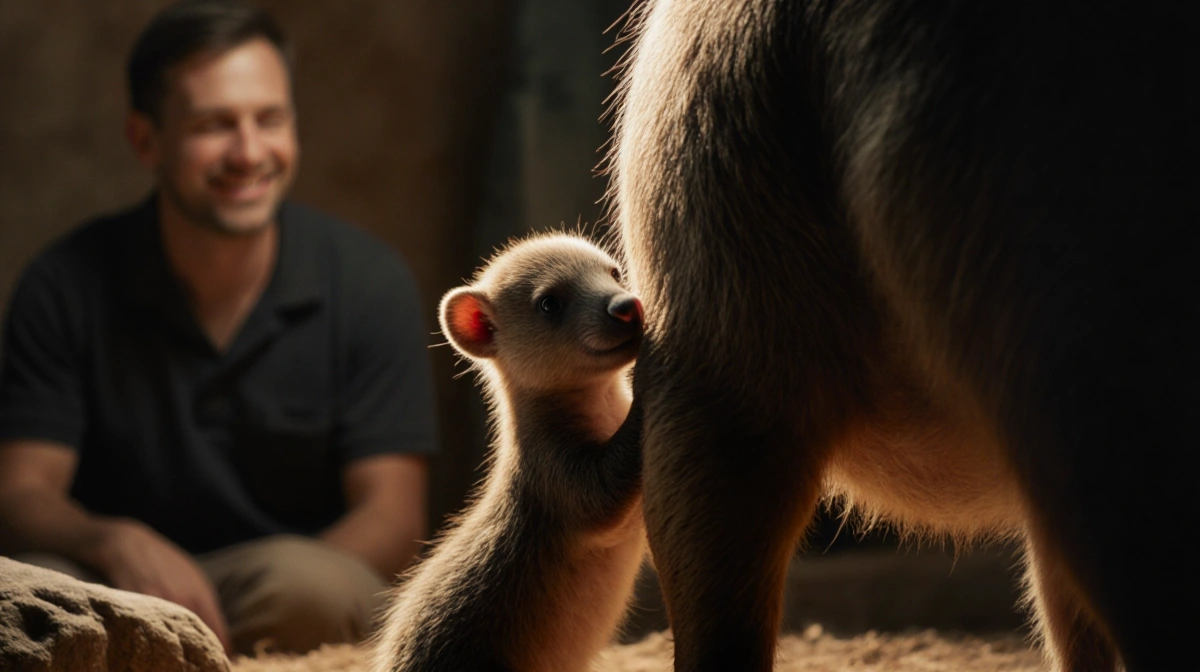
At a Glance
- Nashville Zoo celebrated its first aardvark birth on January 1, 2026
- The calf weighs about four pounds and is roughly the size of a rolling pin
- This marks the 34th aardvark birth in Association of Zoos & Aquariums-accredited facilities
- Why it matters: The birth boosts the critically low population of aardvarks in human care
Nashville Zoo has announced the arrival of its first-ever aardvark calf, born at 6:06 a.m. on New Year’s Day. The birth represents a significant milestone for both the zoo and the species’ conservation efforts.
Historic Birth
The zoo shared the news in a Facebook post on January 12, revealing that the newborn calf arrived to parents Karanga and Winsol. The baby aardvark weighs approximately four pounds and measures roughly the size of a rolling pin.
Both mother and calf are reportedly doing well under close monitoring by the animal care team in a behind-the-scenes area of the facility.
Conservation Significance
This birth holds particular importance for aardvark conservation. Before 2025, only 33 aardvarks had been born in zoos accredited by the Association of Zoos & Aquariums (AZA). The Nashville Zoo calf becomes the 34th overall and the first born since 2024.
The calf’s father, Winsol, made history as the first aardvark to live at the Tennessee zoo. He arrived from Cincinnati Zoo & Botanical Garden in March 2019 at one year old. Karanga joined the zoo in 2021 from Disney’s Animal Kingdom.
Breeding Challenges
Jac Menish, Nashville Zoo’s curator of behavioral husbandry, explained the difficulties of studying and breeding aardvarks in captivity.
“In the wild, aardvarks are difficult to study because they are a nocturnal, burrowing species,” Menish said in a press release.
The zoo’s approach proved successful through hands-on care and training. Both Karanga and Winsol serve as Ambassador Animals, receiving extensive keeper interaction including leash training.
“This has allowed us to gather valuable information about their breeding behaviors and pregnancy,” Menish noted. “Periodic ultrasounds were conducted once the pregnancy was confirmed, and our keeper team began a nonstop baby watch to observe signs of labor and delivery.”
Future Plans
While the zoo continues to monitor the calf’s development, officials have indicated the young aardvark will likely relocate to another AZA-accredited facility. This move would enable the calf to “meet a mate and, hopefully, contribute to the population,” supporting ongoing conservation efforts for the species.
The birth represents a major achievement for Nashville Zoo’s animal care team and their commitment to preserving vulnerable species through managed breeding programs.
Key Takeaways
- Nashville Zoo achieved its first aardvark birth on January 1, 2026
- The calf becomes only the 34th aardvark born in AZA-accredited facilities
- Extensive keeper interaction and monitoring enabled successful breeding
- The birth supports broader conservation efforts for this elusive species