At a Glance
- The 40th federal Martin Luther King Jr. Day unfolds amid sharp political divisions over civil rights rollbacks
- President Trump’s executive orders have dismantled DEI programs and shifted park-fee holidays away from King Day and Juneteenth
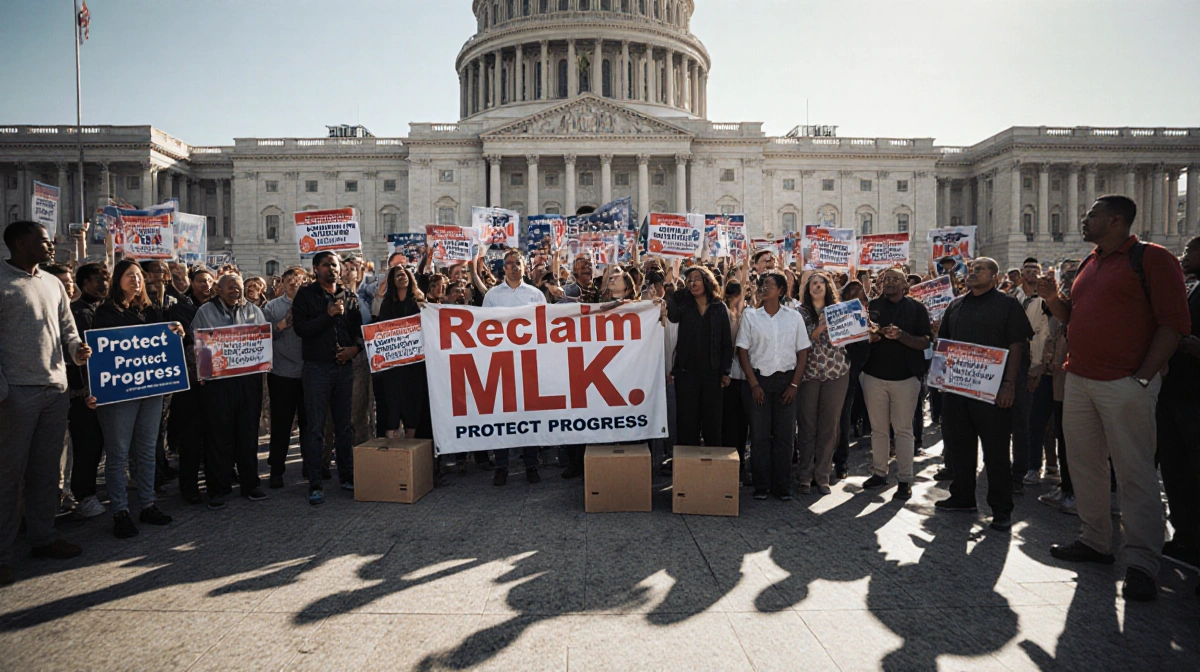
- Some Black advocacy groups are staging “Reclaim MLK Day of Action” rallies in response
- Why it matters: The holiday’s traditional message of unity is colliding with fears that federal policies are eroding the very civil-rights progress King championed
Martin Luther King Jr. Day celebrations on January 20, 2025 are proceeding nationwide, but many events carry a tone of protest rather than pure commemoration. One year after President Donald Trump‘s second inauguration landed on the same date, his administration’s actions have intensified criticism from civil-rights advocates who say the holiday’s ideals are under assault.
Policy reversals stoke fears
Since last year’s inauguration, Trump has signed executive orders titled “Ending Illegal Discrimination And Restoring Merit-Based Opportunity” and “Ending Radical And Wasteful Government DEI Programs and Preferencing.” These directives have accelerated the dismantling of diversity, equity, and inclusion initiatives across federal agencies, corporations, and universities.
In December, the National Park Service announced it will no longer waive entrance fees on King Day and Juneteenth, shifting the free-admission days to Flag Day and Trump’s birthday. Critics view the change as symbolic of broader efforts to downgrade the significance of civil-rights milestones.
Federal law-enforcement activity has also drawn scrutiny. Earlier this month, Immigration and Customs Enforcement agents fatally shot an unarmed Minneapolis woman while targeting the city’s Somali immigrant population. The incident, coupled with Trump’s recent assertion that civil-rights reforms harm white Americans, has amplified concerns about racial justice under the current administration.
Conservatives cite King’s color-blind vision
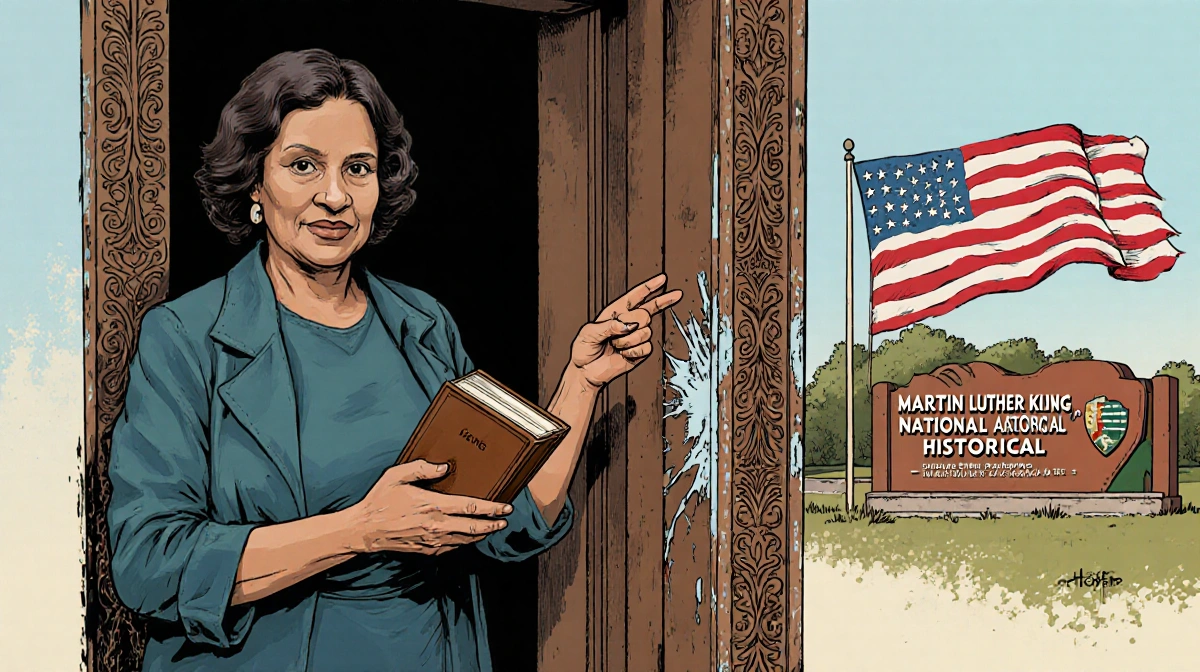
Some conservative voices argue the holiday should focus on King’s call to judge people by character, not skin color. Brenda Hafera, a research fellow at the Heritage Foundation, urged Americans to visit the Martin Luther King Jr. National Historical Park in Atlanta or reread the 1963 “I Have a Dream” speech.
Hafera contends that modern anti-racism and critical-race-theory activism contradicts King’s vision of a color-blind society. “Efforts should be conducted in the spirit of what Martin Luther King actually believed and what he preached,” she said.
Advocates warn of eroding progress
Civil-rights leaders counter that the administration is actively dismantling the movement’s gains. Maya Wiley, president and CEO of the Leadership Conference on Civil and Human Rights, said health-care access, affordable housing, good-paying jobs, and union representation-all pillars of King’s “beloved community”-are at risk.
Gov. Wes Moore of Maryland, the nation’s third elected Black governor, defended the Civil Rights Movement’s legacy. “We haven’t always been perfect, but we’ve always strived to be this more perfect union,” he told Daniel J. Whitman.
The White House did not respond to a request for comment.
“Reclaim MLK” rallies planned
Major advocacy organizations are using the holiday to stage resistance events. The NAACP, which scheduled numerous MLK Day programs, emphasized that communities of color and immigrants feel unsafe. Wisdom Cole, the group’s senior national director of advocacy, said people must “put their safety first, even if their government isn’t.”
The Movement for Black Lives-a coalition linked to Black Lives Matter-organized demonstrations in Atlanta, Chicago, and Oakland, California under the banner “Reclaim MLK Day of Action.”
> “This year it is more important than ever to reclaim MLK’s radical legacy, letting his wisdom and fierce commitment to freedom move us into the action necessary to take care of one another, fight back, and free ourselves from this fascist regime,” said Devonte Jackson, a national organizing director for the coalition.
Local cancellations spark concern
Not every traditional event will proceed. Indiana University Indianapolis canceled its 60-year-old MLK dinner, citing “budget constraints.” The school’s Black Student Union suggested on social media that “broader political pressures” may have influenced the decision. Students have since organized smaller “eat-ins” to maintain community observance.
In Westbrook, Maine, St. Anthony of Padua Catholic Church called off its MLK Day service after the pastor heard rumors of ICE agents in the area and worried for attendees’ safety, according to a parish social-justice committee member.
Major sites carry on
Despite tensions, large institutions are maintaining regular programming. The National Civil Rights Museum in Memphis-built on the site of the Lorraine Motel where King was assassinated on April 4, 1968-is offering free admission and its usual slate of celebrations.
> “This milestone year is not only about looking back at what Dr. King stood for, but also recognizing the people who continue to make his ideals real today,” said museum president Russell Wigginton.
Key takeaways
- Federal policy shifts have moved park-fee holidays away from civil-rights dates and eliminated DEI programs, angering advocates
- Conservative groups stress King’s color-blind message, while Black-led coalitions frame the day as one of resistance
- A handful of local cancellations contrast with nationwide rallies and museum events, indicating the holiday’s evolving role in American political life