At a Glance
- The iconic Trevi Fountain will now charge €2 for visitors who stand on the steps of the basin.
- The fee takes effect on Feb 1 and could bring in €6.5 million annually.
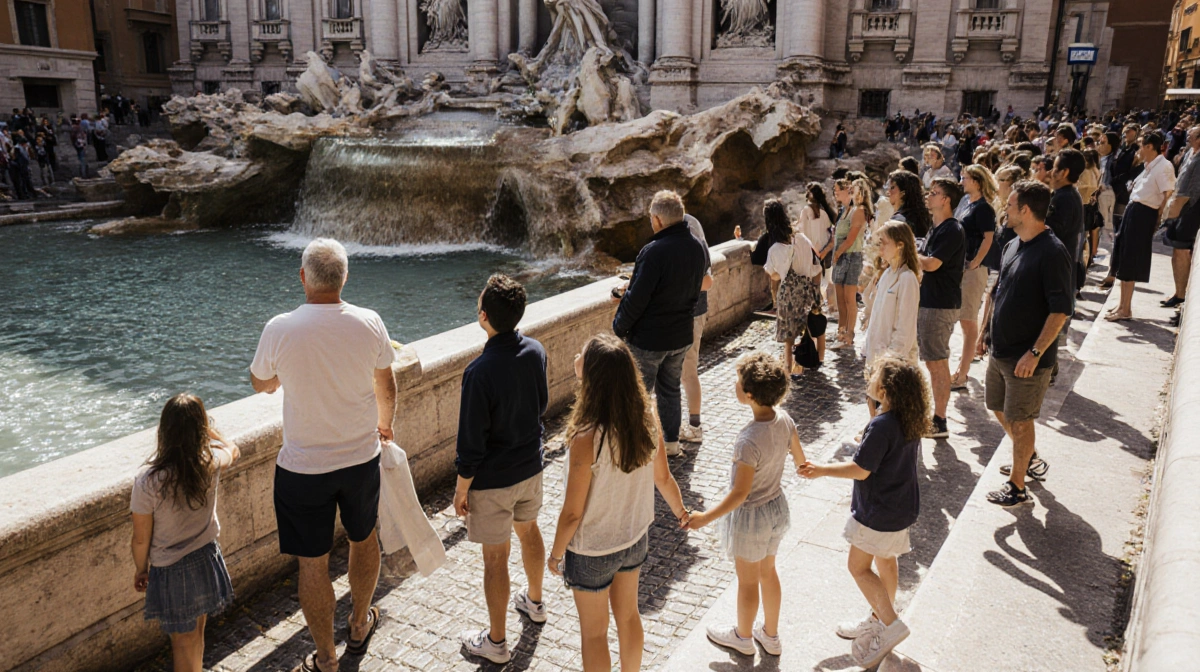
- About 30,000 people visit daily, often causing congestion and unruly behavior.
- Children under five, disabled visitors, and those with an accompanying person are exempt.
The Trevi Fountain, the most famous fountain in the world, is set to change how tourists experience the landmark. Beginning on Feb 1, a €2 fee will apply to anyone standing on the stone steps surrounding the basin. The measure aims to reduce crowding and improve safety.
The mayor of Rome, Roberto Gualtieri, explained the rationale behind the new charge. “Two euros isn’t very much … and it will lead to less chaotic tourist flows,” he told reporters in December. The mayor’s comments were echoed by city officials who say the fee will help manage the flow of visitors.
The fee applies only to those on the steps. Visitors standing directly outside the basin steps in the Piazza di Trevi can enjoy the fountain for free. The charge is not applied to the surrounding plaza or other nearby attractions.
Exemptions
- Children under the age of five
- Visitors with disabilities and an accompanying person
- Tourists who are residents of Rome (subject to upcoming free status for certain sites)
- Those who do not stand on the steps
The decision follows a major restoration that concluded in late 2024. The restoration included a new queueing system designed to control visitor flow. The system was introduced to address the frequent traffic jams that arise when crowds gather around the plaza.
The Trevi Fountain was commissioned in 1640 by Pope Urban VIII of the Barberini family. Architect Nicola Salvi oversaw its construction, and the fountain was completed in 1762. It remains the largest Baroque fountain in Rome.
Tradition dictates that visitors toss a coin into the fountain with their right hand over their left shoulder. Legend says that this act guarantees a return to Rome. The practice has contributed to the fountain’s popularity and the high number of daily visitors.
The new fee could generate €6.5 million annually, according to city projections. This revenue will support maintenance and crowd management efforts. It also aligns with a broader trend of charging for previously free attractions.

The Pantheon, another historic Roman site, imposed a five-euro entry fee in 2023. In 2019, the city banned sitting on the Spanish Steps, which are close to the Trevi Fountain. Venice has also begun charging visitors who are not staying overnight during peak season.
The BBC reports that the Sacred Area of Largo Argentina and other historical sites will soon be free for residents of Rome. This policy is part of a larger plan to balance tourist revenue with local access.
City officials say the fee will be collected at a kiosk near the fountain’s entrance. Visitors will pay with cash or card, and receipts will be issued. The process is designed to be quick to avoid further congestion.
The measure has sparked mixed reactions. Some tourists welcome the idea of a small fee to improve safety, while others worry about the impact on the free-access tradition. Local businesses have expressed concerns about potential declines in foot traffic.
Key Takeaways
- The Trevi Fountain will charge €2 for step-standing visitors starting Feb 1.
- The fee is intended to reduce crowding and generate €6.5 million annually.
- Exemptions include children under five, disabled visitors, and those with an accompanying person.
- The move follows a major restoration and aligns with similar charges at other Roman sites.