At a Glance
- Fernando Goldsztein founded the Medulloblastoma Initiative after his son’s tumor recurred.
- The organization has raised $13 million and coordinates 16 labs worldwide.
- Medulloblastoma affects 500 children a year, accounting for 20% of all childhood brain tumors.
- A 30% recurrence rate leaves families with a near-zero 5-year survival outlook.
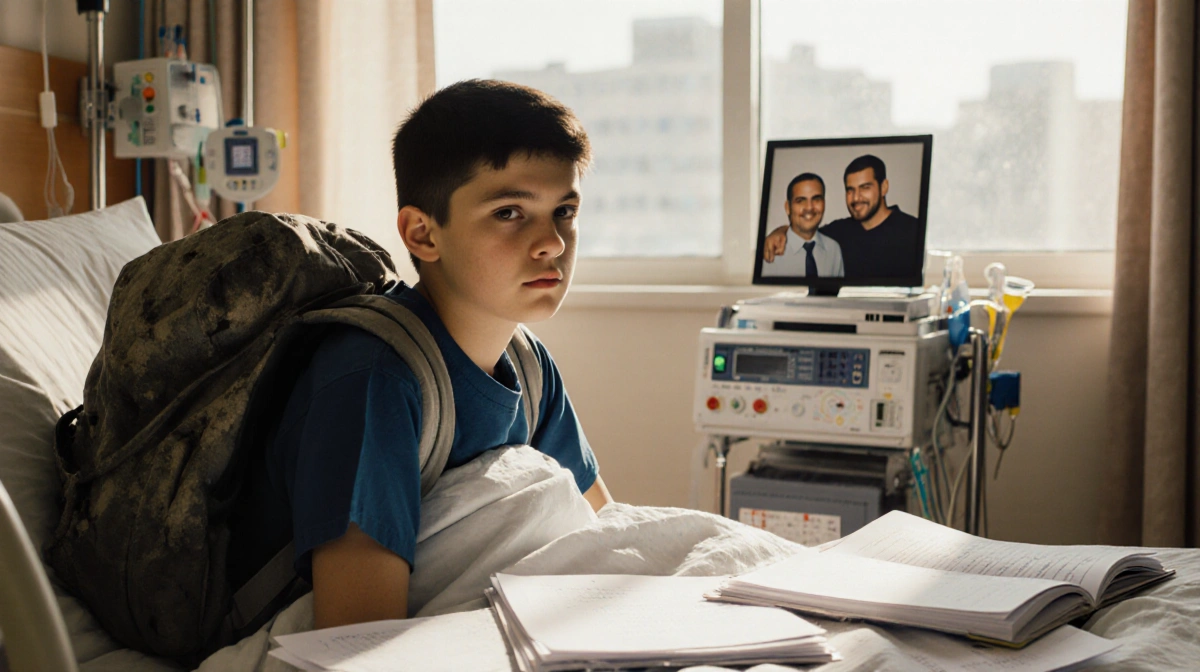
The story of a Brazilian entrepreneur turned cancer advocate began in 2015 when his nine-year-old son, Frederico, started experiencing headaches and vomiting. A new symptom-double vision-led doctors to diagnose a malignant brain tumor known as medulloblastoma. The diagnosis shocked the family and set the stage for a lifelong fight against a rare, aggressive cancer.
The Tumor That Changed a Family
When Frederico was first examined, doctors found nothing seriously wrong. It was only after he reported double vision that a brain scan revealed a tumor. The family was terrified; as Fernando Goldsztein described, the diagnosis felt like “the watch stopped and our lives froze.”
- 2015: Frederico’s first symptoms.
- Diagnosis of medulloblastoma at age 9.
- 2021: Fernando launched the Medulloblastoma Initiative to raise money and awareness.
From Surgery to Survival
Frederico underwent surgery to remove the tumor, followed by a rigorous treatment plan. He traveled to Boston for months of radiation and chemotherapy, enduring side effects such as nausea, vomiting, and loss of taste. Despite the hardships, Frederico’s courage never wavered.
- Surgery to remove the tumor.
- 30 sessions of radiation.
- Nine rounds of chemotherapy.
- Side effects: nausea, vomiting, loss of taste.
The Return and the Fight
After returning to Brazil, Frederico had follow-up scans every three months. In 2019, doctors discovered the tumor had returned. Medulloblastoma recurs for about 30% of children, and the 5-year survival rate is “close to zero” when recurrence occurs.

> “A relapsed medulloblastoma is equal to a death sentence,” Fernando said. “The doctors in the U.S. told us that there might be something to do like a clinical trial, but the best option would be to go back to Brazil and for Frederico to be with the people that he likes.”
Building a Cure
Determined not to give up, Fernando met Dr. Roger Packer, a pediatric neurologist at Children’s National Research Institute. He learned that current treatments were outdated. A donation to Packer sparked the formation of a collaborative group of leading scientists.
- Raised $13 million to date.
- Coordinates 16 laboratories worldwide.
- Two FDA-approved clinical trials: one using the patient’s own cells to target cancer, another testing an mRNA vaccine to destroy tumors.
Frederico himself is not part of the trials because his MRI shows no tumors, making him ineligible. However, he remains in a race against time.
> “He does not need this trial so far, but we know that his tumor will come back because it always does,” Fernando explained.
Frederico’s Current Life
Frederico graduated from high school last year and is preparing to start his freshman year of college. His health is currently stable, and he is living a normal life while the Medulloblastoma Initiative continues its research.
- High school graduation.
- Enrolling in college.
- Health stable; no visible tumors on MRI.
A Global Mission
Since founding the initiative, Fernando has kept in touch with families worldwide affected by medulloblastoma. Through Zoom and WhatsApp, he shares hope and strength, telling them that the organization is “the only hope” for many.
> “They see us maybe as their only hope,” Fernando said. “It’s very hard, but that gives me strength to work even harder.”
He emphasizes that his mission extends beyond his son: “I want to save Frederico, but now, it’s much bigger than him. We are talking about thousands of kids, and this is the purpose of my life.”
Key Takeaways
- Medulloblastoma is a rare, aggressive brain tumor affecting 500 children annually.
- A 30% recurrence rate leaves families with a near-zero 5-year survival chance.
- The Medulloblastoma Initiative has raised $13 million, coordinates 16 labs, and has two FDA-approved trials.
- Frederico’s health is stable, but the fight for a cure continues.
The story of Fernando Goldsztein and his son Frederico illustrates the power of personal resolve to drive scientific progress and offers hope to thousands of families facing the same daunting diagnosis.