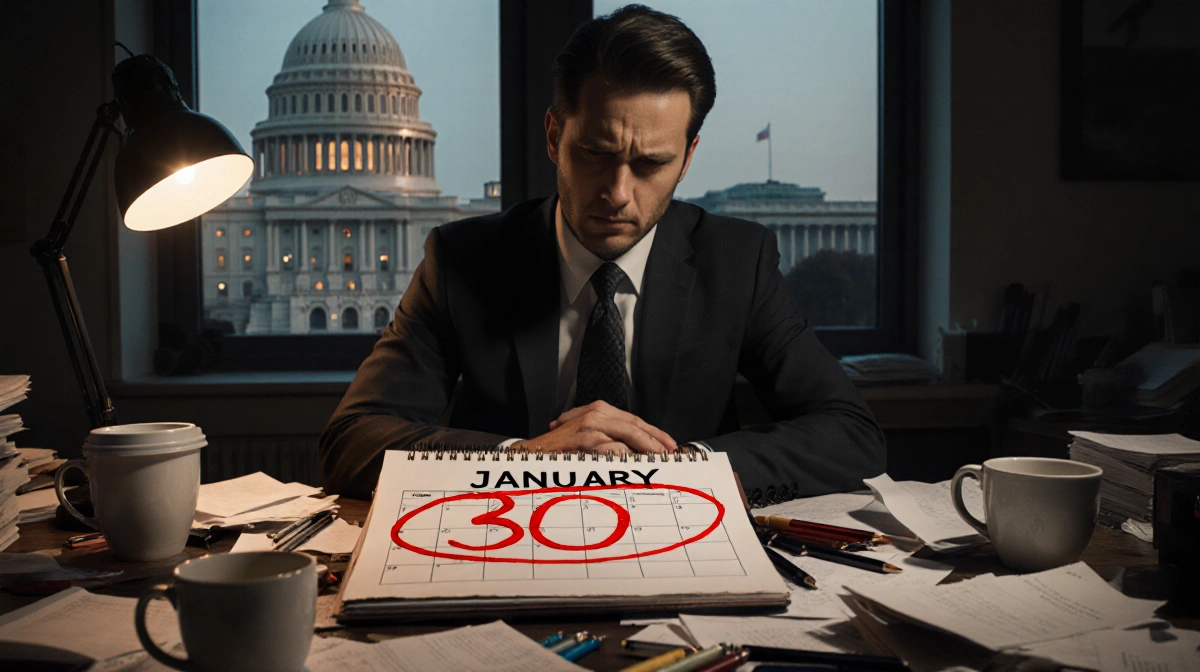
Congressional negotiators in both parties released a massive 1,059-page bill on Tuesday to fully fund the U.S. government before the Jan. 30 shutdown deadline. The bipartisan package includes funding for the Pentagon, Labor, Health and Human Services, and Homeland Security, and aims to reduce the risk of another funding lapse after last fall’s longest shutdown. While the bill promises to avert a partial shutdown, it has ignited a fierce debate over the amount of money and reforms for Immigration and Customs Enforcement (ICE).
At a Glance
- 1,059-page bipartisan bill aims to keep the government funded through Jan. 30.
- ICE funding stays flat at $10 B for the rest of the fiscal year, with $18 B added for enforcement.
- Democrats demand reforms to ICE, threatening to block the bill’s DHS portion.
- Why it matters: The bill’s fate will determine whether federal agencies like TSA, FEMA, and the Coast Guard keep operating without interruption.
The Bipartisan Funding Bill
The package allocates $20 M for body-worn cameras for ICE agents and encourages DHS to adopt a uniform policy that makes federal officers clearly identifiable. It also cuts ICE enforcement and removal operations by $115 M and reduces the number of ICE detention beds by 5,500. The deal is designed to keep the government running while addressing some Democratic priorities. The funding also includes $75 B for detention and enforcement from Trump’s “big beautiful bill,” keeping ICE money flat at $10 B for the rest of the fiscal year.
ICE Funding and Controversy
Rep. Ted Lieu, D-Calif., the No. 4 House Democrat, said, “There should absolutely be reforms to ICE. And if there aren’t reforms, I’m going to be a hard no on that bill, the DHS bill,” to Marcus L. Bennett last week. Rep. Ro Khanna added, “The bill leaves in place an additional $18 B a year for ICE, tripling the budget. It is a surrender to Trump’s lawlessness. I will be a strong no and help lead the opposition to it.”
Democrats argue the bill fails to impose the reforms they seek. Key demands include:
- Requiring ICE agents to wear identification.
- Barring masks during enforcement operations.
- Preventing the detention and deportation of American citizens.
The bill’s stance on ICE has drawn criticism from lawmakers who say it “does nothing to curb ICE’s aggressive tactics.” Critics point to a federal judge’s recent ruling that ICE agents violated constitutional rights by preventing peaceful protesters from exercising free speech.
Democratic Reactions
Rep. Rosa DeLauro, D-Conn., acknowledged that the package does not include broad reforms to rein in ICE but endorsed it, saying it would prevent a partial shutdown and argue it does include some Democratic priorities. She noted that the bill cuts funding for ICE enforcement and removal operations and reduces detention beds. DeLauro also warned that a lapse in funding would force TSA agents to work without pay, delay FEMA assistance, and adversely affect the Coast Guard.
Congresswoman Robin Kelly of Illinois introduced three articles of impeachment against Homeland Security Secretary Kristi Noem, alleging obstruction of Congress, erosion of public trust, and self-dealing. Noem, in turn, said Thursday that President Trump is weighing whether to invoke the Insurrection Act over protests in Minnesota. “If anything doesn’t change with Governor Walz, I don’t anticipate that the streets will get any safer or more peaceful,” she said.
Senator Ruben Gallego, D-Ariz., told CNN, “We cannot vote for anything that actually adds more money and doesn’t constrain ICE.” He added that the agency’s actions have caused “racial profiling, terrorizing our cities.” Senator Chris Van Hollen, D-Md., said he would not vote to give “one dime to support this lawless, brutal Trump ICE operation” without “significant reforms to rein in this lawless ICE operation.” He cited a federal judge’s ruling that ICE agents were violating constitutional rights by preventing peaceful protest.
Senate and House Dynamics
The House has passed eight of the 12 required full-year funding bills, while the Senate has passed half of the 12. The Senate will need Democratic support to reach the 60 votes required to avoid a partial shutdown affecting the remaining agencies beginning on Jan. 31. Republicans hold 53 seats, making the passage of the DHS portion a contentious vote. GOP leaders have promised a separate vote on the Homeland Security portion, giving Democrats a chance to oppose it without moving Washington toward another shutdown.
The separate vote strategy is expected to force Democrats to weigh whether to support the broader package or isolate the DHS portion. If the DHS vote fails, the House could still pass the rest of the funding bills, but the Senate would face a standoff that could bring the entire federal government to a halt.
Health Care Provisions
The bipartisan deal also includes health-care changes that both parties largely back, including more oversight of pharmacy benefit managers (PBMs). These measures aim to increase transparency and reduce costs for prescription drug benefits. The PBM oversight is designed to curb opaque rebate practices and ensure that patients receive the full benefit of their drug plans.
Key Takeaways
- The 1,059-page bill is a last-minute effort to keep the federal government funded through Jan. 30.
- ICE funding remains flat at $10 B, with an additional $18 B earmarked for enforcement.
- Democrats insist on reforms; failure to deliver could block the DHS portion.
- The Senate’s 60-vote threshold and the House’s 12-bill requirement set the stage for a tightly contested vote.
- A separate DHS vote could split the bill, forcing lawmakers to choose between a full funding package and a partial shutdown.