At a Glance
- Be The People campaign launches on July 4 to mobilize Americans for local action.
- It seeks to raise $200 million in its first year from 50 foundations and donors.
- The initiative unites nonprofits, businesses, and sports leagues to coordinate community projects.
Why it matters: The campaign aims to shift a national sense of helplessness toward collective problem-solving, targeting issues from poverty to democratic erosion.
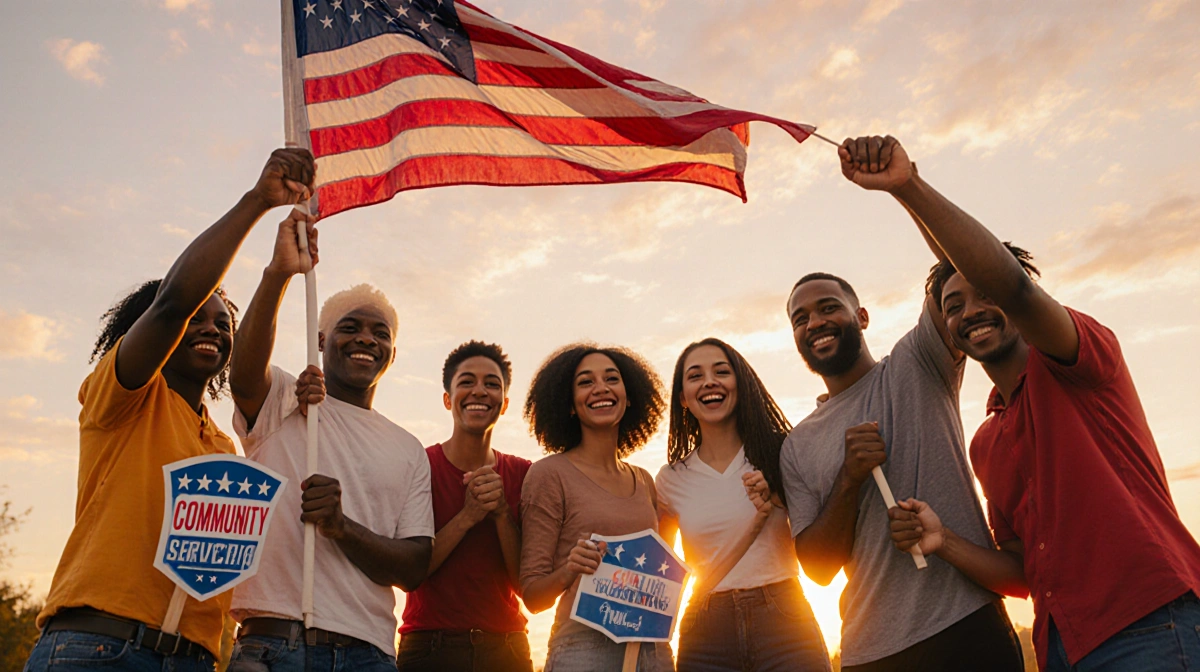
A new privately funded initiative was unveiled on Independence Day as a privately funded effort to connect millions of Americans with local solutions to poverty, addiction, violence, and stalled mobility. The initiative, backed by 50 philanthropic foundations and individual donors, plans to spend $200 million over its first year and is led by Stand Together’s Brian Hooks. It seeks to change the perception that the U.S. is hopelessly divided and that individuals lack power to overcome major problems.
Launching on Independence Day
On July 4, the campaign’s debut coincided with the 250th anniversary of the Declaration of Independence. Hooks said the anniversary offered a unique moment “to show people that they matter, that they have a part to play, and that the future is unwritten, but it depends on each one of us stepping up to play our part.” The launch included a high-profile event at an Atlanta Hawks game where Martin Luther King III and his wife linked the campaign to their Realize the Dream program.
Funding and Partnerships
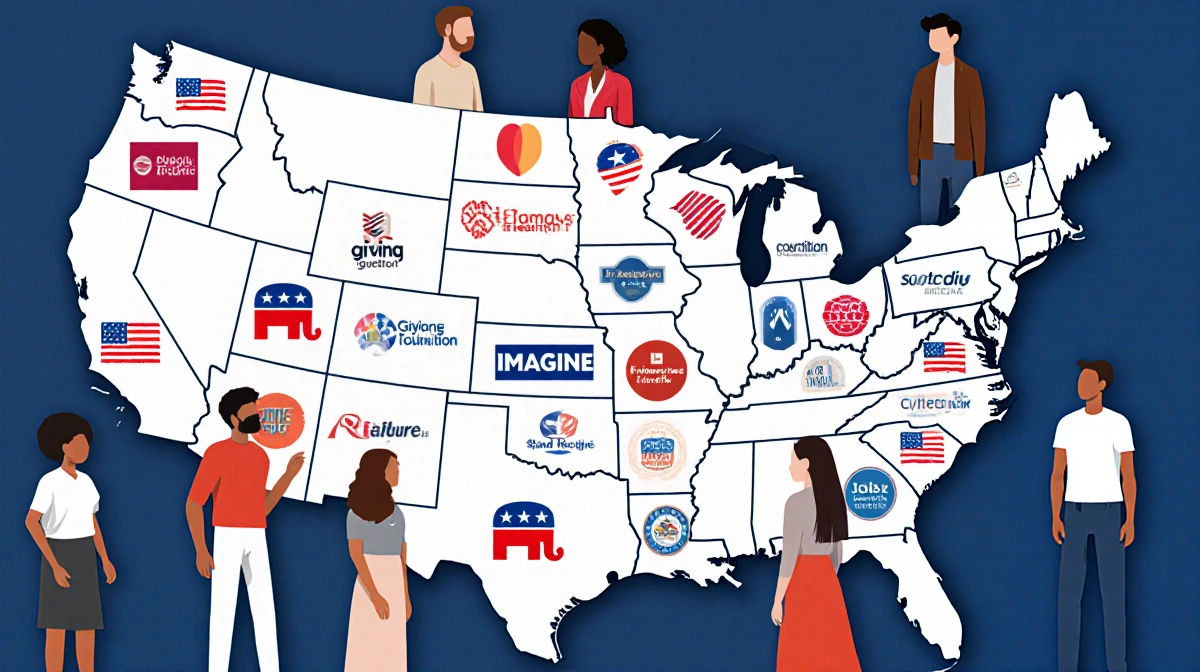
The campaign’s budget targets $200 million in its first year, sourced from 50 philanthropic foundations and individual donors. Founding members include nonprofits such as GivingTuesday, Goodwill Industries, Habitat for Humanity, and More Perfect; businesses like Ron Howard’s Imagine Entertainment and the National Basketball Association; and funders such as the John D. and Catherine T. MacArthur Foundation. Stand Together, founded by billionaire Charles Koch, serves as a convener that can bring coalitions across ideological lines.
The initiative is not a new nonprofit; instead, it functions as a banner that groups can adopt to access resources and coordinate efforts. Hooks emphasized that the campaign’s 10-year commitment seeks a profound shift in behavior and culture. He cited a 2024 Pew Research Center survey that found most Americans in 2023 and 2024 did not believe the U.S. could solve its most important problems, calling it a “red alert” for the country.
Vision and Goals
“Be The People” envisions actions that go beyond volunteering or service in free time. Hooks highlighted the roles businesses and schools can play and announced a major data-collection effort to track engagement and problem resolution. The campaign aims to lift existing community initiatives, reminding people that service and shared responsibility are defining parts of the American story.
Asha Curran, CEO of GivingTuesday, said small actions build on each other like exercising a muscle. “Our experience with GivingTuesday is that when people volunteer together, when people work together on something to do with positive social impact, they find it harder and harder to demonize each other,” she said. The campaign also plans to publish stories that highlight local successes, which Hooks says are “lost in the current information ecosystem.”
Community Engagement and Impact
The initiative arrives amid deep polarization, economic inequality, and the degradation of democratic norms. Hahrie Han, a political scientist at Johns Hopkins University, studied civic engagement and said people need more authentic opportunities to solve problems by connecting with local organizations. “They’re more likely to be invited into things where people are asked to let professional staff do most of the problem solving and they show up and give their time or their money,” she said. The result is a feeling of detachment and a belief that participation does not advance personal interests.
Kristin Goss, professor at Duke University, noted that a growing number of private foundations are funding issues related to the health of U.S. democracy. While foundations cannot participate in elections, Goss said they can influence policy or public opinion in other ways. “Funders are getting more concerned about the health of American democracy, the future of the democratic experiment and pluralism and inclusion,” she said.
Another group of funders, including the Freedom Together Foundation, launched a project last year to recognize people and groups who stand up for their communities, calling it a “civic bravery” award. In a November report, they issued a similar call for funders to invest in helping individuals organize together in response to a rise in authoritarianism.
Hooks and the other leaders of “Be The People” have convened major communications teams to help tell these stories, which they think are lost in the current information ecosystem. “What we’re doing is we’re helping to lift up the story of Americans that is unfolding at the local level, but is not breaking through,” Hooks said. “So we’re holding up a mirror and a microphone to Americans to reveal to each other who we truly are.”
Looking Ahead
The U.S. Mint unveiled new coin designs for the 2026 dime, quarter-dollar, and half-dollar coins in honor of the country’s 250th anniversary, underscoring the broader celebration of national identity. The “Be The People” campaign seeks to translate that spirit into tangible local action, inviting citizens to step forward and shape the future.
As the initiative moves forward, it will track engagement metrics and community outcomes to assess whether increased participation translates into measurable improvements. The campaign’s success will hinge on its ability to galvanize a diverse coalition of nonprofits, businesses, and individuals around shared goals of reducing poverty, addiction, violence, and restoring democratic health.
Key Takeaways
- The campaign launches on July 4 with a budget of $200 million and a 10-year horizon.
- It brings together 50 foundations, nonprofits, and major businesses under a shared banner.
- The initiative focuses on data collection, community storytelling, and broad civic engagement to counter polarization and strengthen democracy.