At a Glance
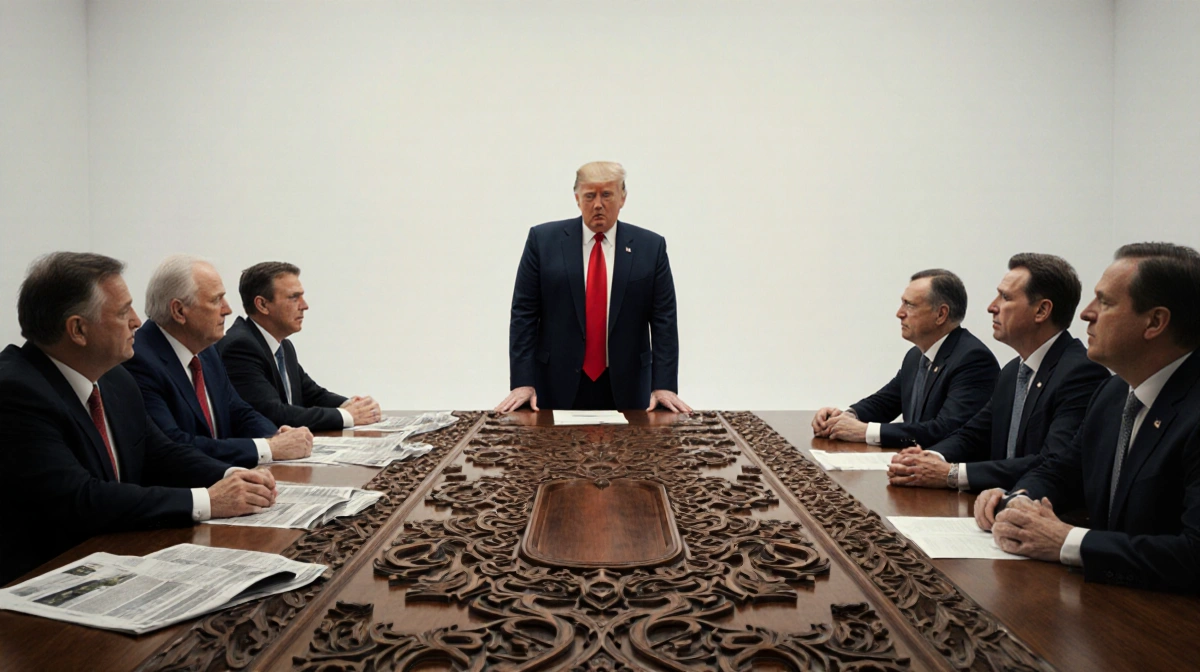
- President Donald Trump is pushing a new Board of Peace at the World Economic Forum in Davos.
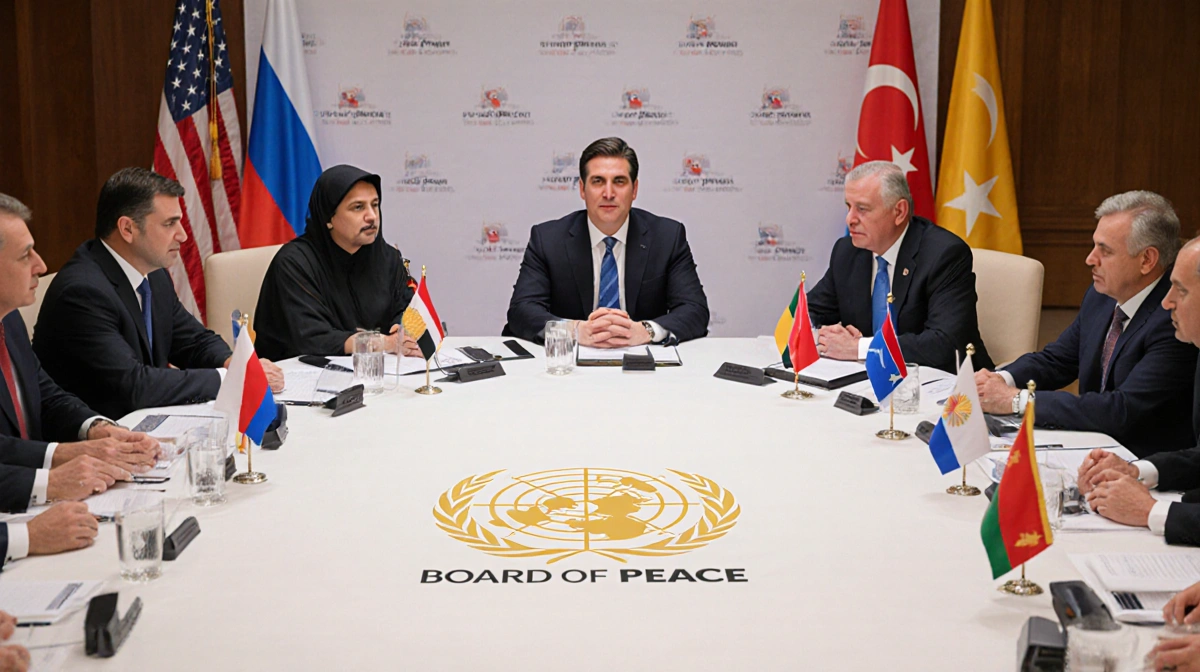
- The board aims to oversee the Gaza ceasefire and may replace some UN functions.
- Key allies, including the U.K., France, Norway, and Sweden, have declined to attend.
- Why it matters: The board’s success could reshape global conflict resolution, but skepticism about its mandate threatens U.S. diplomatic standing.
President Donald Trump is turning the World Economic Forum in Davos into a launchpad for a new Board of Peace that could alter how the world handles conflict. The board, which began as a small group to oversee a Gaza ceasefire, has grown into a far-bigger project that some U.S. allies view with caution. Trump’s announcement comes after a week of high-profile diplomatic moves, including threats to seize Greenland and a retreat from that push.
Trump’s Vision for a New Global Body
The board was first outlined in Trump’s 20-point Gaza ceasefire plan and even received endorsement from the U.N. Security Council. Trump told reporters that the board could eventually replace some UN functions and might become “the most prestigious board ever formed.”
> “We have a lot of great people that want to join,” Trump said with Egyptian President Abdel-Fattah el-Sissi by his side during a Wednesday meeting. “It’s going to be the most prestigious board ever formed.”
Trump’s plan was to announce the board’s charter on the sidelines of the forum, with opening remarks from the president and a gathering of administration officials and international leaders.
Key Participants
- Secretary of State Marco Rubio
- U.S. special envoy Steve Witkoff
- Jared Kushner, president’s son-in-law and overseas negotiator
- Foreign Minister Prince Faisal bin Farhan of Saudi Arabia
- President Ilham Aliyev of Azerbaijan
- Prime Minister Nikol Pashinyan of Armenia
- President Santiago Peña of Paraguay
- President Kassym-Jomart Tokayev of Kazakhstan
- President Javier Milei of Argentina
- President Prabowo Subianto of Indonesia
The list also includes heads of several state-run sovereign wealth funds.
A senior administration official, speaking on condition of anonymity, told reporters that 35 countries had agreed to sign on and 60 nations had been invited.
Allies’ Mixed Reactions
Despite Trump’s enthusiasm, several traditional U.S. allies have chosen to skip the ceremony.
Britain
U.K. Foreign Secretary Yvette Cooper told the BBC:
> “We won’t be one of the signatories today, because this is about a legal treaty that raises much broader issues, and we do also have concerns about President Putin being part of something which is talking about peace, when we have still not seen any signs from Putin that there will be a commitment to peace in Ukraine.”
France, Norway, Sweden
France also declined, citing concerns that the board could replace the U.N. as the main venue for resolving conflicts. Norway and Sweden announced they would not participate, while Slovenia’s Prime Minister Robert Golob said the time had not yet come to accept the invitation.
Russia
Russian President Vladimir Putin said his country was still consulting with Moscow’s “strategic partners” before deciding to commit. He is due to host Palestinian President Mahmoud Abbas for talks in Moscow.
Kremlin spokesman Dmitry Peskov said Putin “highly values peacemaking efforts by President Donald Trump and his team.” Putin plans to discuss sending $1 billion to the Board of Peace for humanitarian purposes, but noted that the use of those assets will require U.S. action to unblock them.
Countries on the Board
A tally of countries that have accepted, declined, or remain undecided follows:
| Accepted | Declined | Non-committal |
|---|---|---|
| Argentina | France | Cambodia |
| Armenia | Norway | China |
| Azerbaijan | Slovenia | Croatia |
| Bahrain | Sweden | Germany |
| Belarus | United Kingdom | Italy |
| Egypt | European Union’s executive arm | |
| Hungary | Paraguay | |
| Indonesia | Russia | |
| Jordan | Singapore | |
| Kazakhstan | Ukraine | |
| Kosovo | Canada | |
| Morocco | ||
| Pakistan | ||
| Qatar | ||
| Saudi Arabia | ||
| Turkey | ||
| United Arab Emirates | ||
| Uzbekistan | ||
| Vietnam |
The Gaza Context
The board’s original mandate was to oversee a Gaza ceasefire, a goal that remains fragile. Gaza’s more than 2 million Palestinians continue to face a humanitarian crisis after two years of war. Violence in Gaza, while reduced from its peak, still persists.
Trump said on Wednesday that the U.S. administration would know in the next few weeks whether Hamas would agree to lay down its weapons.
> “If they don’t do it, they’ll be blown away. Very quickly.”
Iran’s Role and U.S. Strategy
Trump’s push for peace also follows his threats of military action against Iran. He said he would not carry out new strikes after receiving assurances that Iran would not carry out the planned hangings of more than 800 protesters. Trump emphasized that his tough approach to Tehran was critical to the Israel-Hamas ceasefire deal.
> “If we didn’t do that, there was no chance of making peace,” Trump said of Iran.
Future Discussions
Trump also expects to speak with Ukrainian President Volodymyr Zelenskyy, who arrived in Davos on Thursday morning. He expressed frustration with both Zelenskyy and Putin, saying:
> “I believe they’re at a point now where they can come together and get a deal done, and if they don’t, they’re stupid – that goes for both of them.”
Summary
Trump’s Board of Peace has generated both enthusiasm and skepticism. While the president claims it could replace parts of the UN and accelerate peace processes, key allies have declined to attend, citing concerns over the board’s mandate and membership. The outcome of the board’s launch may reshape international conflict resolution, but its success hinges on broad international participation and clear authority.