
Intro paragraph
Super quantum dots have just made a splash at CES 2026, promising brighter and more vivid displays. While the term sounds like marketing hype, the underlying science points to real gains in color accuracy and efficiency. The question is whether these improvements will translate into noticeable differences for viewers.
At a Glance
- Super quantum dots promise a sharper, more saturated color palette.
- TCL claims a 33% increase in color gamut with its new design.
- The technology builds on existing quantum-dot production but adds precise size control.
- The biggest gains are expected in high-end, performance-focused TVs.
What Are Quantum Dots?
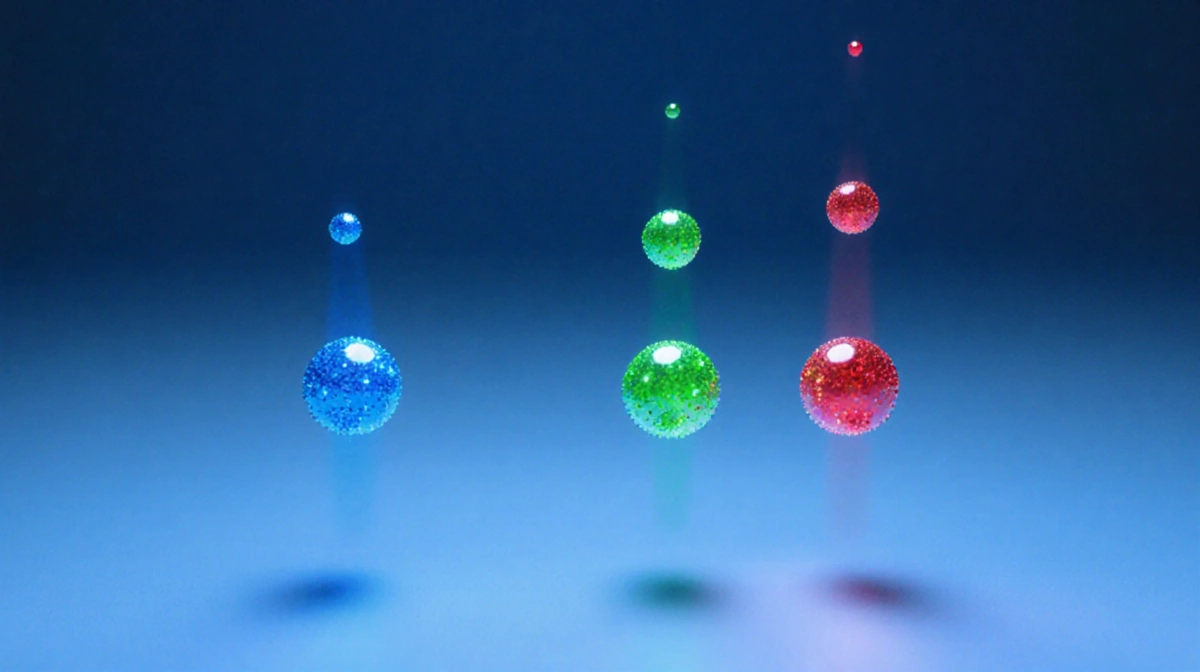
Quantum dots are microscopic particles that can change one color of light into another with near-perfect efficiency. Their size determines the color they emit when energized by a blue LED or OLED: the smallest emit blue, medium-sized emit green, and the largest emit red.
- Blue light from a blue LED is converted to red and green.
- The conversion process is highly efficient, boosting brightness.
- Future quantum dots may convert electricity directly or use UV light to create visible light.
From Regular to Super: The Manufacturing Leap
Super quantum dots are a refined version of the existing technology. Advanced manufacturing allows producers like Nanosys to produce batches with nanometer-level precision, enabling manufacturers to fine-tune color filters and overall TV design.
| Size (nm) | Emitted Color |
|---|---|
| 500-520 | Blue |
| 521-540 | Green |
| 541-560 | Red |
The precision is visible in laboratory vials: a 521-nm vial looks noticeably different from a 537-nm vial, and even smaller differences become apparent with closer sizes. The production plant resembles a brewery, with multiple stages to ensure each molecule falls within the desired size range.
- If a dot is too large or too small, it may not convert light correctly.
- Slight variations are acceptable for budget models but not for high-performance displays.
Why Color Purity Matters
For high-end TVs, pure color is essential. Deeper colors can appear less bright, and any color impurity wastes energy and can affect neighboring colors.
- A green quantum dot that leans yellowish wastes yellow light, diminishing overall brightness.
- Yellowish red dots can limit the achievable green saturation.
- Budget TVs tolerate these imperfections because the average color remains acceptable.
The goal is to create colors that are as pure as possible: red is pure red, green is pure green, and blue is pure blue. This purity ensures maximum brightness and accurate color reproduction.
TCL’s Super Quantum Dot Claims
TCL is the first major manufacturer to market a super quantum-dot design. According to TCL, its new approach delivers a 33% increase in color gamut.
- The claim is based on laboratory measurements and preliminary consumer testing.
- TCL’s design also incorporates a new color-filter layout to complement the dots.
- The company expects the technology to roll out in its flagship models over the next 12-18 months.
Other manufacturers are likely to follow, even if they do not use the “SQD” label. The underlying trend is toward brighter, more vibrant displays powered by higher-performance quantum dots.
Will Super Quantum Dots Change the TV Landscape?
The technology represents an incremental step rather than a revolution. While the gains are real, they are modest compared to the leap from LCD to OLED.
- The 33% color-gamut boost is significant for color-critical users but may not be noticeable for casual viewers.
- The manufacturing complexity and cost are higher, which may keep the technology in premium models.
- As more manufacturers adopt refined quantum-dot processes, the market may converge on similar performance levels.
In short, super quantum dots will likely improve the visual experience for discerning consumers, but they will not completely overhaul the current TV ecosystem.
Key Takeaways
- Super quantum dots offer a measurable increase in color gamut, especially in high-end TVs.
- Precision manufacturing is essential to achieve pure, bright colors.
- TCL’s 33% color-gamut claim is the first public benchmark for this technology.
- The technology will mainly impact premium models, with incremental benefits for the broader market.