At a Glance
- The United States has officially withdrawn from the World Health Organization, a move that leaves it with a debt of $130 million.
- The exit will cut U.S. access to global disease-tracking data and slow vaccine development.
- Experts warn the decision could cripple efforts to stop polio, Ebola, and future pandemics.
- Why it matters: U.S. scientists and pharmaceutical companies lose a key partner in early outbreak detection.
The United States has finalized its withdrawal from the World Health Organization, a year after President Donald Trump announced America was ending its 78-year-old commitment. Federal officials confirmed the move Thursday, but the break is far from clean. The U.S. owes more than $130 million to the agency, and officials admit unfinished business, such as lost access to data that could give America an early warning of a new pandemic.
The Withdrawal and Its Immediate Implications
The U.S. exit will hurt the global response to new outbreaks and will hobble the ability of U.S. scientists and pharmaceutical companies to develop vaccines and medicines against new threats, said Lawrence Gostin, a public health law expert at Georgetown University. “In my opinion, it’s the most ruinous presidential decision in my lifetime,” he said.
Financial Fallout
On average, the U.S. pays $111 million a year in member dues to the WHO and roughly $570 million more in voluntary contributions, according to the U.S. Department of Health and Human Services. The agency says the U.S. has not paid any of its dues for 2024 and 2025, leaving a balance of more than $133 million.
Impact on Global Health Response
The WHO coordinates responses to outbreaks of mpox, Ebola and polio, provides technical assistance to poorer countries, helps distribute scarce vaccines, supplies and treatments, and sets guidelines for hundreds of health conditions. Nearly every country in the world is a member.
U.S. officials helped lead the WHO’s creation and have long been among its biggest donors. The agency’s recent mistakes-such as advising against mask-wearing and claiming COVID-19 wasn’t airborne-have fueled Trump’s criticism. The U.S. withdrawal also ends official participation in WHO-sponsored committees, leadership bodies, governance structures and technical working groups.
Expert Opinions
- Dr. Ronald Nahass, president of the Infectious Diseases Society of America, called the U.S. withdrawal “shortsighted and misguided” and “scientifically reckless.”
- Gostin warned that the U.S. is unlikely to reach agreements with more than a couple dozen countries for direct data sharing. “Is China going to sign a contract with the United States?” he asked. “Are countries in Africa going to do it? Are the countries Trump has slapped with a huge tariff going to send us their data? The claim is almost laughable.”
- Gostin also believes Trump overstepped his authority in pulling out of WHO. The U.S. joined the organization through an act of Congress, and it is supposed to take an act of Congress to withdraw, he argued.
Legal and Political Questions
The U.S. is legally required to give notice one year in advance of withdrawal- which it did- but also to pay any outstanding financial obligations. An administration official denied that requirement Thursday, saying the U.S. had no obligation to pay prior to withdrawing as a member.
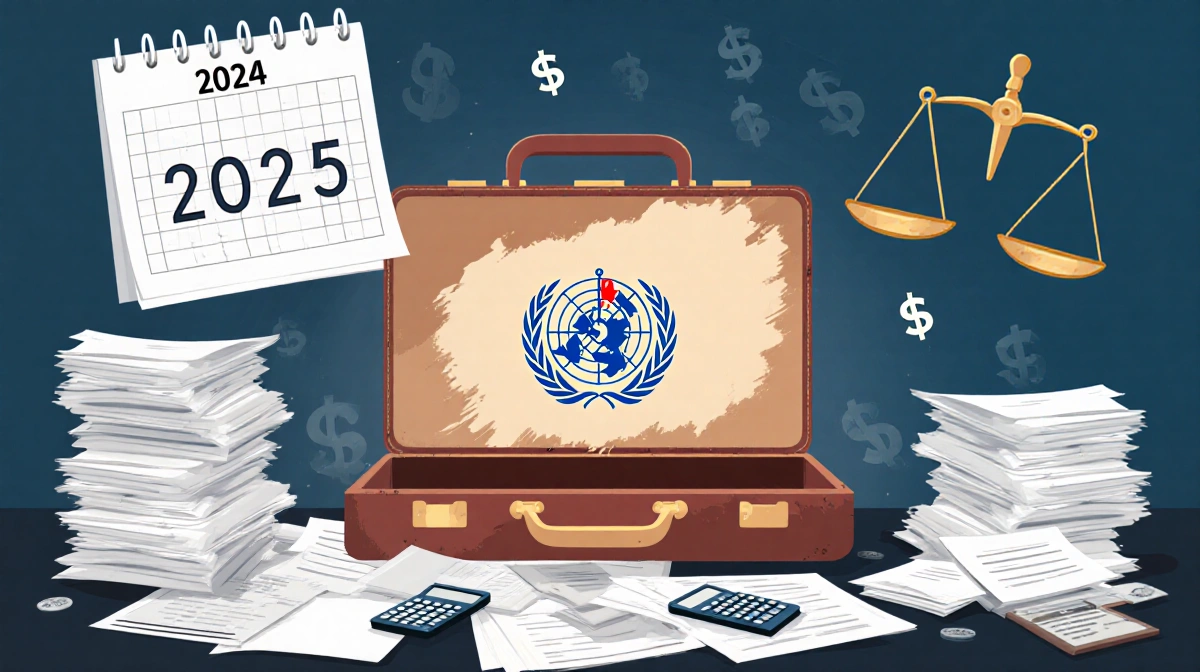
The U.S. Still Owes Money
WHO says the U.S. has not paid any of its dues for 2024 and 2025, leaving a balance of more than $133 million. The agency’s statement contrasts with an official’s claim that the U.S. had no obligation to pay before withdrawing.
Takeaways
- The United States’ exit from WHO creates a significant financial debt and cuts a vital source of global health intelligence.
- Experts warn that the move could slow vaccine development and weaken efforts to eradicate diseases like polio.
- The legal basis for the withdrawal is contested, with the agency insisting on payment of outstanding dues.
- The U.S. may struggle to secure direct data-sharing agreements with key countries, limiting early outbreak detection.
The decision marks a sharp shift in U.S. global health engagement and raises questions about the country’s future role in pandemic preparedness.