At a Glance
- Nine students and staff died in a 1986 Mt. Hood hike.
- The group began at 2 a.m. and faced a sudden snow flurry and wind chill of 50 degrees below zero.
- Rescue teams found a snow cave after 31 hours, but only two survivors emerged.
The 1986 expedition turned from a routine school outing into a deadly tragedy. A group of 20-15 high-school students and five adults-set out at 2 a.m. on a south-face hike, only to be caught in a snow flurry and a rapid drop in temperature.
The Planned Expedition
The hike was part of a required outdoor program called “Basecamp” at the exclusive Oregon Episcopal School. The party included students, chaplain Rev. Thomas Goman, dean Marion Horwell, a student’s mother, and guides Dee Zduniak and Ralph Summers.
- 20 participants: 15 students, 5 adults
- No overnight gear or insulating blankets
- Each student wore three pairs of socks and layers of clothing
Richard Haeder, a 15-year-old, expressed concern the day before the trip and called chaplain Goman, who had hiked Mt. Hood 17 times. Goman reassured him, but Haeder’s father later said his son felt he had no choice.
The school had planned the hike as a rite of passage, and the students had trained in survival skills for weeks. The itinerary called for a day-trip up the south face, with a return to the lodge if weather worsened. Other groups from Portland had canceled their expeditions in the three days before, but the school proceeded.
The Weather Turns
Less than an hour after departure, a strong snow flurry forced six members to head back to the lodge. The rest continued, but by 4 p.m. clouds obscured the summit and wind chill dropped to 50 degrees below zero.
- Six members returned early
- Remaining members were within 100 feet of the summit when they turned back
- Visibility near-impossible; the weather forced a retreat
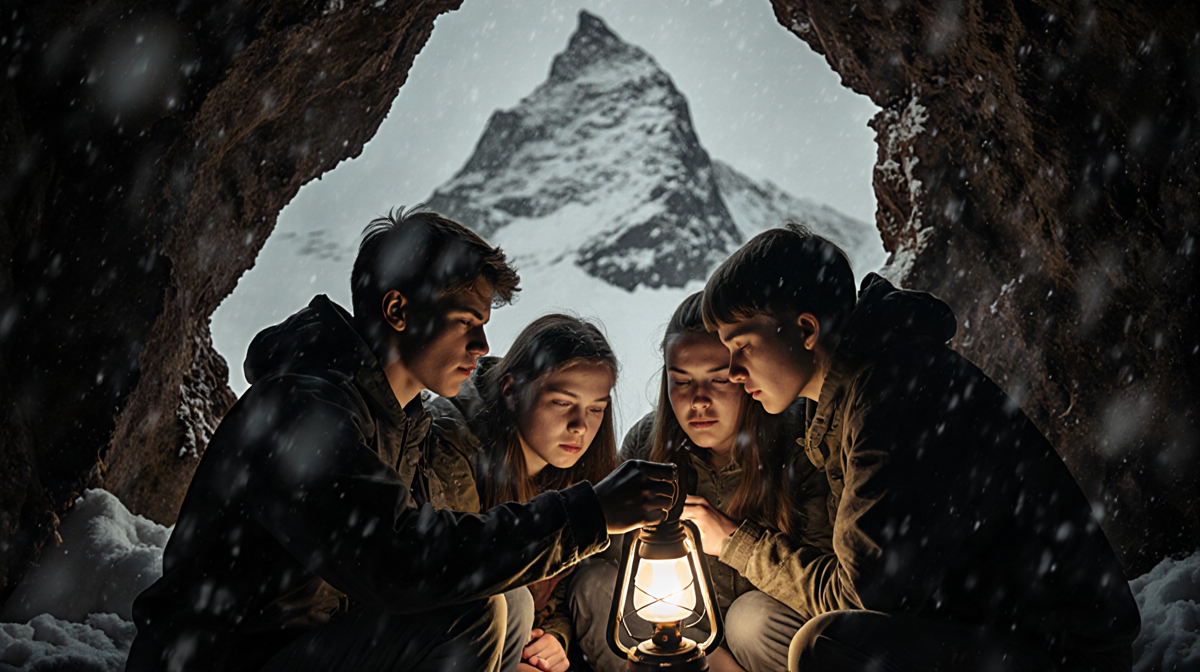
When one boy began to suffer hypothermia, the others spent two hours digging a snow cave to try to warm him.
Molly Schula, a 17-year-old senior, later told The Oregonian: “People were shaking and shivering. When the boy’s temperature stayed down, we decided to dig in.”
Rescue Operations
A guide, Ralph Summers, left with student Molly Schula to seek help. They reached Mount Hood Meadows, a ski resort three miles southeast of the cave, after 31 hours on the mountain.
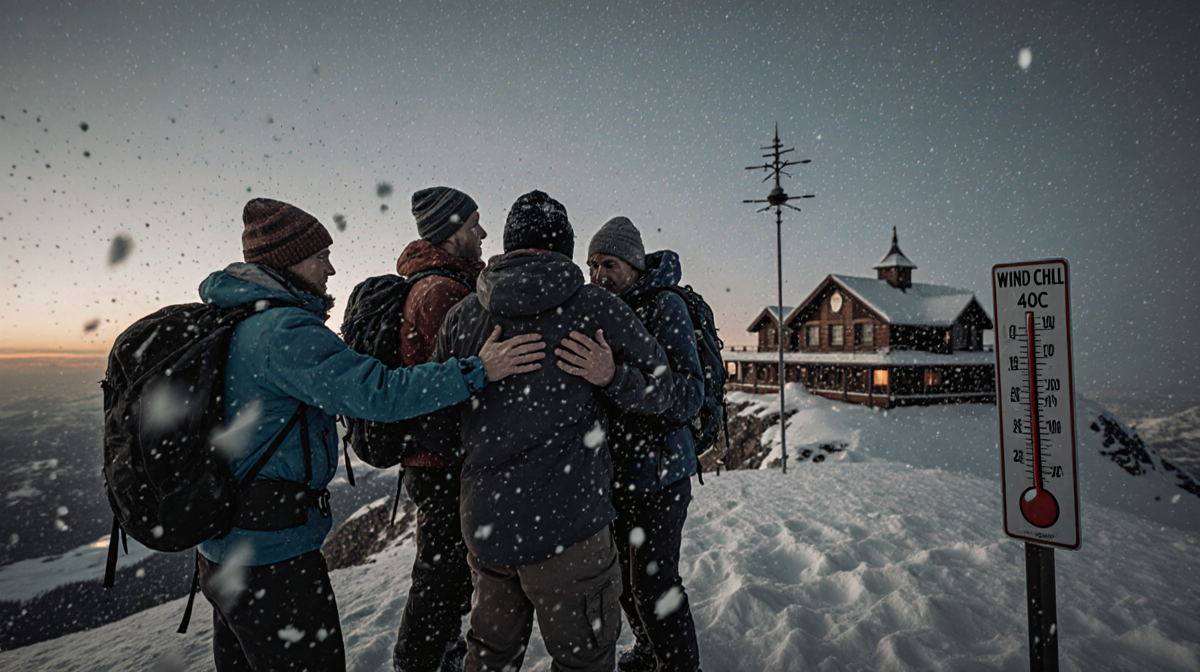
Rescue teams-using Sno-Cats and helicopters-scoured the peak but were forced to turn back for safety. The next day, they found three frozen children: Erin O’Leary, Alison Litzen-berger, and Eric Sandvik. Doctors managed to start Eric’s heart and keep it beating for nearly four hours before he was pronounced dead.
On the third day, after 89 hours, rescuers located a snow cave containing eight people. Two-16-year-olds Brinton Clark and Giles Thompson-were alive but severely hypothermic.
- Seven men carried each climber over 700 feet of snow to a helicopter
- Giles’s legs were amputated above the ankles; both survivors later recovered
- Others, including Susan McClave and Patrick Mcginness, showed no vital signs
The rescue effort involved coordination between the Oregon Department of Transportation, the U.S. Forest Service, and local hospitals. Helicopter crews faced low visibility and high winds, making lift-off hazardous. Ground crews spent hours clearing snow to create a landing zone.
Medical Treatment
After being extracted, Clark and Thompson were flown to Good Samaritan Hospital, where they received intensive care. Thompson’s heart was stabilized, but he later required amputation of both legs-one above the knee and one below-and removal of damaged muscle tissue. Clark spent six weeks in the hospital, suffering from severe frostbite and hypothermia.
Doctors at Good Samaritan noted that the pair had been exposed to temperatures near 50 degrees below zero for extended periods. They received a combination of rewarming techniques, blood transfusions, and antibiotics to prevent infection.
Participants
- Richard Haeder (15)
- Rev. Thomas Goman
- Marion Horwell (Dean)
- Dee Zduniak (Guide)
- Ralph Summers (Guide)
- Molly Schula (17)
- Erin O’Leary (15)
- Alison Litzen-berger
- Eric Sandvik
- Brinton Clark (16)
- Giles Thompson (16)
- Susan McClave (17)
- Patrick Mcginness (15)
- Tasha Amy (15)
The Aftermath
In total, nine of the hikers, including seven students, died, making the incident the second deadliest alpine accident in North American history. Richard Haeder Sr. said, “I am heartbroken. It could have been avoided.”
The tragedy prompted a review of the school’s outdoor program. The school added stricter weather monitoring, required overnight gear for future trips, and implemented a mandatory briefing on emergency protocols.
Survivors Brinton Clark and Giles Thompson later spoke about the ordeal. Clark spent six weeks in hospital, returned to the school, graduated from Stanford with a degree in human biology, and served in the Peace Corps in Ghana. Thompson endured amputations of both legs-one above the knee and one below-and extensive tissue removal.
“After a couple of nights up there, I was unconscious,” Thompson recalled. “I don’t remember if I thought I was going to die. I just remember it being completely unreal. I don’t remember it occurring to me.”
The incident remains a stark reminder of the dangers of mountain travel and the importance of weather monitoring and proper preparation.
Survivors’ Stories
Brinton Clark later reflected on the experience in a 2004 interview with Willamette Week. She said the ordeal taught her resilience and the value of teamwork.
Giles Thompson, in a 2004 interview, described the physical toll and the emotional aftermath. He emphasized the need for better emergency protocols in schools.
Both survivors have since become advocates for outdoor safety, sharing their story with students and hikers across the country.
Legacy and Lessons Learned
- The incident underscored the need for real-time weather monitoring on mountain routes.
- It prompted changes to school outdoor programs, including mandatory gear and emergency drills.
- Rescue protocols were refined, with better coordination between agencies and improved helicopter landing procedures.
- The story remains a cautionary tale for hikers, educators, and emergency responders.
Timeline of Events
| Time | Event |
|---|---|
| 2 a.m. | Group departs Mt. Hood south face |
| 3 a.m. | Snow flurry forces six to return |
| 4 p.m. | Clouds cover summit; wind chill 50° below zero |
| 31 h | Summers and Schula reach ski resort |
| 55 h | First frozen children found |
| 89 h | Snow cave discovered; two survivors rescued |
The story of the 1986 Mt. Hood hike continues to resonate with hikers, educators, and emergency responders, underscoring the fragile balance between adventure and safety.