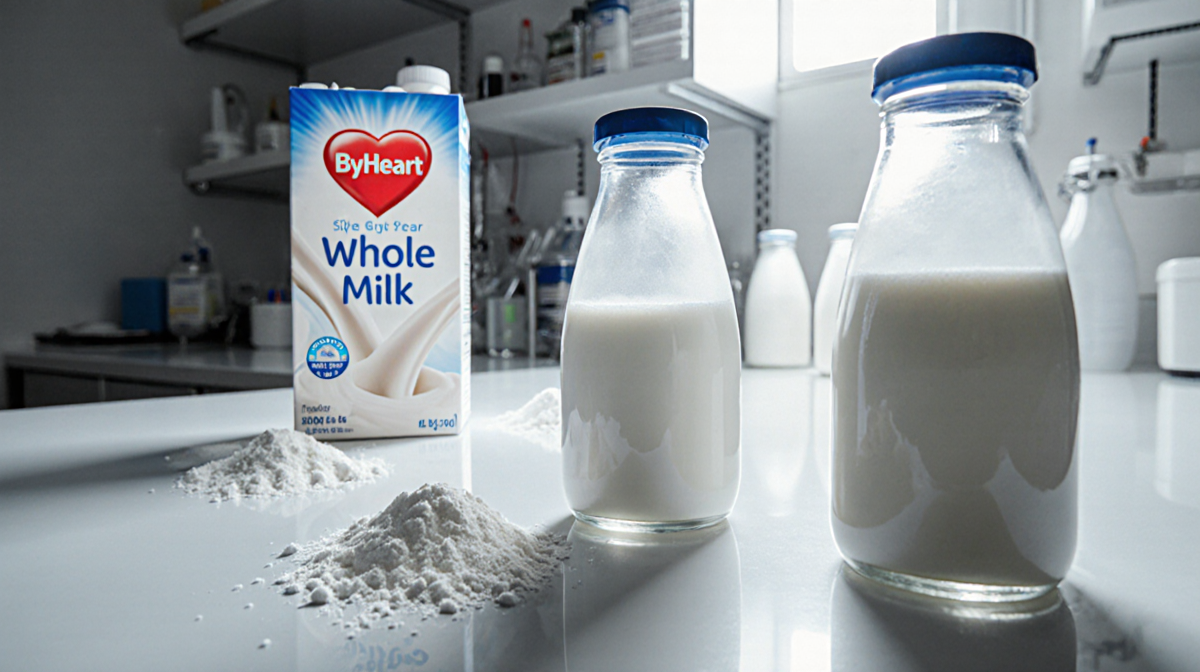
A nationwide botulism outbreak linked to powdered milk used in ByHeart infant formula has sickened dozens of babies. The U.S. Food and Drug Administration (FDA) confirmed that the same bacterial strain was found in unopened cans of the formula, in the powdered milk itself, and in a sample from an ill infant.
At a Glance
- 51 babies in 19 states affected by an outbreak that began in December 2023.
- FDA matches the bacteria in an unopened can, the infant’s sample, and the powdered milk used by ByHeart.
- Recall expanded from two lots to all products; no new cases reported since mid-December.
- $42 per can, ByHeart marketed as a breast-milk-like option.
Outbreak Overview
The outbreak, first identified in November, has sickened 51 babies across 19 states since December 2023. Parents reported that the infants had been fed ByHeart formula, which the company describes as made from organic, grass-fed whole milk.
| Event | Date |
|---|---|
| Outbreak identified | November 2023 |
| First cases reported | December 2023 |
| No new cases since | mid-December 2023 |
| FDA testing announced | December 2023 |
| Recall expanded | Days after initial recall |
FDA Findings
FDA testing revealed the presence of Clostridium botulinum in:
- An unopened can of finished ByHeart formula.
- A sample from a sick infant.
- Organic whole-milk powder used in the formula, collected and tested by the company.
- A separate sample of powdered whole milk supplied to ByHeart.
The agency stated that the findings are not conclusive and the investigation continues to determine the source of the contamination.
Company Response
ByHeart initially recalled two lots of formula. Days later, the recall was expanded to all products, and federal health officials said they could not rule out contamination of any product made since the company launched in March 2022.
A ByHeart spokesperson said the investigation has become a “watershed moment” for the company:
> “We are focused on the root cause and our responsibility to act on what we’ve learned to help create a safer future for ByHeart and infant formula,” said Dr. Devon Kuehn, chief scientific and medical officer.
The company has not named the powdered-milk supplier.
Legal and Industry Implications
Some formula manufacturers test raw materials and finished products, but the FDA has not announced a plan to mandate such testing. Sarah Sorscher, director of regulatory affairs for the Center for Science in the Public Interest, said:
> “FDA has not announced a plan to do testing, and that’s what we really want to see them do,” she said.
Bill Marler, a Seattle food-safety lawyer representing more than 30 families, emphasized that the company remains liable:
> “Just because they are able to point the finger at dried powder as the ingredient that may have been contaminated, it doesn’t take any of the legal or moral responsibility away from ByHeart,” Marler said.
What Parents Need to Know
- If you are feeding your infant ByHeart formula, check the product’s lot number and compare it to the recall list.
- If you suspect contamination, contact your pediatrician immediately.
- The FDA has issued no warning about a broader problem in the infant-formula supply.
Key Takeaways
- The outbreak is linked to powdered milk used in ByHeart formula.
- FDA confirmed matching bacteria in the formula, the infant, and the powdered milk.
- Recall covers all ByHeart products; no new cases since mid-December.
- Legal experts say the company remains responsible for the harm.
- Parents should verify lot numbers and seek medical advice if symptoms appear.
Conclusion
The investigation into the source of the contamination is ongoing. Health officials and the company are working to ensure no further infants are exposed. Parents are urged to remain vigilant and consult healthcare providers if they suspect their infant is ill.