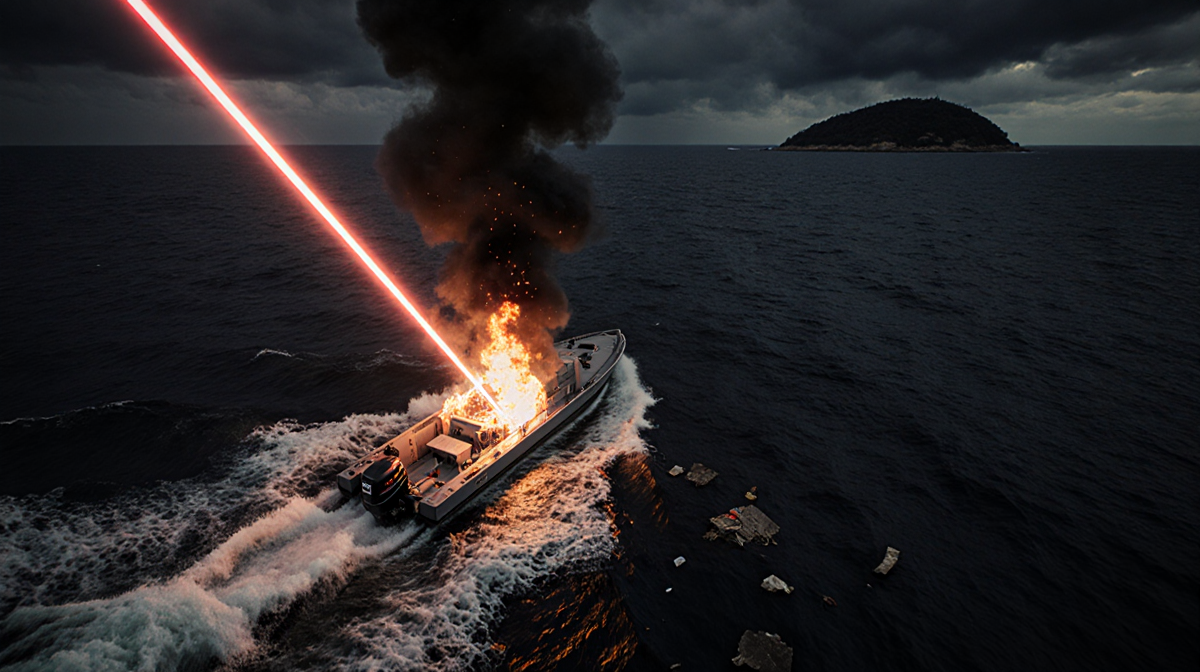
A U.S. strike on a drug-trafficking vessel in the eastern Pacific on January 23, 2026 killed two people and left one survivor, the first attack since the raid that captured Venezuelan President Nicolás Maduro earlier this month.
At a Glance
- January 23, 2026: U.S. military destroys a drug-trafficking vessel, killing two people and injuring one survivor.
- First known U.S. strike on a drug vessel since the January 3, 2026 raid that captured Maduro.
- The U.S. Southern Command notified the Coast Guard to launch a search and rescue operation.
- The strike follows a series of December boat attacks that killed eight people.
- President Donald Trump claims the U.S. strikes have virtually stopped almost 100% of waterborne drug traffic.
Strike Details
The U.S. Southern Command said on social media that the boat was “engaged in narco-trafficking operations.” A video posted by the command shows the vessel moving through the water before exploding in flames. The strike killed two people and left one survivor, who was immediately contacted by the Coast Guard.
The command also reported that it notified the Coast Guard to launch search and rescue operations for the survivor. The survivor’s status and location were not disclosed.
Background: The Maduro Raid
On January 3, 2026, the U.S. conducted a “large-scale strike” in Caracas, the capital of Venezuela. The operation led to the capture of President Nicolás Maduro and his wife, who were then flown to New York to face federal drug-trafficking charges. Maduro, before his capture, said the U.S. military operations were a thinly veiled effort to oust him from power.
President Donald Trump has repeatedly emphasized the impact of these strikes. “We’ve stopped – virtually stopped almost 100% of all drugs coming in by water,” he said in remarks on Wednesday at the World Economic Forum at Davos.
Recent Targeting of Drug Trafficking
- Late December 2025: The U.S. struck five alleged drug-smuggling boats over two days, killing a total of eight people while others jumped overboard. Days later, the Coast Guard suspended its search.
- The U.S. military has focused on seizing sanctioned oil tankers with connections to Venezuela since the Trump administration launched the raid that captured Maduro.
| Date | Location | Target | Casualties |
|---|---|---|---|
| January 23, 2026 | Eastern Pacific | Drug-trafficking vessel | 2 killed, 1 survivor |
| January 3, 2026 | Caracas | Venezuelan leadership | Maduro and wife captured |
| Late December 2025 | Unspecified | Five alleged smuggling boats | 8 killed |
Impact and Statements
The latest strike underscores the U.S. military’s continued emphasis on disrupting drug trafficking routes in the Caribbean and eastern Pacific. The U.S. Southern Command’s rapid response and coordination with the Coast Guard illustrate the joint effort to neutralize threats and conduct rescue operations.
Trump’s statement at Davos reflects the administration’s narrative that U.S. military actions have dramatically curtailed waterborne drug traffic, a claim that aligns with the recent pattern of boat strikes.
Key Takeaways
- The January 23, 2026 strike marks the first known U.S. attack on a drug vessel since the Maduro raid.
- Two people were killed and one survivor was rescued.
- The U.S. Southern Command coordinated closely with the Coast Guard.
- The operation follows a broader strategy targeting Venezuelan-linked oil tankers and drug smuggling.
- President Trump claims the strikes have virtually halted waterborne drug trafficking.