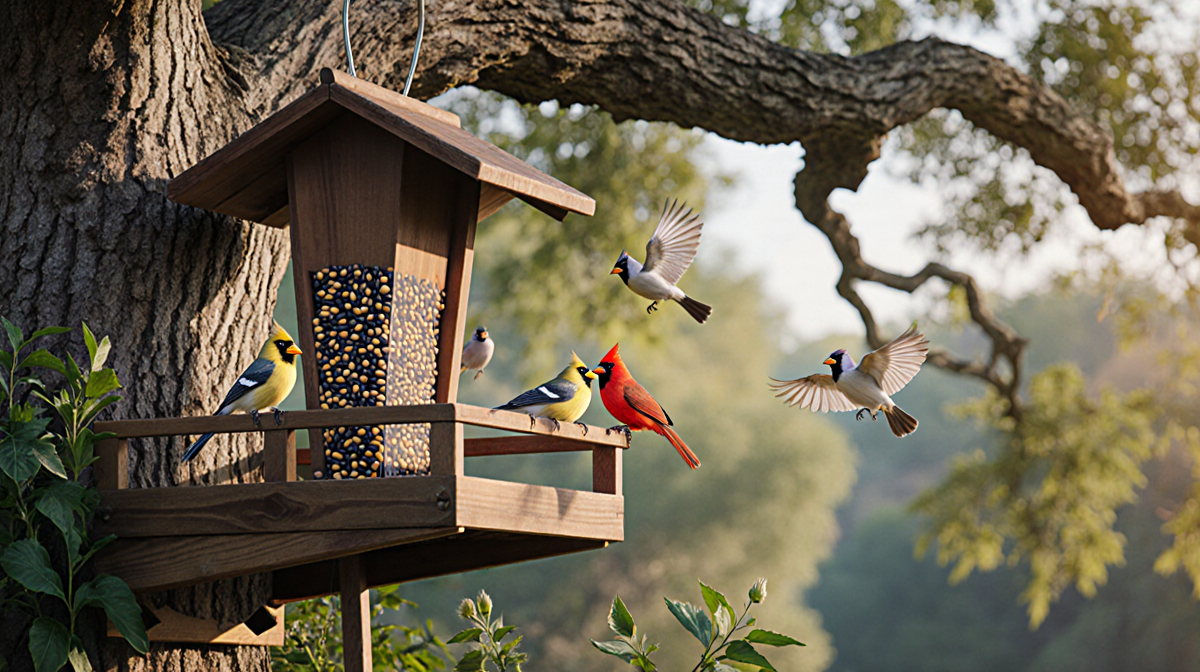
At a Glance
- Position a bird feeder 10-15 feet from trees or shrubs to deter squirrels.
- Keep it 30 feet from windows or glass to lower collision risk.
- Use high-quality black-oil sunflower seed and avoid human food.
- Why it matters: Proper placement and care keep birds healthy, reduce predator attraction, and protect your home from damage.
Birdsong can calm the mind, but attracting feathered friends requires thoughtful planning. Daniel J. Whitman explored the science behind feeder placement, the best types of feeders, and how to keep both birds and your household safe.
Choosing the Right Spot
When deciding where to hang a bird feeder, the goal is to give birds shelter while keeping predators out.
Coverage and Proximity to Trees
- Birds like to feed near cover so they can escape quickly.
- Place the feeder 10-15 feet from bushes or trees.
- Avoid hanging it directly in a tree; squirrels, raccoons, and other mammals can jump onto it.
> “We also want to reduce the ability of other animals to access the food, which is why sometimes hanging them in trees can be an invitation to our smaller mammals,” said Tru Hubbard, urban wildlife education coordinator for the Nevada Department of Wildlife.
Distance from Windows
- The Rule of 3 or 30 suggests placing a feeder within 3 feet of a window or at least 30 feet away.
- Feeder less than 3 feet from a window reduces the chance of high-speed strikes.
- The U.S. Fish and Wildlife Service estimates over 1 billion bird-glass collisions each year.
Shade vs. Sun
- Shaded locations keep food from spoiling and reduce glare.
- They also protect birds from the hot summer sun.
Height Off the Ground
- Ground feeders (sparrows, towhees) prefer lower levels.
- Woodpeckers and higher-flying species feed higher.
- A minimum of 5-6 feet is recommended to keep squirrels and raccoons out.
Selecting the Feeder Type
Bird feeders come in many shapes: trays, platforms, hoppers, tubes. The best choice depends on the species you want to attract.
| Feeder Type | Best For | Notes |
|---|---|---|
| Platform | Larger songbirds like cardinals | Less competition, easy to clean |
| Tray | Small songbirds | Offers multiple perches |
| Hopper/Tube | General use | Squirrel-proof options available |
| Smart Feeder | Tech enthusiasts | Solar-powered, camera, app alerts |
Hubbard advised that a mix of styles attracts the greatest variety:
> “Unless you’re trying to attract one specific type of bird, providing a combination of different feeder styles and foods in your yard will attract the greatest variety.”
What to Feed
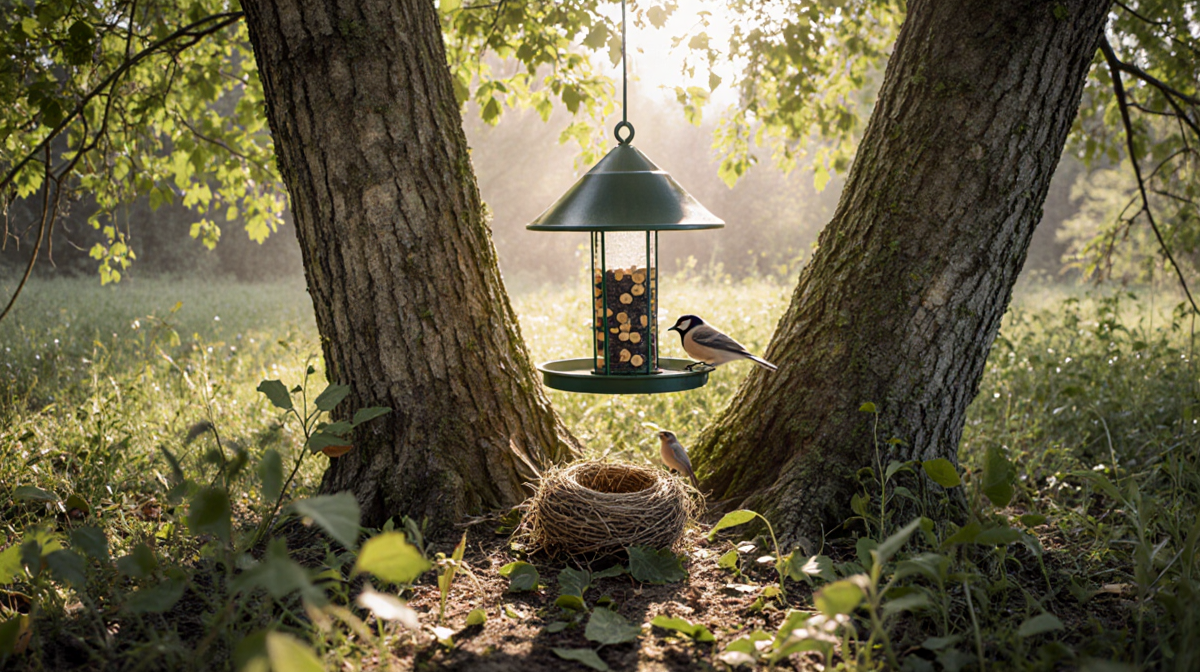
The seed type determines which birds visit.
- Black-oil sunflower seeds are the top choice: easy to crack, high in oil, favored by chickadees, finches, cardinals, and robins.
- Cheap mixed bags often contain cracked corn or red milo, which lack nutrition and can attract unwanted pests.
- Mealworms and suet cakes provide protein and energy.
> “The type of birdseed used varies depending on what species you’re hoping to attract,” Hubbard said, referencing a National Audubon Society study of 1.2 million feeder visits.
Avoid human food such as avocado, fruit seeds, bread, milk, chocolate, or sugary snacks. These can be toxic and alter bird behavior.
Managing Wildlife and Predators
Feeder placement can attract larger animals. Hubbard outlined steps to mitigate risks:
- Keep feeders away from bear or coyote sightings.
- Remove feeders overnight during peak wildlife activity.
- Use small seed scatterings during the day to deter larger predators.
- Secure feeders in bear-country by locking or covering them.
Cats pose a significant threat; if you have a roaming cat, consider not using a feeder.
Cleaning Frequency
Regular cleaning prevents mold and disease.
- General feeders: clean every other week or twice a month.
- Hummingbird feeders: clean every 3-5 days.
- Cleaning method: remove seed, disassemble, wash in dishwasher on hot setting or hand-wash with soap or diluted bleach.
- Rinse and dry thoroughly before refilling.
- Clean the area beneath the feeder to avoid seed buildup.
How Long Until Birds Arrive?
Birds are creatures of habit; new feeders can take time.
- Daniel J. Whitman noted the first bird on a platform feeder arrived in three days.
- The first visitor to a smart feeder appeared after 12 days.
- Expect a few weeks for a new feeder to become a regular stop.
Final Tips for Responsible Feeding
- Place feeders 10 feet from trees or shrubs, 30 feet from windows.
- Use high-quality seed and avoid human food.
- Secure feeders if large predators are present.
- Clean regularly to prevent mold.
- Consider adding a bird bath or nest box, but ensure proper placement and maintenance.
By following these guidelines, you can create a safe, welcoming environment for birds while protecting your home and maintaining a healthy backyard ecosystem.
Key Takeaways
- Proper placement reduces predator access and window collisions.
- High-quality black-oil sunflower seed attracts a wide range of birds.
- Regular cleaning and secure housing keep feeders safe for both birds and humans.
—