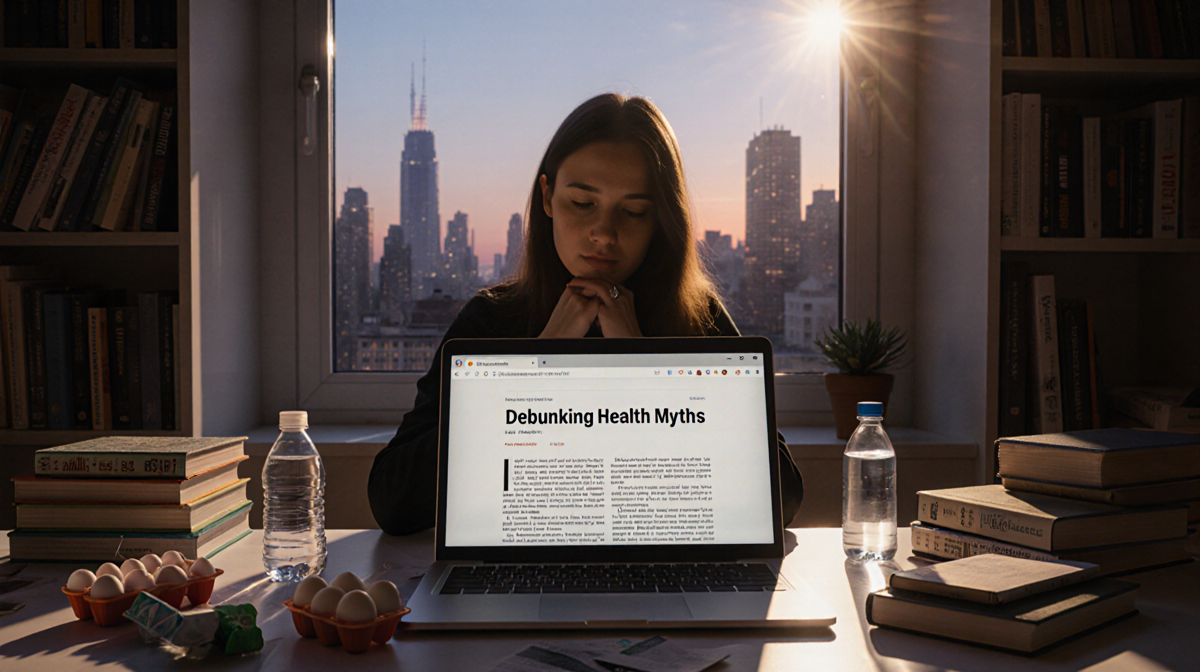
Health advice online is full of claims that sound too good to be true. This article examines fifteen of the most common myths, from nighttime workouts to GMOs, and presents the evidence that supports or refutes each one.
At a Glance
- Night workouts don’t always disrupt sleep.
- Eggs have minimal impact on blood cholesterol.
- Water needs vary; 64 ounces isn’t a one-size-fits-all rule.
- 10,000 steps a day is not a universal health benchmark.
- GMOs are not linked to cancer.
Myth: Exercising at Night Ruins Your Sleep
Late-night workouts are often blamed for sleeplessness, but research shows the effect depends on the type of exercise and individual sensitivity. Light activities like yoga may have little impact, while vigorous weightlifting could improve rest for some people. The key is to listen to your body and adjust timing as needed.
Myth: Eating Eggs Causes High Cholesterol
The 1968 recommendation limiting eggs to three per week has been overturned by modern studies. Current evidence indicates that eggs have minimal effect on blood cholesterol and may even benefit heart health. People can safely enjoy eggs as part of a balanced diet.
Myth: You Must Drink 64 Ounces of Water Each Day
The eight-by-eight rule-8 8-ounce glasses-originates from a century-old observation that water keeps you healthy. However, individual hydration needs vary with activity level and environmental factors. Adjust intake based on thirst and urine color rather than a fixed number.
Myth: 10,000 Steps Is the Key to Getting Healthy
Walking is excellent cardio, but 10,000 steps a day is not a universal target for health. The American Physical Activity Guidelines recommend a mix of moderate and vigorous activity, and many people achieve healthy outcomes with fewer steps. Focus on overall activity quality rather than a specific count.
Myth: Six-Pack Abs Are the Epitome of Health
While a visible core can be a sign of fitness, it is largely genetic and not a definitive health marker. A stronger core achieved through functional training is more beneficial than chasing a six-pack. Prioritize strength and stability over aesthetics.
Myth: Saturated Fat Directly Causes Heart Disease
Public health guidance on saturated fat has evolved. A 2017 study challenged the notion that it clogs arteries, and the FDA still recommends limiting intake. Current consensus acknowledges that overall dietary patterns matter more than isolated nutrients.
Myth: Organic Foods Are Better for You
Evidence comparing organic and conventional produce is inconclusive. Some studies suggest lower pesticide residues, but the health impact remains unclear. Organic foods can be part of a healthy diet, but they are not inherently superior in nutrition.
Myth: Natural Sugars Are Better Than Refined Sugar
All sugars, whether natural or refined, are chemically identical. Fruit sugars come with fiber and micronutrients, but added sugars still contribute to excess calorie intake. Moderation is key regardless of sugar source.
Myth: Coffee Stunts Your Growth
A Harvard study found no link between coffee consumption and reduced height. Genetics are the primary determinant of growth, and coffee has no measurable effect on it. Concerns about coffee and health are largely unfounded.
Myth: GMOs Cause Cancer
Meta-analyses of long-term studies show GM plants are nutritionally equivalent to non-GM varieties and pose no cancer risk. They can also reduce pesticide use and increase yields. The evidence does not support cancer claims.

Myth: Microwave Ovens Cause Cancer
Microwave ovens emit non-ionizing radiation, which is not strong enough to alter cellular structure. The radiation is contained within the appliance, and any leakage is below harmful levels set by the FDA. Microwaves are safe for cooking.
Myth: Antiperspirants Cause Breast Cancer
Aluminum in deodorants has not been linked to breast cancer in epidemiologic studies. The American Cancer Society states there is no strong evidence for a connection. The International Agency for Research on Cancer does not list aluminum as a carcinogen.
Myth: Breakfast Is the Most Important Meal
Skipping breakfast does not cause harm for most people. Intermittent fasting research suggests benefits for some, and individual schedules can vary. Focus on balanced meals throughout the day rather than a single obligatory breakfast.
Myth: Cold Weather Causes Colds
Cold temperatures do not directly cause viral infections. They create conditions-indoor crowding, dry air, temporary immune suppression-that facilitate spread. The seasonality of colds is a correlation, not causation.
Myth: Everyone Needs Eight Hours of Sleep
Sleep needs differ across ages and lifestyles. The recommended range of 7-9 hours is a guideline, and some individuals thrive with slightly more or less. Listen to your body and aim for quality rest.
Myth: The Sun Is Safer Than Tanning Beds
Both sun and tanning beds expose skin to UV radiation that can cause cancer and premature aging. Dermatologists advise limiting UV exposure regardless of source. Protective measures like sunscreen and time limits apply to both.
Myth: Cracking Your Knuckles Causes Arthritis
The popping sound from joints is due to gas release, not a risk factor for arthritis. Painful cracking or joint discomfort warrants medical evaluation, but routine knuckle popping is harmless.
Myth: Your Body Needs Juice Cleanses
The liver, kidneys, and lymphatic system naturally detoxify the body. Juice cleanses can deprive the body of essential nutrients and may cause harm. A balanced diet, hydration, and exercise support natural cleansing processes.