
The way you file your taxes can change how much you owe or get back. Choosing the wrong filing status can cost a middle-class household between $3,000 and $7,500 in a single year, according to a tax adviser.
At a Glance
- A wrong filing status can cost up to $7,500.
- Five filing statuses exist, each with specific eligibility.
- Standard deductions and tax brackets vary by status.
- Why it matters: Picking the right status can reduce your tax bill or boost your refund.
Introduction
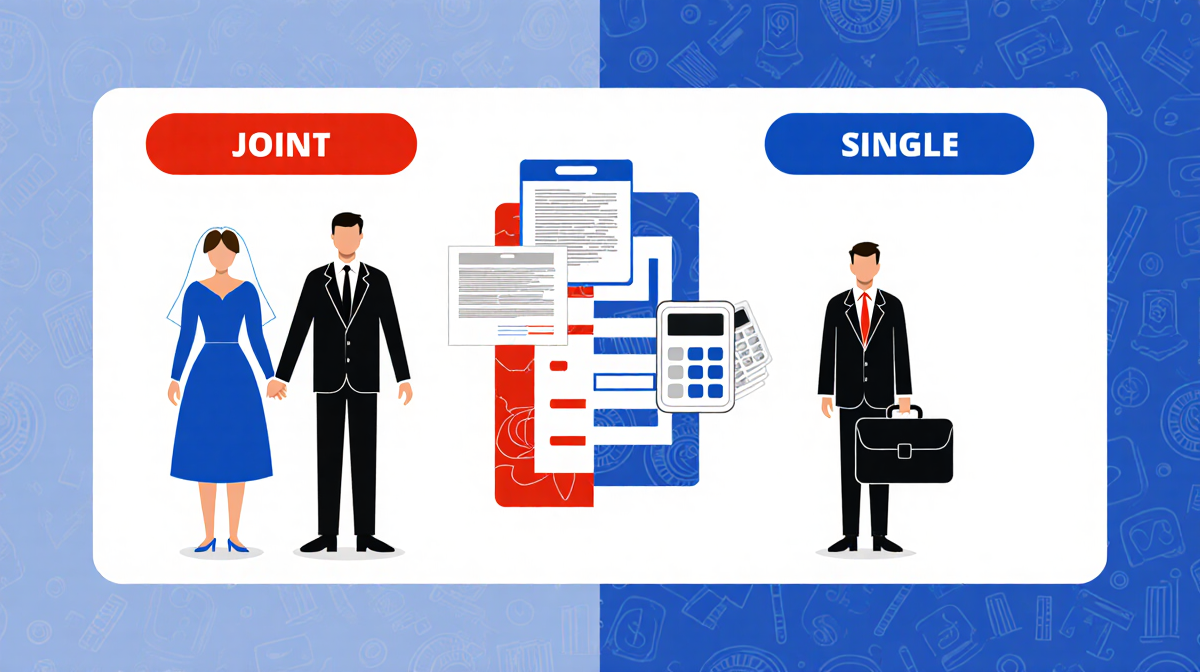
Your yearly tax filing journey starts with a single question: Are you Single, Married filing jointly, Married filing separately, Head of Household, or a Qualifying Surviving Spouse? The answer can cost you thousands of dollars if you choose poorly. The filing status determines your tax bracket and the deductions and credits you can claim.
Five Filing Statuses and Eligibility
The IRS recognizes five filing statuses. The status you choose depends on your marital situation and who you can claim as a dependent.
| Status | Who can claim it |
|---|---|
| Single | Unmarried, divorced, or legally separated |
| Married Filing Jointly | Married and both agree to file jointly, or spouse passed in the tax year |
| Married Filing Separately | Married but choose not to file jointly |
| Head of Household | Single, paid more than half the cost of keeping a home, and a qualifying dependent lived with you for more than half the year |
| Qualifying Surviving Spouse | Spouse passed in the past two years, not remarried, and has a dependent child who lived in the home all year |
The filing status is determined by Dec. 31 of the tax year unless your spouse passed during that year.
Standard Deductions and Their Impact
Standard deductions reduce taxable income and thus the amount of federal tax owed. Taxpayers can either itemize deductions on Schedule-A or take the standard deduction.
- Itemizing allows you to claim expenses such as state and local taxes, mortgage interest, medical expenses, and charitable contributions, up to a limit.
- Taking the standard deduction minimizes paperwork and can deliver greater tax savings in many situations.
- Even when taking the standard deduction, you can still deduct “above-the-line” expenses like health savings account contributions, IRA contributions, student loan interest, and educator expenses.
Before the Tax Cuts and Jobs Act of 2017, roughly one-third of taxpayers itemized. After the act, only 10% itemized, according to the Bipartisan Policy Center.
Standard Deduction Amounts for 2026 (2025 income year)
| Filing Status | Standard deduction |
|---|---|
| Single | $15,750 |
| Married Filing Separately | $15,750 |
| Head of Household (HOH) | $23,625 |
| Married Filing Jointly | $31,500 |
| Qualifying Surviving Spouse (QSS) | $31,500 |
| Additional deduction for those 65+ or blind (Single or HOH) | $2,000 |
| Additional deduction for those 65+ or blind (Married or QSS) | $1,600 |
The standard deduction adjusts each year for inflation and varies by filing status.
Tax Brackets and How They Vary
Your tax bracket determines the percentage of tax you pay based on income. The IRS uses a progressive system, so the rate increases as income rises. The brackets differ by filing status.
2025 Tax Bracket Thresholds
| Tax Rate | Single | Married filing jointly | Married filing separately | Head of Household |
|---|---|---|---|---|
| 10% | $1 – $11,925 | $1 – $23,850 | $1 – $11,925 | $1 – $17,000 |
| 12% | $11,926 – $48,475 | $23,851 – $96,950 | $11,926 – $48,475 | $17,001 – $64,850 |
| 22% | $48,476 – $103,350 | $96,951 – $206,700 | $48,476 – $103,350 | $64,851 – $103,350 |
| 24% | $103,351 – $197,300 | $206,701 – $394,600 | $103,351 – $197,300 | $103,351 – $197,300 |
| 32% | $197,301 – $250,525 | $394,601 – $501,050 | $197,301 – $250,525 | $197,301 – $250,500 |
| 35% | $250,526 – $626,350 | $501,051 – $751,600 | $250,526 – $626,350 | $250,501 – $626,350 |
| 37% | $626,351+ | $626,351+ | $626,351+ | $626,351+ |
Because brackets are progressive, you pay each rate only on the portion of income that falls into that bracket. For example, a single filer earning $70,000 would pay 10% on the first $11,925, 12% on the next $36,550, and 22% on the remaining $21,525.
Joint vs. Separate Filing
Married couples usually benefit from filing jointly because the wider brackets and additional credits often lead to lower overall tax bills. However, filing separately can be advantageous in specific situations:
- It can protect one spouse from the other’s tax exposure, student loan debt, business liabilities, or audits.
- It may allow a spouse with low income but high medical expenses to meet the 7.5% AGI threshold for deducting medical costs.
- It can help meet thresholds for certain deductions that would be unattainable on a joint return.
Drawbacks of Filing Separately
- Many deductions phase out at lower income levels or are unavailable entirely.
- Credits such as the earned income tax credit, child and dependent care credit, American Opportunity Tax Credit, and Lifetime Learning Credit are either unavailable or reduced.
- Married couples must choose the same deduction method (standard or itemized) for both spouses.
- Preparing two separate returns can increase professional preparation costs.
“Filing separately can help couples manage risk and protect assets,” said Evan Paul, managing partner of Paul Advisory and Legal Group.
Self-Employment Considerations
Self-employment is an income type, not a filing status. A self-employed individual can file under any of the five statuses. They must pay a 15.3% self-employment tax on 92.35% of their net earnings.
The IRS requires most taxpayers to pay 90% of current-year taxes or 100% of prior-year taxes by year-end. Failure to meet this can result in penalties. Self-employed taxpayers should make quarterly estimated payments using Form 1040-ES.
The Qualified Business Income (QBI) deduction allows self-employed individuals, sole proprietors, partners, and S-corporations to deduct up to 20% of income. High-earning independent contractors can also reduce liability by contributing to tax-deferred retirement plans or using an S-corporation or partnership structure.
Special Situations and Action Steps
Certain filing statuses offer significant advantages:
- Head of Household provides a larger standard deduction and wider brackets than Single filers.
- Qualifying Surviving Spouse uses the same brackets and deduction as Married filing jointly.
“When divorced or separated parents file as single, the tax rates go up, and the standard deduction goes down,” Paul said. “This can cost those parents thousands of dollars each year.”
Before filing as Head of Household, ensure you can claim responsibility for 50% or more of living expenses for yourself and your child. Generally, only one parent can claim this status.
Key Takeaways
- A wrong filing status can cost up to $7,500.
- Standard deductions vary by status; for 2025, the largest is $31,500 for Married filing jointly or Qualifying Surviving Spouse.
- Tax brackets are progressive and differ by status; Head of Household brackets sit between Single and Married filing jointly.
- Filing separately can protect assets but limits deductions and credits.
- Self-employed taxpayers should make quarterly payments and consider the QBI deduction.
- Run scenarios or use a tax calculator to determine the best filing status for your situation.
If you’re thinking of filing yourself, the best software for simple filers is Cash App Taxes or H&R Block free options. For self-employed or complicated situations, H&R Block and TurboTax are recommended.