
Vitalik Buterin announced a significant change in his stance on blockchain validation, stating that full chain verification by users is now realistic.
At a Glance
- Full validation is no longer seen as a fantasy but a feasible option thanks to zero-knowledge proofs.
- The shift follows a series of statements about simplifying Ethereum and protecting user sovereignty.
- January 26, 2026 marks the date of the public announcement.
- Why it matters: It signals a potential move toward more independent verification for everyday users.
Shift from the 2017 View
In June 2017, during a debate with Ian Grigg, Vitalik Buterin argued that requiring users to re-execute every historical transaction was impractical, describing it as a “weird mountain man fantasy.”
On January 26, 2026, he posted a detailed social media note explaining why he no longer shares that view. The core of his argument is that advances in cryptographic technology have changed the trade-off between convenience and independence.
Buterin’s new position is framed as a response to real-world failure modes rather than abstract theory. He cited:
- Peer-to-peer network outages
- High latency
- Service shutdowns
- Validator or miner concentration
- Censorship by intermediaries
These risks, he said, show that relying solely on third-party RPC providers or developers can become a single point of failure, undermining self-custody.
Cryptographic Advances Make Validation Practical
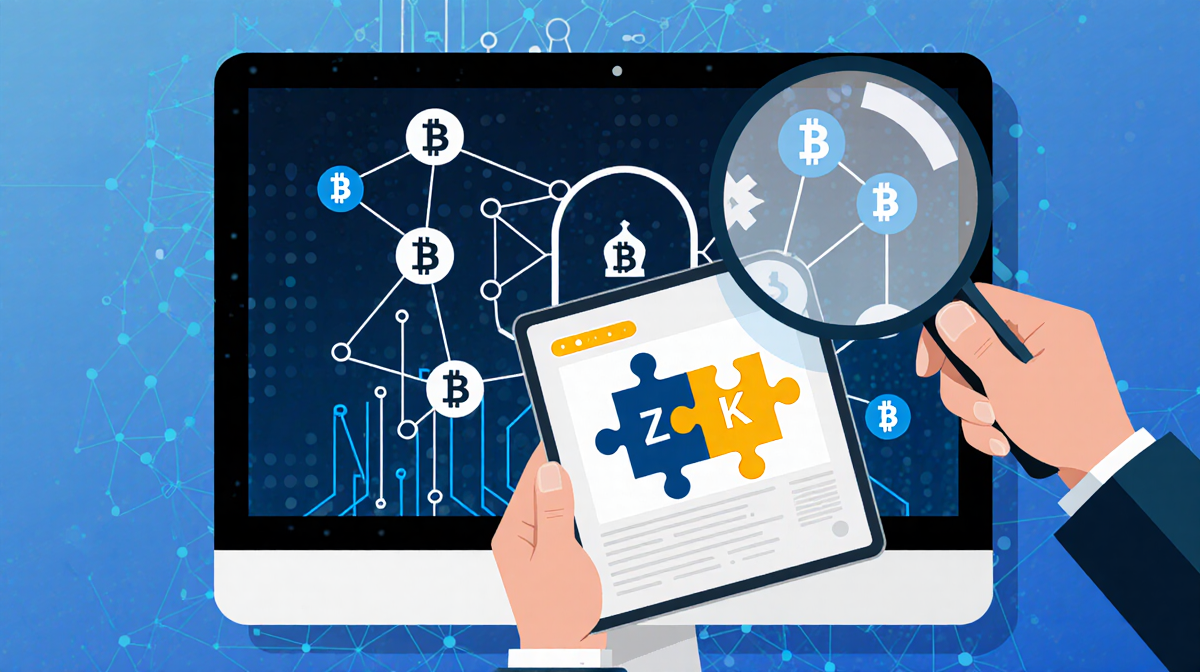
The breakthrough he points to is the development of zero-knowledge proofs, especially ZK-SNARKs. These tools enable a user to verify that a chain is correct without replaying the entire transaction history, dramatically reducing the computing burden.
He explained that the technology offers the benefits of full validation while eliminating the traditional costs of re-execution. “The cryptographic tools allow us to verify the state without re-playing every transaction,” he wrote.
Benefits of ZK-SNARKs
- Efficiency: Verification requires only a few milliseconds of computation.
- Security: The proof is mathematically sound, ensuring the chain’s integrity.
- Independence: Users can trust the data without depending on external services.
- Scalability: The approach scales with network growth, keeping costs low.
Broader Vision for Ethereum
Buterin’s updated stance fits into a broader push for simplicity and self-sovereignty. On January 19, 2026, he warned that Ethereum’s growing protocol complexity could threaten its ability to remain trustless over the next century.
He called for a stronger focus on pruning unnecessary features and reducing reliance on a small group of experts. “Complex systems force users to rely on a handful of experts, weakening true ownership,” he said.
In a separate post on January 23, 2026, he urged broader adoption of decentralized privacy tools, calling 2026 a year to reclaim “computing self-sovereignty.” He advocated moving away from mainstream platforms toward privacy-focused alternatives such as Proton Mail, Signal, and decentralized social media clients.
Earlier, on January 8, 2026, he noted that increasing network bandwidth, rather than chasing lower latency, is a more realistic way to achieve large-scale growth without sacrificing decentralization.
Collectively, these remarks suggest a philosophical shift: new cryptography and simpler design can make personal verification practical again, even if only as a safety net when other systems fail.
Timeline of Key Events
| Date | Event |
|---|---|
| June 2017 | Debate with Ian Grigg; claim that full validation is unrealistic |
| January 8, 2026 | Analysis on scaling via bandwidth, not latency |
| January 19, 2026 | Warning about protocol complexity and call for simplicity |
| January 23, 2026 | Call for privacy-focused tools and self-sovereignty |
| January 26, 2026 | Public announcement of shift on full chain validation |
Implications for Users
- Users gain a viable fallback option when centralized services fail.
- The existence of a full-validation path may pressure RPC providers to improve reliability.
- Developers can design lighter clients that still offer strong security guarantees.
- The shift may accelerate adoption of privacy-focused and decentralized applications.
Key Takeaways
- Vitalik Buterin now believes full chain validation is realistic due to zero-knowledge proofs.
- The change reflects a broader commitment to simplicity, self-sovereignty, and user independence.
- Users and developers alike may see new opportunities for secure, lightweight blockchain interactions.